



For more than a decade, India's home grounds have been considered close to impregnable in T20 internationals. Familiar conditions, roaring crowds and depth across departments have usually tilted contests heavily in the hosts' favour.
Yet, among all visiting teams, New Zealand have consistently found ways to disrupt that dominance, carving out a reputation as India's most resilient and dangerous opponents on Indian soil.
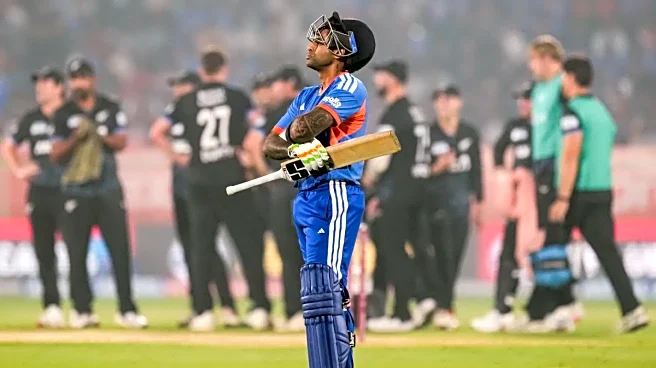
The numbers underline this trend emphatically. India's biggest home defeat by runs in T20Is came as recently as 2025 in Mullanpur, when South Africa won by 51 runs. Just a year later, New Zealand inflicted a 50-run defeat in Visakhapatnam in 2026, now the second-heaviest loss India have suffered at home.
The list further reinforces
how frequently the Black Caps appear at the sharp end of Indian discomfort, with New Zealand also responsible for a 47-run defeat in Nagpur in 2016 and a 40-run loss in Rajkot in 2017. Only South Africa, with defeats in Indore in 2022 and Mullanpur in 2025, feature alongside them in this otherwise rare company.
Beyond margin of defeat, the more telling indicator of New Zealand's toughness lies in their ability to defend targets in India, a notoriously difficult task in T20 cricket. New Zealand have successfully defended totals against India five times on Indian soil, the joint-highest by any visiting side. Remarkably, all other teams combined have managed the same number-South Africa twice, Sri Lanka twice and England once. This statistic speaks volumes about New Zealand's tactical clarity and bowling discipline under pressure.
What sets New Zealand apart is not raw pace or overwhelming spin resources, but adaptability. Their bowlers rarely chase magic deliveries; instead, they rely on relentless accuracy, smart use of cutters, and sharp field placements tailored to Indian conditions. Spinners like Mitchell Santner and Ish Sodhi have repeatedly shown the ability to bowl into the pitch and change pace, while their seamers have mastered hard lengths and wide lines that deny Indian batters room to free their arms.
Equally crucial has been New Zealand's batting approach in India. Rather than attempting to overpower attacks from the outset, they have often built strong platforms before accelerating decisively. This methodical approach has allowed them to post defendable totals even when pitches appear batting-friendly, as seen most recently in Visakhapatnam. Their calmness in crunch moments contrasts sharply with the pressure that Indian bowlers often face when attempting to close out games.
The psychological edge cannot be ignored either. New Zealand's repeated success has created a sense of belief that travelling sides often lack in India. Each close defence or big-margin win reinforces the notion that India can be challenged-and beaten-at home with the right plans and execution. For India, these defeats serve as reminders that familiarity alone is no guarantee of dominance, especially against opponents who excel at absorbing pressure.
As the T20 World Cup 2026 approaches, New Zealand's record in India stands out as a case study in preparation and adaptability. Their ability to defend totals and inflict heavy defeats has set them apart from other visiting teams, firmly establishing the Black Caps as India's toughest touring side in home T20Is - not by reputation alone, but by sustained, measurable impact.