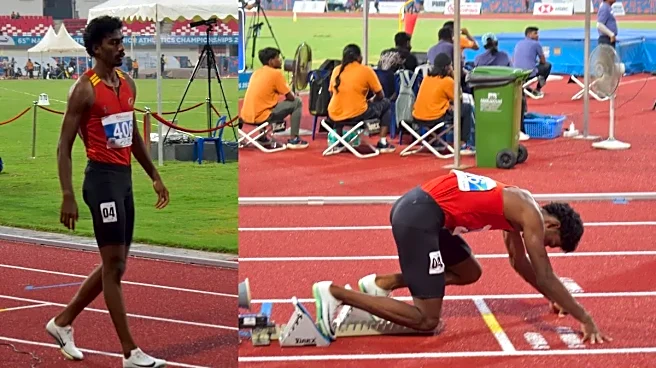


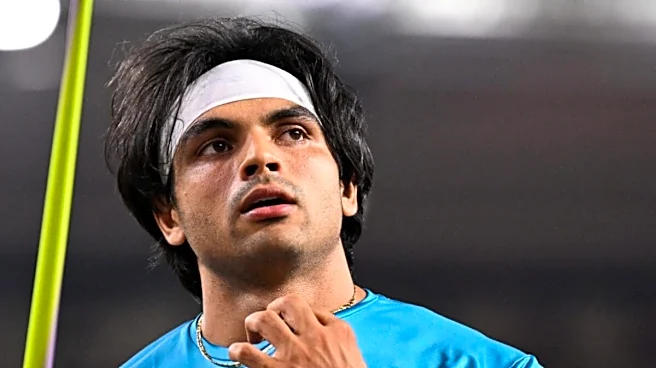
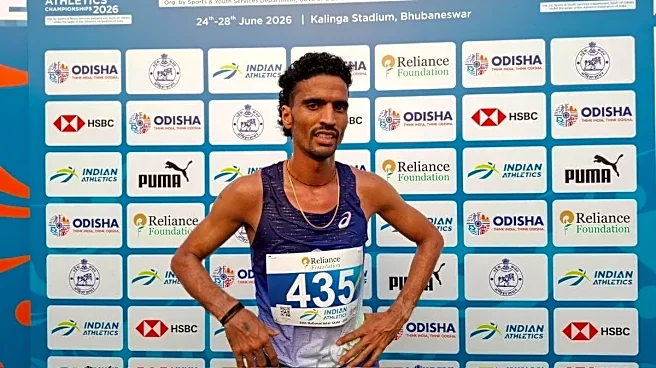
Glasgow, July 24: At the Inter-State Athletics Championships in Bhubaneswar last month, James Hillier, Athletics Director at the Reliance Foundation, was one of the busiest figures on the sidelines. While the meet doubled up as the national qualification event for the 2026 Asian Games, it also brought together the country's finest track and field athletes, all chasing a coveted ticket to Aichi-Nagoya, Japan.
For Hillier, however, the priority extended beyond qualification. His biggest concern was ensuring his athletes achieved the demanding entry standards without picking up injuries. Thankfully, they did just that.
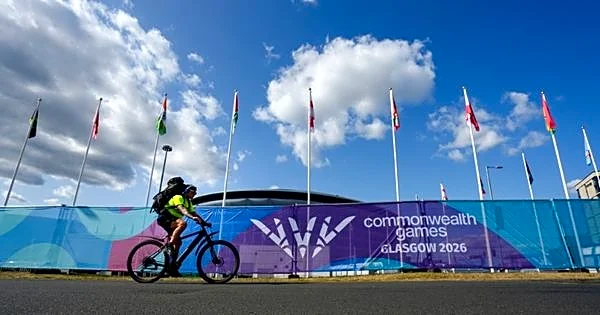
Fast forward to Glasgow, where Hillier now faces an even sterner examination. With the Commonwealth Games featuring powerhouses such
as England, Australia, Canada, Jamaica and several Caribbean nations, the standard of competition in track and field is expected to be significantly higher than at the Asian Games.
Months of meticulous planning and preparation will now be put to the test. Yet, rather than talking about medals or podium finishes, the British coach wants his athletes to focus on something far more controllable-their performances.
"Our target isn't to win a medal. Our target is to deliver a very, very good performance. If that performance is good enough to win a medal, we'll obviously take it. We must focus on the performance rather than the outcome because the outcome will take care of itself," Hillier told myKhel in an exclusive interaction from Glasgow ahead of the Games.
Reliance Foundation's Strong Presence in India's Athletics Squad
Hillier arrives in Glasgow with another reason to be optimistic. Eight of the 32 athletes named in India's athletics contingent are part of the Reliance Foundation programme, underlining the organisation's growing influence on Indian track and field.
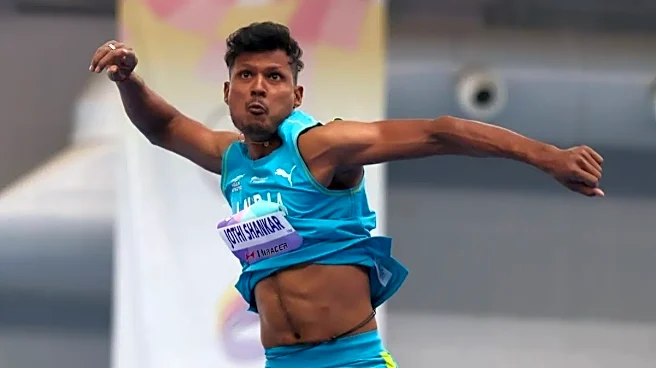
The list includes national record holders Gurindervir Singh (100m), Tejas Shirse (110m hurdles) and Tejaswin Shankar (decathlon), comeback star Murali Sreeshankar, rising sprinter Animesh Kujur, high jumper Aadarsh Ram, long jumper Lokesh Sathyanathan and 400m hurdler Yashas Palaksha.
"It's great to have effectively 25 per cent of the team represented by Reliance Foundation athletes. It's a testament to all the hard work we're doing and shows we're producing athletes capable of competing at this level. The qualification standards, especially in the track events, were extremely tough, so we know everyone who has qualified will be competitive," Hillier said.
'Expectation Is a Privilege'
Few Indian athletes head into Glasgow with bigger expectations than Gurindervir Singh, who rewrote the national 100m record this season with a stunning 10.09 seconds.
Hillier believes expectations shouldn't be viewed as pressure but as recognition of an athlete's progress.
"I always view expectation as a positive thing. I told Guri that it's a privilege people expect him to do well because this is what he has always wanted. Nobody handed him this opportunity; he created it himself by achieving an extremely high qualification standard. Having expectations is something every professional athlete has to manage, and it's something he should relish because it shows people believe he can compete at this level," he explained.
The British coach added that championships are won by playing to strengths rather than obsessing over weaknesses.
"Competition isn't the time to focus on weaknesses. It's the time to reinforce your strengths. Guri's biggest strength is the first 30 to 60 metres of the race. If he executes that well, he'll put the other athletes under pressure instead of feeling the pressure himself. "
Why Tejas Shirse Excites Hillier
Another athlete Hillier believes possesses a rare competitive edge is Tejas Shirse, who lowered the national record in the 110m hurdles to 13.27 seconds earlier this year.
"What makes Tejas special isn't that he's different from Indian athletes, it's that he's different from most athletes. He's got a ruthlessness, an intensity and a belief in his own abilities that you rarely see. He's not afraid of anybody and genuinely enjoys competing on the biggest stage," Hillier said.
While refusing to predict medals, he made it clear what success would mean.
"If you want a medal, you've got to go and win it. Nobody is going to hand you a medal. You've got to fight for it, but at the same time you have to stay technically disciplined. That's the balance every athlete needs. "
Murali Sreeshankar's Big Return
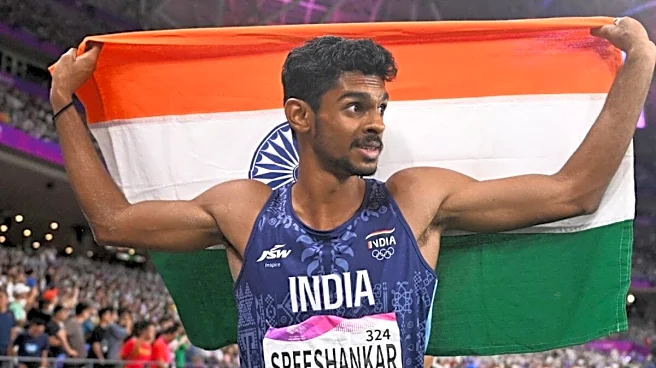
Among India's biggest stories in Glasgow will be the return of Murali Sreeshankar, who missed the entire Paris Olympic cycle after suffering a serious knee injury before making an impressive comeback this season.
Hillier believes the Commonwealth Games silver medallist is entering the competition in excellent shape.
"Murali is in very, very good shape mentally and physically. He's jumping really well. He's an outstanding competitor, so my job isn't to make him compete harder. It's to make sure he stays calm and keeps doing exactly what has brought him here. If he does that, I expect a big performance from him. "
Weather, Pressure and Big Names
Glasgow's unpredictable weather has often been discussed as a potential obstacle for Indian athletes, but Hillier refuses to let it become an excuse.
"If it's raining or cold, it's the same for everybody. Whoever deals with those conditions best will perform the best. Everything is an opportunity, not a challenge. "
He also wants his athletes to embrace, rather than fear, sharing the arena with Olympic and world champions. "They've earned the right to be here because the qualification standards were so tough. I tell them that when they're introduced before the competition, they should look left, look right and tell themselves, 'I'm better prepared than all of you. ' That belief is the final piece of the jigsaw. "
Looking Beyond Glasgow to India 2030
While Hillier's immediate focus remains Glasgow, he also believes the next five years will be crucial as India prepares to host the 2030 Commonwealth Games.
The British coach praised the Athletics Federation of India for improving the domestic competition calendar but believes there is still room to create a more athlete-centric ecosystem.
"We need stronger domestic competitions, but we also need to keep sending athletes overseas. They need exposure to different environments, different competitions and different coaching philosophies. Athletes must come first. We shouldn't build competitions around administration; we should build them around athletes. "
Hillier also advocated event-specific meets and better competition planning to help athletes consistently produce world-class performances.
"Competitions should be set up for success. Whether it's sprints, jumps or throws, athletes should compete in the best possible environments. The professionalisation of Indian athletics has improved enormously over the last seven years, and the federation is consulting coaches much more than before. That's a really positive sign. "
With eight Reliance Foundation athletes set to take the field in Glasgow-including six Commonwealth Games debutants-Hillier knows the results will ultimately be decided on the track and in the field.
But if his philosophy is anything to go by, the medals will be a consequence, not the objective.
"Competitions can't be won in the last three or four days before they start, but they can certainly be lost. Right now, our job is to make sure the athletes are the best prepared they can possibly be. "