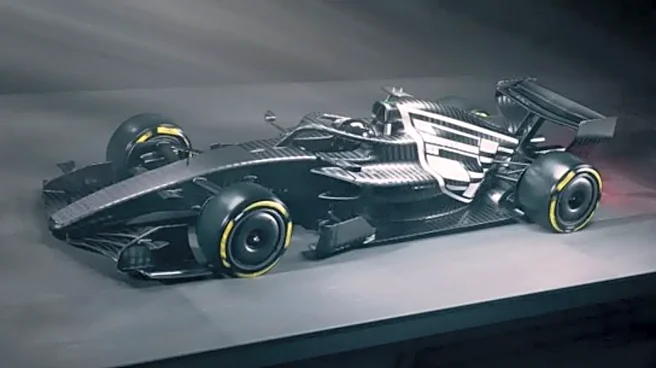


Formula 1's first on-track running of 2026 was meant to offer an early glimpse into a new era. Fresh cars, new power units, and the first hints of who has interpreted the regulations best. Instead, the season's opening test has been stripped of almost all public access, turning what is usually a marquee moment into a largely closed-door exercise.
The initial pre-season test, scheduled to take place in Barcelona from January 26 to 3,0 will run for a maximum of three days per team. While attendance is technically optional, all teams are expected to participate. What sets this test apart, however, is not the location or format, but the level of secrecy surrounding it. There will be no live broadcast, no standard media access, ss and no public live timing
- an unusually opaque start to a major rules reset in F1.
Teams have justified the decision by pointing to reliability concerns associated with the new regulations. With cars and engines undergoing significant changes, the priority, they argue, is uninterrupted testing rather than public scrutiny. In effect, the opening test has been positioned as a private shakedown rather than a spectacle, even though pre-season testing is formally written into the sporting regulations.
A compromise of sorts has been reached. A limited F1 media presence will be allowed at the circuit to capture short interactions with drivers and senior team personnel, and teams are encouraged to share their own updates.
How forthcoming those updates will be remains to be seen, and the absence of independent observation inevitably narrows the picture available to fans and analysts.
History of secret F1 pre-season testing
The 2026 testing marks a step beyond even the pared-back testing formats of recent years. When Formula 1 introduced its last major technical overhaul in 2022, the initial Barcelona test was low-key but not secretive. Media access was restricted, yet timing data was available, and independent reporting was possible. Bahrain then hosted the more conventional, broadcast-heavy pre-season test.
The rationale for tightening the curtain further this season is less convincing. Testing, by definition, is about experimentation, but teams already have avenues for private running through filming days and early shakedowns. Audi, for instance, ran its car for the first time on January 9. The option to reduce coverage without eliminating it has existed and worked before.
Limiting extensive broadcasting is not inherently problematic; the sessions can be repetitive, and interest naturally wanes. However, removing the ability to follow it almost completely speaks less to sporting purity and more to message control. Teams are keen to avoid embarrassment, particularly if new systems fail under the spotlight.
The anxiety is valid and rooted in history. The last time F1 entered the new engine era, in 2014, pre-season testing was chaotic. Jerez, teams managed just 93 laps between them on the opening day, several cars barely ran, and reliability issues dominated headlines. McLaren didn't leave the garage, Red Bull struggled with mileage, and Mercedes suffered a high-profile failure when Lewis Hamilton crashed due to a front wing problem.
Those memories still linger, and in that context the decision to keep the 2026 test largely private feels less like a philosophical stance and more like a pre-emptive shield. When that serves the sport's long-term relationship with fans remains an open question. But it ensures that F1's newest era will begin, unusually, out of sight.