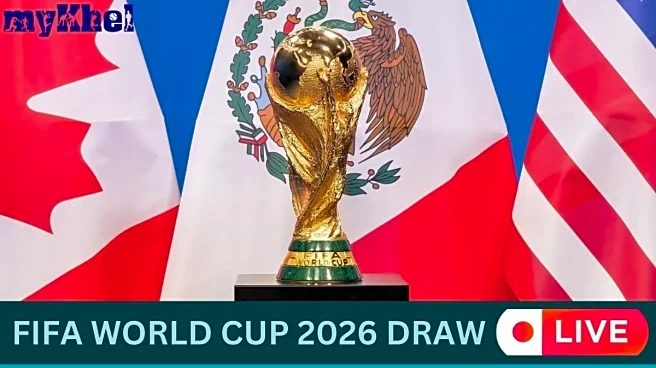

FIFA World Cup 2026 Draw Live Updates: Excitement is building as the countdown to the FIFA World Cup 2026 continues, with the official tournament draw scheduled to take place on December 5 in Washington
D.C., USA. This draw will lay the foundation for the competition's historic new format, featuring 48 teams instead of the traditional 32.
For the first time ever, the World Cup will span three host nations - the United States, Mexico, and Canada - making this edition one of the most ambitious and globally inclusive tournaments in football history.
(Refresh blog frequently for faster updates)
The expanded format divides the 48 participating teams into 12 groups of four, and the draw process revolves around a structured system involving four pots. These pots are primarily seeded based on the FIFA World Rankings, ensuring a balanced distribution of strong teams across groups.
As hosts, the USA, Mexico, and Canada automatically earn a place in Pot 1 and will lead Groups A, D, and G respectively. They will be joined in the top pot by the world's highest-ranked teams, including traditional heavyweights such as Argentina, France, England, Spain, Portugal, Brazil, Netherlands, Germany, and Belgium. These Pot 1 teams will be assigned to groups alphabetically, setting the framework before the remaining teams are drawn.
Once Pot 1 placements are settled, the draw proceeds with Pots 2, 3, and 4, with one team from each pot placed into every group. However, confederation rules will guide the process to maintain diversity. Teams from the same continent cannot be placed together in a group - except for European nations, since UEFA has the highest representation. As a result, each group may contain a maximum of two teams from Europe, but no more.
This draw is expected to generate a thrilling mix of matchups, new rivalries, and compelling storylines. With more teams competing than ever before and three countries sharing hosting responsibilities, the 2026 World Cup promises fresh energy and global accessibility. The draw will not only determine fixtures but also shape expectations, pressure, and excitement heading into what could become the most unpredictable and widely celebrated FIFA World Cup in history.