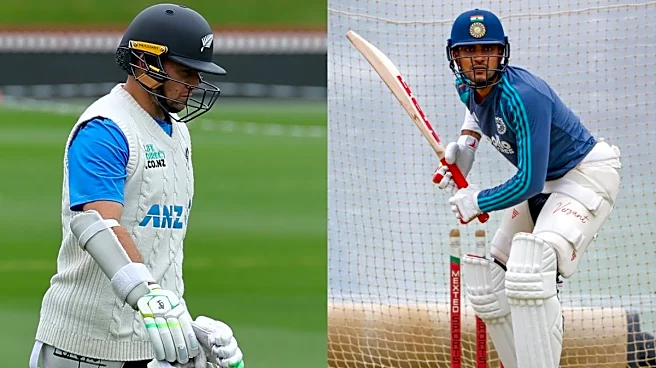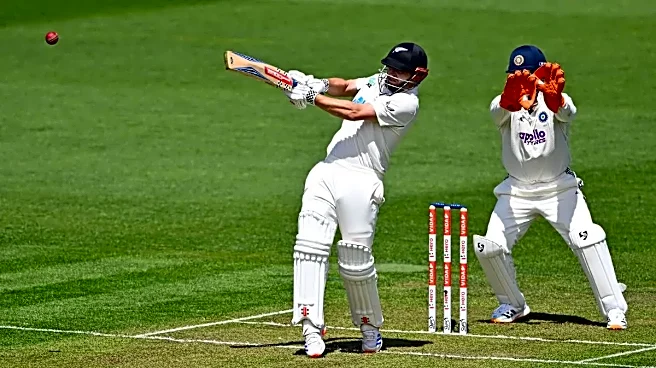

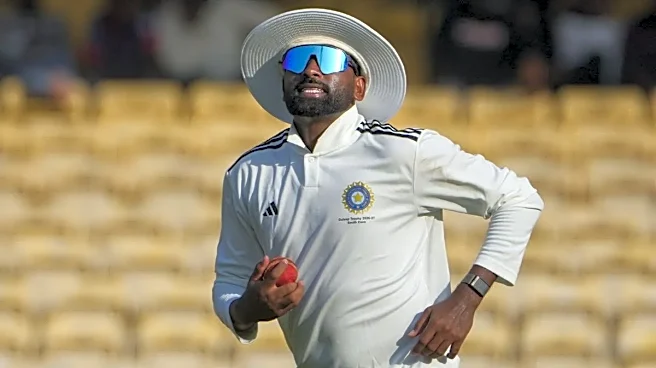

Wellington, November 19: Henry Nicholls and Glenn Phillips produced a remarkable counter-attacking partnership to rescue New Zealand after India reduced the hosts to 70/5 on the opening day of the first Test at the Basin Reserve on Thursday. Nicholls struck an unbeaten 109, while Phillips was closing in on a century with 94 not out as New Zealand reached 236/5 at stumps.
India appeared firmly in control after a disciplined opening session in which they picked up four wickets, before removing Tom Blundell shortly after lunch to leave New Zealand struggling at 70/5. However, Nicholls and Phillips turned the contest around with an unbroken 166-run sixth-wicket stand, taking the game away from India's bowlers over the final two sessions.
Nicholls
remained unbeaten on 109 off 215 deliveries, hitting 13 boundaries, while Phillips scored 91 from 176 balls, also finding the boundary 13 times. Their partnership not only stabilised the innings but gave New Zealand a strong platform after a difficult start.
India Dominate Morning Session, Reduce New Zealand To 70/5
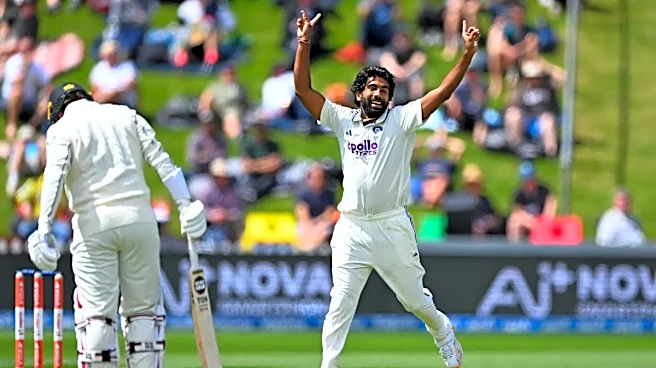
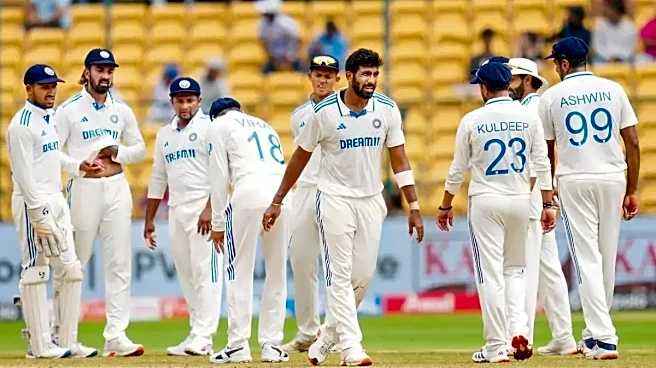
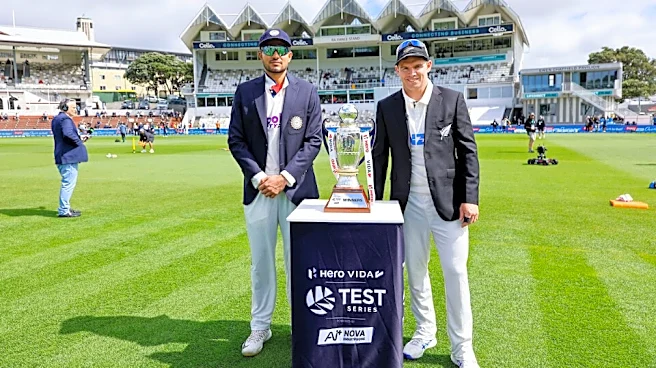
India's decision to bowl first after winning the toss initially paid dividends. Jasprit Bumrah struck early, dismissing Tom Latham for a duck, before Anshul Kamboj removed Devon Conway for four.
Akash Deep then dismissed Rachin Ravindra for 15, while Bumrah returned to remove Daryl Mitchell for one. New Zealand slipped to 52/4 before Tom Blundell's dismissal at 70/5 in the 29th over left the hosts in serious trouble.
India finished the opening session with 60/4 at a run rate of 2.6, having maintained control of 74.9 per cent of the deliveries. Blundell's departure early in the second session appeared to strengthen India's position further.
Henry Nicholls And Glenn Phillips Turn The Tide
The arrival of Phillips changed the complexion of the innings. Rather than allowing India to build pressure through dot balls, the pair rotated the strike effectively, ran hard between the wickets and punished loose deliveries.
Their control over the innings was reflected in the session-wise numbers. New Zealand scored 80 runs for the loss of one wicket in the second session, before adding 103 without losing a wicket in the final session.
The scoring rate also increased, moving from 2.6 runs per over in the morning to 3.07 in the second session and 3.12 in the final session. New Zealand's control percentage rose from 74.9 per cent in the first session to 88.6 per cent and then 93.5 per cent.
Nicholls and Phillips were particularly assured against India's bowling attack. Their control percentages stood at 90.1 and 91.8 respectively, significantly higher than the 69.5 per cent recorded by the other New Zealand batters.
India tried different approaches, with Washington Sundar providing some control in the middle overs and Prasidh Krishna returning with a short-ball strategy. But the batters continued to find ways to keep the scoreboard moving.
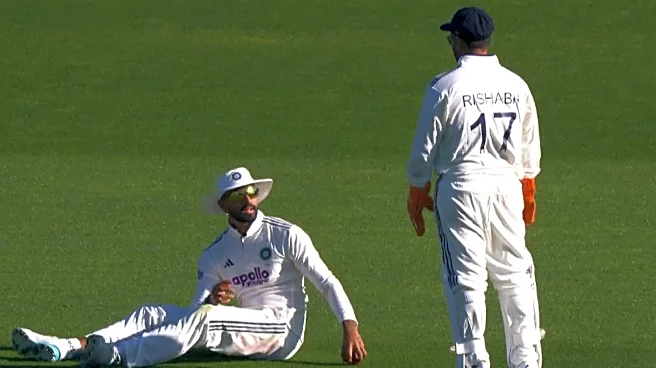
Nicholls also survived a notable opportunity when he mishit a delivery and offered a chance towards backward square leg. A miscommunication between Rishabh Pant and Devdutt Padikkal meant India could not complete the catch, allowing the New Zealand batter to continue.
The left-hander made the most of the reprieve, bringing up his century and extending his impressive record at the Basin Reserve. He has now registered five centuries and four fifties in 15 innings at the venue.
Nicholls' Numbers Explain Why India Needed An Early Breakthrough
A statistical comparison of active Test batters with at least 40 scores of 25 or more underlines why allowing Nicholls to settle can be costly.
Nicholls has registered 40 such scores and averages 62.50 after reaching 25. He has converted 12 of those 40 scores into centuries, a conversion rate of 30 per cent.
Only Joe Root and Steve Smith have more 25-plus scores among the players in the comparison, with 164 and 131 respectively. Nicholls' century conversion rate, however, stands out in the list.
His familiarity with the Basin Reserve was evident as he absorbed the early pressure before gradually taking the attack to India.
India's Lengths And The Sixth-Wicket Partnership Record
India's bowling data also highlighted the challenge of finding the right length. Deliveries on a good length produced three wickets for 50 runs in 202 balls, at an economy rate of 1.48. Full deliveries brought two wickets but conceded 67 runs from 78 balls, while short deliveries went wicketless and cost 77 runs from 122 balls.
The Nicholls-Phillips stand also added to a notable pattern in Test cricket. There have been 31 sixth-wicket partnerships of 150 or more after a team lost its first five wickets for fewer than 100 runs. India have now conceded six such partnerships, including the ongoing stand, the joint-most by a team alongside New Zealand.
The highest of those partnerships remains the 352-run stand between Brendon McCullum and BJ Watling at the Basin Reserve in 2014. New Zealand had been reduced to 94/5 before the pair turned the match around, eventually helping the hosts declare at 680/8 after taking a first-innings lead of 246.
India Face A Crucial Second Morning
At 236/5, New Zealand have transformed what looked like a difficult first innings into a promising position. Nicholls has already completed a century, while Phillips is nine runs away from his own hundred.
India had the upper hand after the morning session and even strengthened their position with Blundell's wicket. But the inability to break the Nicholls-Phillips partnership allowed New Zealand to dictate terms for the rest of the day.
The visitors will need an early breakthrough on Friday to prevent the hosts from building a substantially bigger first-innings total. For New Zealand, the immediate objective will be to extend the partnership and turn a remarkable recovery into a commanding position in the Test.