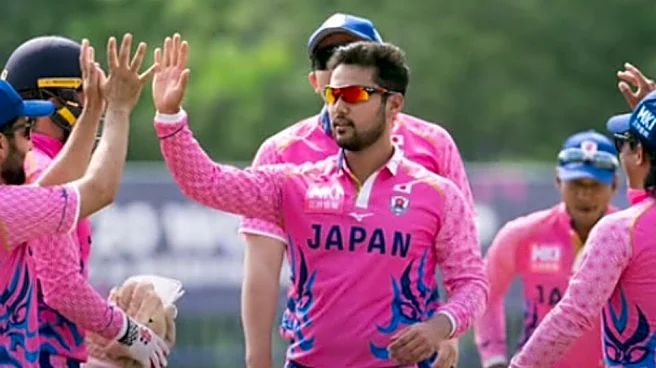

New Delhi, Sep 8: Japan, the Land of the Rising Sun, has never been a traditional cricket-loving nation. But a sport that enjoys immense popularity across the Asian subcontinent is steadily trying to make its mark in Japan.
The upcoming historic one-off T20I against reigning T20 world champions India, followed by the cricket competition at the Asian Games in Aichi-Nagoya, could well mark the beginning of something significant for the game in the country.
For the Japan Cricket Association, the opportunity goes far beyond hosting a major international match or an Asian Games competition. It is about using the unprecedented exposure to build a lasting cricket culture, inspire a new generation of Japanese players and establish the sport in regions
where it has had little or no traditional presence.
Japan Cricket Association CEO Naoki Miyaji believes the India-Japan T20I and the Asian Games could prove to be "game-changers" for cricket in a country where the sport has spent nearly two decades trying to establish a foothold.
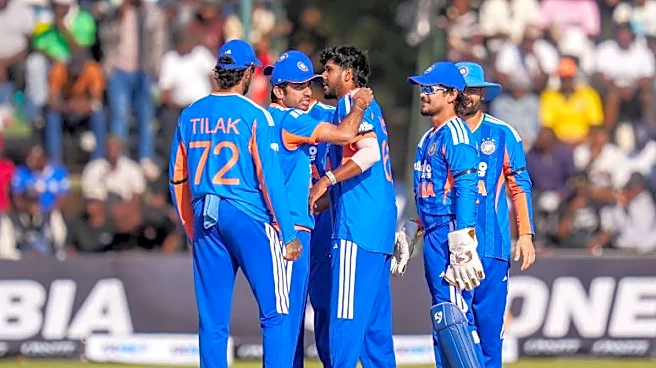
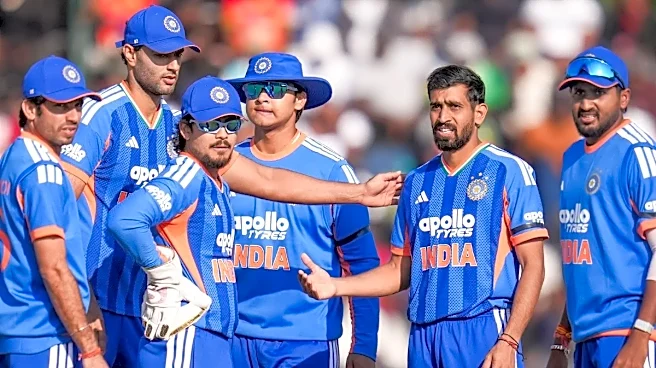
For Japan, the significance of India's visit extends well beyond the one-off contest. The September 22 T20I at the Sano International Cricket Ground in Tochigi Prefecture will be the first international meeting between the two men's senior teams and will also launch celebrations marking 75 years of India-Japan diplomatic relations.
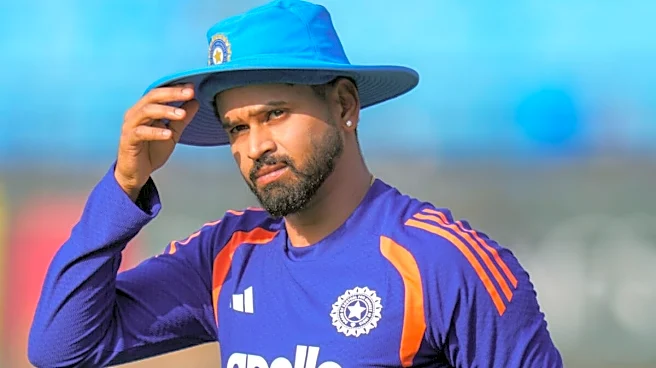
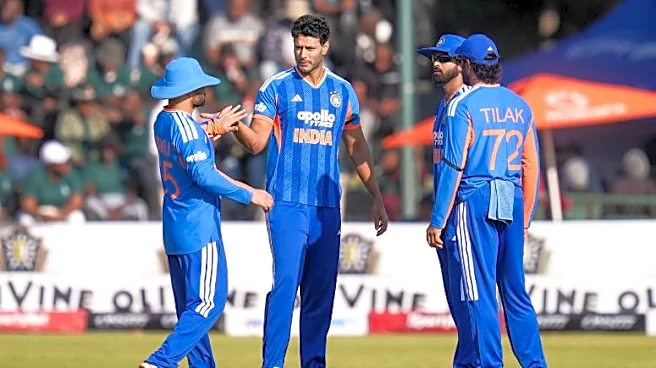
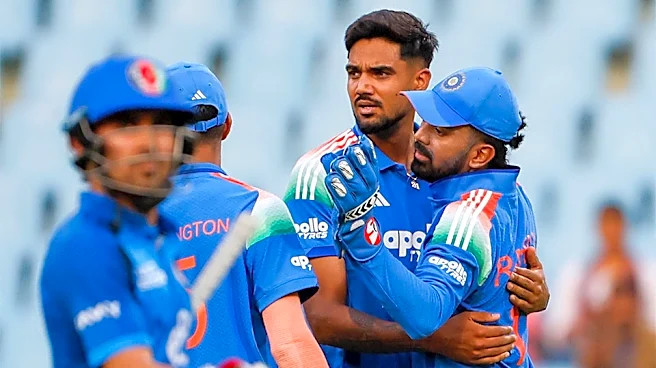
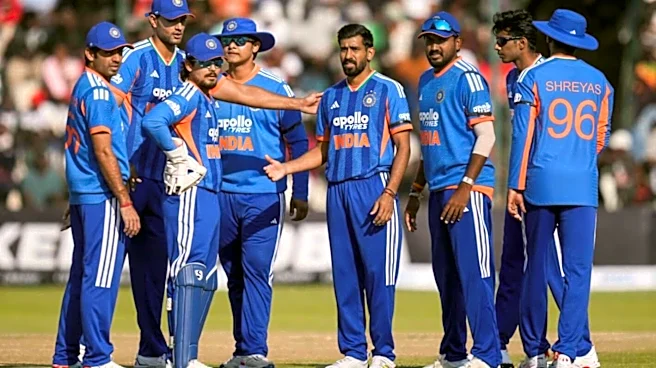
More importantly for Miyaji, India's full-strength side - led by captain Shreyas Iyer and several other superstars, including Jasprit Bumrah, and young sensation Vaibhav Sooryavanshi - provides Japanese cricketers with the opportunity to test themselves against the best in the world while giving the sport an unprecedented platform in Japan.
"Having the full-strength Indian team coming. that is what we need to show people, that is what is going to make the big impact on so many different fronts, like for the players as well," Miyaji told myKhel over phone.
For Japan's players, the opportunity is as much about learning as competing.
"Having that opportunity to play against the best-the reigning World Champions-is a benchmark," he said. "Without that challenge and that opportunity to play, try to perform, and play well against the World Champions, you're not going to improve. "
But the JCA is also looking beyond the boundary. Miyaji expects the India fixture to attract Japanese fans, the Indian diaspora, Japanese companies and media, creating a wider social and commercial impact for a sport still seeking mainstream recognition in the country.
"On the social impact, the economic impact, the partner impact, the market impact, and the media impact, having that full-strength side means the world to us," he said.
Asian Games opportunity extends beyond September
The India match is only one part of a much larger moment for Japanese cricket. Cricket will be played at the 2026 Asian Games in Aichi-Nagoya, with the women's competition scheduled from September 17 to 22 and the men's tournament from September 24 to October 3. The competition will be staged at Kōrogi Sports Park in Nisshin City, a region where organised cricket has not traditionally had a strong presence.
For Japan Cricket, that is precisely what makes the Asian Games opportunity so significant.
Miyaji explained that the association has been pursuing a "City of Cricket" strategy, establishing cricket hubs with facilities and school development programmes rather than attempting to spread the sport thinly across the entire country.
"We've been doing this 'City of Cricket' strategy, where we identify a city and then we try to build a cricket ecosystem in that city," Miyaji said. "We try to get a ground, we try to get into schools, we try to get the local community involved, and then we build from there. "
The approach is part of a broader effort to build the sport gradually by creating local pathways for children, developing homegrown players and establishing cricket communities that can sustain the game over the long term.
"The first school is so hard. Getting the first ground is so hard. Moving from city to city, it's not easy," Miyaji said. "But once you have that foothold, once you have that first group of children playing and that first facility, then you can start to build something that is sustainable. "
That philosophy has become particularly important in Aichi-Nagoya.
"The challenge has been that we're hosting one of the biggest sports events in the world in a place where the sport (cricket) has no footing," Miyaji said.
Nisshin City is the host town for cricket in the Asian Games, and Miyaji believes the Games can provide the catalyst to establish a permanent cricketing presence in the region.
"The Games is not the end-all for what we're doing there; it's the start of a new, thriving city of cricket in the region," he said.
Miyaji pointed out that countries normally have seven or eight years to prepare for events of this scale, allowing time to enter schools, develop local players and build community engagement. Japan, by contrast, had only around 16 to 17 months after cricket's inclusion to prepare.
The support of the local administration has therefore been critical, with the JCA using the opportunity to open doors into schools and engage with the local community.
India's accommodation concerns addressed
The scale of the Asian Games preparations has also attracted attention in India, particularly around accommodation and player comfort.
Speaking to media persons on the sidelines of the official send-off ceremony of the Indian contingent, BCCI Vice-President Rajiv Shukla expressed satisfaction with the arrangements while acknowledging the initial accommodation challenge in Nagoya.
"That was the problem because Nagoya hasn't got many hotels. Tokyo is one and a half hours by bullet train, so is Osaka. But this is a family version game. All the participants are like family, so it doesn't look like some stay in Tokyo and some stay in Osaka. So it has been decided that we live there," Shukla said.
His comments came amid questions around accommodation, ground facilities and player comfort, and offered reassurance that the Indian contingent would remain together rather than being split between Tokyo and Osaka.
On the Japanese side, Miyaji acknowledged that preparing for an event of this scale has required a significant expansion of the infrastructure and operational capabilities around cricket.
'Every area' was a challenge
Preparing the Sano International Cricket Ground for India's arrival has involved significant work. "We've hosted international teams and tournaments before, but not at this scale," Miyaji said. "This is the first time we're welcoming a full member to the Sano International Cricket Ground. "
The upgrades have extended across infrastructure, operations, accommodation, transportation and spectator facilities. For the first time, the venue will sell tickets for entry, while the broadcast operation is also being expanded significantly.
Miyaji said Japan's previous biggest production involved six cameras, whereas the India match is expected to use around nine or 10.
The playing surface has received particular attention. The JCA worked well in advance to ensure that the turf clay used at Sano matches the clay installed at Kōrogi Sports Park, the Asian Games venue.
"We've made sure that the clay at Sano is the same clay that we're using at the Asian Games venue," Miyaji said. "So the players can get used to the conditions here and then have a similar experience when they go to the Asian Games. "
The idea is to provide teams with a comparable playing surface when they use Sano for preparation before travelling to Nisshin for the Asian Games.
Temporary stands, additional toilet facilities and upgraded changing rooms have also been arranged.
"Every area!" Miyaji said with a laugh when asked about the biggest logistical challenges.
The financial demands of bringing the facilities and operations up to the required level have also been considerable.
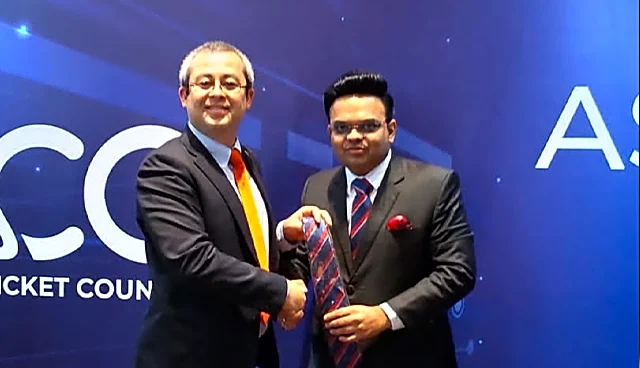
Miyaji credited the BCCI for helping cover some of the costs, while Suzuki Motors came on board at short notice as the title sponsor for the historic India-Japan T20I. The local community has also contributed to the effort.
"I really appreciate the efforts made by the BCCI and the ICC," Miyaji said, acknowledging the support Japan has received in bringing the event together.
He also praised the BCCI for being supportive and forward-looking in its approach to helping develop cricket globally.
From 41 all out to beating Tanzania
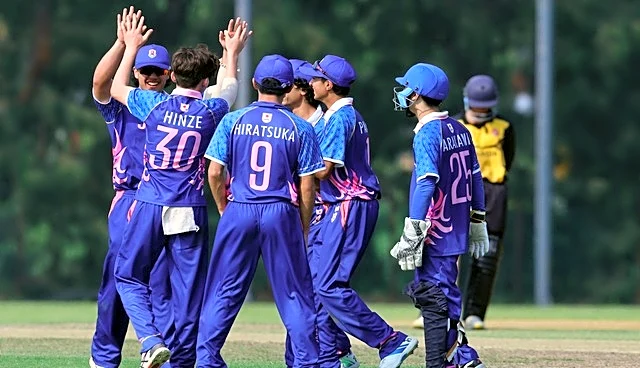
The most compelling evidence of Japan's progress, however, can be found in its young cricketers. Japan made its men's Under-19 World Cup debut in 2020, when the team endured a difficult campaign and was bowled out for 41 against India.
Six years later, the picture was dramatically different. At the 2026 U19 World Cup, Japan scored 190 against Sri Lanka, 200 against Australia, came close to 250 against Ireland and, most significantly, recorded its first-ever victory in the tournament by defeating Tanzania.
One Japanese player was particularly central to that progress. Hugo Tani-Kelly scored an unbeaten century against Sri Lanka and followed it with a resilient 79 against Australia.
Miyaji sees those performances not as isolated successes but as evidence of a developing player pathway.
"Some of our players who started cricket when they were really young are now graduating, representing Japan at the Under-19 level, and graduating university," he said.
"You can see how the strength has built up through junior development, producing homegrown players who form the base of our cricket development. "
The progression has not been restricted to the U19 side. Miyaji also pointed to the improvement in individual performances and results across the men's programme, including T20I cricket and Asian Games competition, as evidence that Japan is beginning to develop greater depth.
For a country that once struggled to compete at youth level, the emergence of players capable of producing substantial performances against established cricket nations represents an important change.
Women's cricket also showing progress
The women's programme, meanwhile, is also showing encouraging signs of progress. Japan's women have a notable Asian Games history, having won a bronze medal at the 2010 Guangzhou Games after defeating China in the third-place playoff.
Miyaji has been encouraged by the recent improvement in the women's team's performances and sees that progress as another indication that the development work is beginning to produce results across Japanese cricket.
The objective for the JCA is therefore not simply to produce one successful national side, but to establish a broader ecosystem in which both men's and women's cricket can continue developing.
Building cricket one school and one ground at a time
That process has been neither quick nor easy. Japan is now in its fourth five-year development strategy, meaning the JCA has spent close to 20 years building the foundations of the sport.
Miyaji described the association's approach as a targeted one, identifying cities where it can establish facilities and school programmes and gradually create local cricket hubs.
Around Tokyo, the JCA has established locations across different parts of the metropolitan area rather than expecting players to travel through one of the world's most congested urban regions.
The same philosophy has been applied in Osaka and Sano, while Aichi-Nagoya is now the next major frontier.
"You don't go from just going into one school to suddenly being in all schools in Japan," Miyaji explained.
The JCA's strategy has been to establish a foothold, develop a local community and then expand from there. "Without a foothold, just parachuting a cricket event of this scale isn't going to really change anything," Miyaji said.
That is why the Asian Games are being viewed as a beginning rather than a conclusion.
India could become a development partner
The relationship with India could also become an important part of Japan's next phase. Miyaji said the JCA has recently begun discussions with the BCCI about greater cooperation and hopes the relationship can develop into exposure tours, training opportunities and knowledge-sharing.
With the 75th anniversary of India-Japan diplomatic relations approaching, he hopes Japan can eventually take a team to India and learn directly from one of the world's most developed cricket ecosystems.
"Hopefully, this is the start of things," he said. "Hopefully, we can come to India with a team as well, and we can learn as an association from the Indian setup - the development programs, academies, associations, leagues, and coaches that make India such a strong and healthy cricketing nation. "
Miyaji also sees a commercial opportunity in the relationship, pointing to the presence of major Japanese companies in India and the potential for cricket to act as a bridge between the two markets.
"Japan is a big market with strong economic ties, and Japanese global makers already in India (or looking to enter) can engage more," he said. "Cricket is a great tool to build these relationships. "
He hopes more Japanese companies will support Japan Cricket, Indian cricket and the wider global game.
A realistic expectation of Japanese cricket
For all the excitement surrounding India, the Asian Games and the investment in infrastructure, Miyaji is keen that visiting media arrive with realistic expectations.
He acknowledged that Japan is not yet equipped with the kind of top-end, world-class cricket facilities that established cricket nations take for granted.
But he believes that understanding where Japanese cricket has come from is essential to appreciating where it is headed.
His message to visiting cricket media is therefore straightforward: come with realistic expectations, but also come prepared to see how far the sport has progressed.
"Not to expect top-end, world-class facilities like you might be used to," Miyaji said.
At the same time, he believes visitors will be positively impressed by what the organising committee and Japanese cricket authorities have managed to put together in Aichi and at Sano.
"Your image of cricket in Japan might have felt distant, but you'll see how far we've come and how strong the foundations are for future growth," he said.
For Miyaji, the biggest prize is not simply hosting India, winning a match or staging a successful Asian Games competition.
It is using this unprecedented exposure to persuade more Japanese children to pick up a bat, bring more schools and communities into the sport, create stronger pathways for homegrown players and turn new regions such as Aichi into lasting cricket hubs.
The India game may be historic. The Asian Games may be a landmark.
But for Japanese cricket, Miyaji believes, they are only the beginning.