
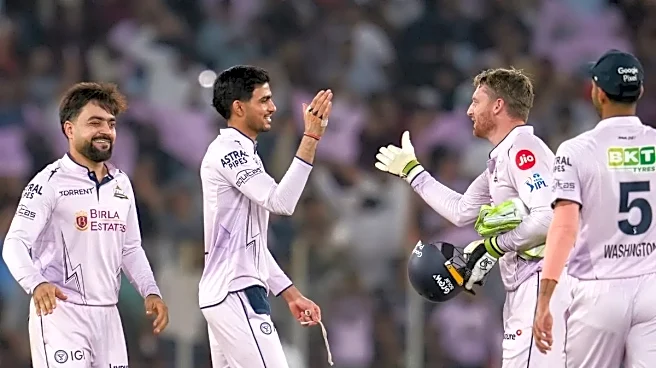
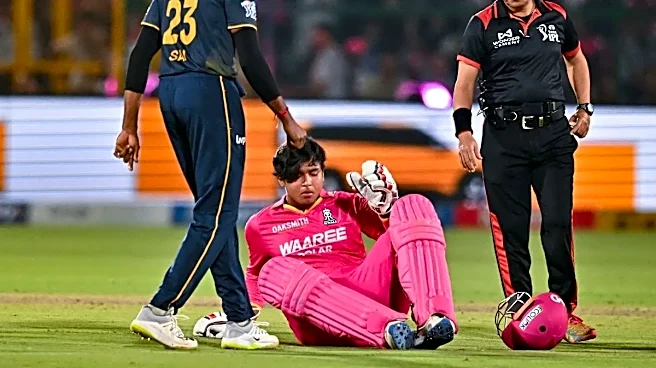
What began as a simple IPL sustainability concept has now grown into one of Indian cricket's biggest environmental campaigns.
The BCCI and Tata Group's 'Green Dot Ball' initiative has officially crossed more than 6.4 lakh tree saplings planted across India since its launch, turning every dot ball in IPL and WPL matches into a measurable environmental contribution.
The campaign has quietly become one of the IPL's most unique off-field innovations - linking on-field bowling discipline directly with real-world plantation drives.
What is the IPL Green Dot Ball campaign?
The Green Dot Ball initiative is a sustainability partnership between the BCCI and Tata Group.
The core idea is simple: every dot ball bowled during IPL and WPL matches contributes towards tree plantation drives across India.
Instead of treating dot balls as just cricket statistics, the campaign converts defensive bowling into environmental impact by associating every scoreless delivery with a fixed number of saplings planted.
The initiative first began during IPL playoffs before gradually expanding across entire seasons.
Where were the trees planted?
The plantations have been distributed across multiple Indian states, with special focus on regions suitable for long-term sapling survival.
State-wise plantation breakdown
- Assam - 3,51,937 saplings
- Kerala - 2,60,556 saplings
- Himachal Pradesh - 12,780 saplings
- Gujarat - 12,000 saplings
- Maharashtra - 10,000 saplings
The plantation drives are reportedly being managed alongside local communities to improve survival rates, especially during monsoon seasons.
Assam and Kerala have emerged as the biggest beneficiaries due to suitable climatic conditions and large-scale plantation partnerships.
Mohammed Siraj currently leading IPL 2026 dot ball race
Interestingly, the campaign has created a new layer of appreciation around defensive bowling during a high-scoring IPL era.
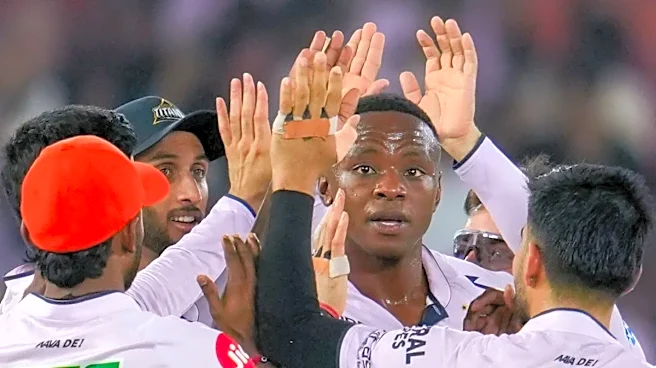
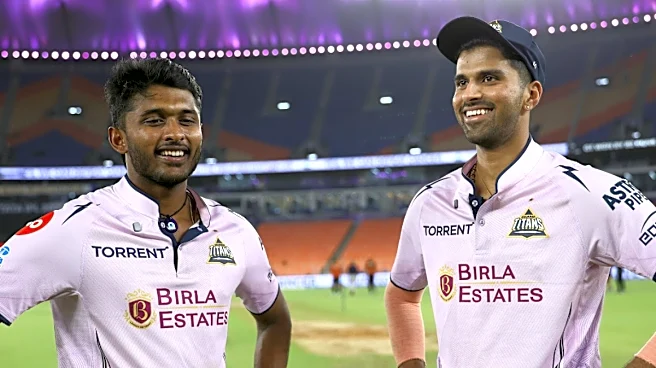
As of mid-May 2026, Gujarat Titans pacer Mohammed Siraj leads IPL 2026 for the most dot balls bowled this season with more than 130 dot deliveries.
His GT teammate Kagiso Rabada follows closely behind with 127 dot balls, while Rajasthan Royals pacer Jofra Archer has also crossed the 100-dot-ball mark.
IPL 2026 dot ball leaders
- Mohammed Siraj (GT) - 130+ dot balls
- Kagiso Rabada (GT) - 127 dot balls
- Jofra Archer (RR) - 107+ dot balls
In a season dominated by massive scores and aggressive batting, these bowlers have stood out by consistently controlling scoring rates, particularly during the powerplay.
How does the Green Dot Ball campaign work?
The campaign evolved in phases over the last few years.
IPL playoffs pilot phase (2023 and 2024)
The initiative was first tested during IPL playoff and final matches.
During this phase:
- 500 tree saplings were linked to every dot ball
- 617 dot balls were bowled across 8 matches
- 3,08,500 saplings were planted
The strong response encouraged organisers to expand the idea further.
WPL expansion increased the scale
The campaign next expanded into the Women's Premier League.
Across WPL 2024 and 2025:
- league-stage dot balls contributed 50 saplings each
- playoff dot balls contributed 100 saplings each
That phase alone resulted in:
- 3,697 league-stage dot balls
- 377 playoff dot balls
- 2,22,550 saplings planted
IPL 2025 became full-season Green Dot Ball rollout
The biggest jump came when the campaign expanded across the entire IPL season in 2025.
To celebrate the tournament's 18th edition each dot ball contributed 18 saplings
Across 74 matches:
- 5,562 dot balls were bowled
- 1,00,116 saplings were planted
Combined with earlier phases, the campaign has now crossed: 6,41,166 total tree saplings planted
Why the campaign became popular among fans
The Green Dot Ball campaign has gained strong traction because it directly connects match moments with visible environmental outcomes.
Fans now actively track:
- dot-ball counts
- bowling economy
- which teams contribute most plantations
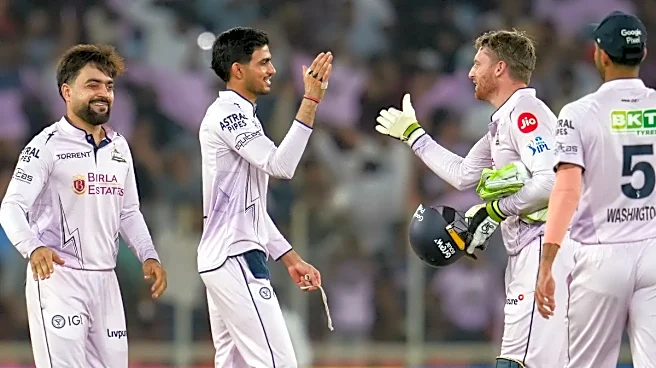
Social media reactions have especially praised bowling-heavy teams like Chennai Super Kings and Gujarat Titans for their contribution through disciplined bowling spells.
At the same time, some fans have also questioned the geographical distribution of plantations, with online discussions asking why drought-prone regions like Rajasthan have received comparatively fewer plantations despite environmental concerns there.
Green Dot Ball changing how IPL markets sustainability
The initiative also reflects how IPL franchises and sponsors are increasingly trying to integrate sustainability into cricket without disrupting the entertainment aspect of the tournament.
Instead of running separate awareness campaigns disconnected from the sport itself, Green Dot Ball ties environmental action directly to live match events - making every defensive delivery feel more meaningful.
And in IPL 2026, no bowlers have contributed more to that movement than Mohammed Siraj and Kagiso Rabada.