





Mission Objectives & Trajectory
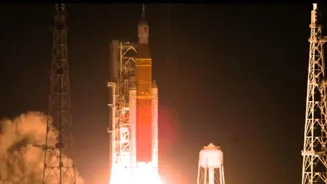
Artemis II embarks on a groundbreaking 10-day journey, not to land on the Moon, but to rigorously test deep-space systems crucial for future crewed lunar missions and beyond. Following its liftoff from
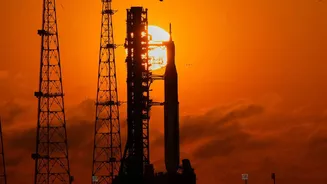
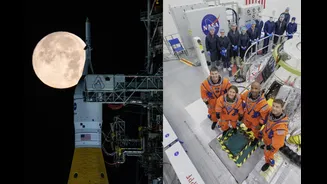
Kennedy Space Center's Launch Complex 39B, the Orion spacecraft and its four-person crew will first spend approximately 24 hours in a high Earth orbit, reaching about 230 miles above the planet. This initial phase is dedicated to thoroughly evaluating the spacecraft's life support and communication technologies in a space environment. Subsequently, the mission will execute a free-return trajectory, propelling the crew around the far side of the Moon. This daring maneuver will bring them to an astounding distance of roughly 248,655 miles from Earth, surpassing the previous record held by the Apollo 13 mission. The entire expedition will cover an impressive total distance of approximately 685,000 miles, culminating in a high-velocity re-entry into Earth's atmosphere and a splashdown in the Pacific Ocean, anticipated around April 10, 2026. This mission serves as a vital precursor, assessing the capabilities and dependability of the Space Launch System (SLS) rocket, which will inform decisions regarding the feasibility of the Artemis III lunar landing.
Launch Schedule and Viewing
NASA has officially slated the Artemis II mission for launch on Wednesday, April 1, 2026, from the Kennedy Space Center. The launch window is set to open at 6:24 PM EDT (22:24 UTC) and will remain open for a two-hour duration. Contingency plans are in place with daily backup launch opportunities scheduled through April 6, should any unforeseen weather or technical challenges arise on the primary launch day. For those eager to witness this historic event unfold live, NASA is providing comprehensive coverage across multiple platforms. Exclusive, ad-free streaming will be available on NASA+ and NASA TV, commencing at 12:50 PM EDT on April 1. Additionally, NASA's official YouTube channel will host a continuous, 24/7 live stream, featuring both live views from the Orion spacecraft and real-time commentary from mission control. For moment-to-moment updates and highlights, follow NASA's official social media channels on X (formerly Twitter), Facebook, and Instagram.
A Diverse and Historic Crew
The Artemis II mission is set to make history not only by returning humans to lunar proximity but also by showcasing an unprecedented level of diversity in its crew. For the first time, four astronauts will venture into outer space together, representing a significant milestone in inclusivity. Leading the mission as Commanding Officer is Reid Wiseman, who will spearhead humanity's first manned flight to the vicinity of the Moon in over half a century. The role of Pilot will be filled by Victor Glover, who will also achieve a significant first, becoming the first astronaut of color to journey to the Moon. Mission Specialist Christina Koch, a seasoned astronaut, is set to make history as the first woman to fly to the Moon. Rounding out the crew is Mission Specialist Jeremy Hansen, representing the Canadian Space Agency. His participation marks a pivotal moment, as he becomes the first Canadian and the first non-American to embark on a lunar mission.