






The Goddess of Penance
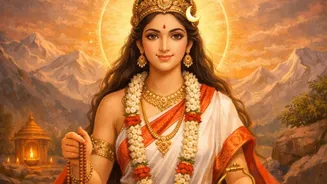
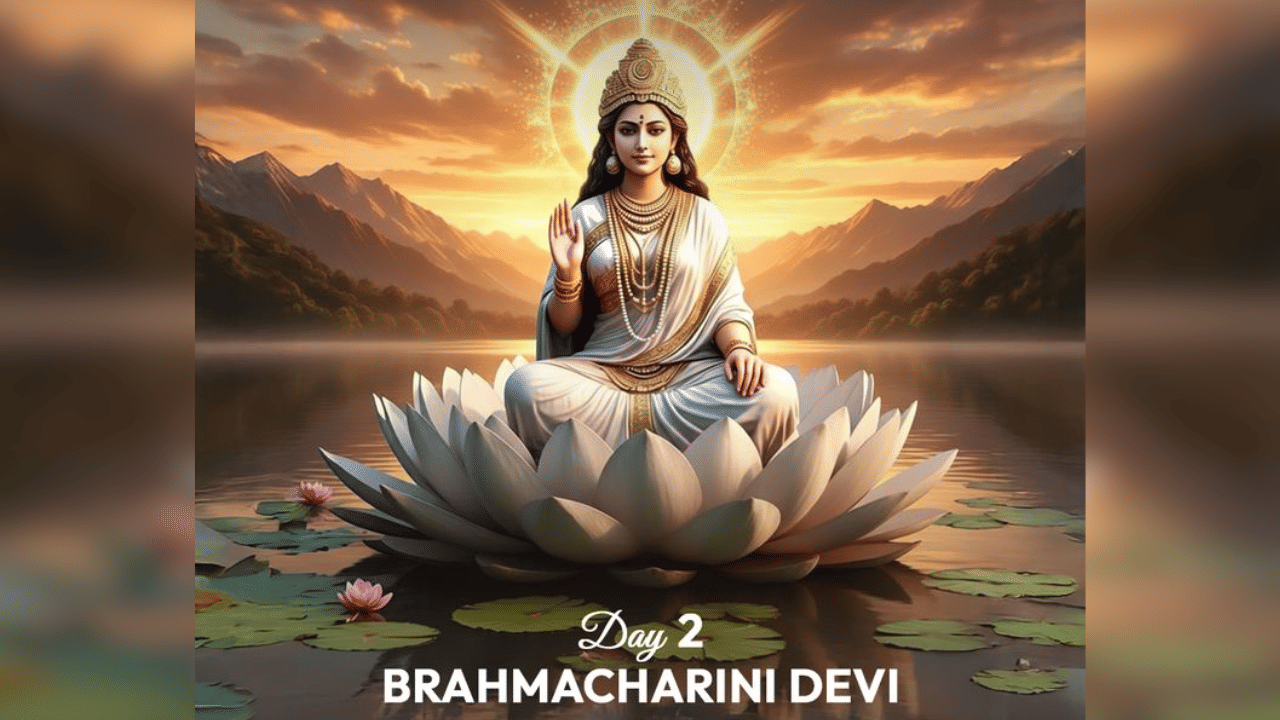
The second day of the vibrant Chaitra Navratri festival is devoted to the worship of Maa Brahmacharini, the divine form embodying penance and austerity. She is typically visualized adorned in a white sari,
holding a rosary in one hand and a water pot (kamandal) in the other. This manifestation of the Goddess is revered for bestowing knowledge, profound wisdom, and keen insight upon her devoted followers. Maa Brahmacharini is also recognized by other epithets such as Devi Tapasvini and Devi Yogni, highlighting her disciplined spiritual journey. Her worship is considered crucial for inner growth and understanding, as she embodies the power of sustained spiritual practice and self-control. This day encourages devotees to engage in sincere prayers and spiritual activities to connect with her divine grace and seek her blessings for a more balanced and enlightened life.
Maa Brahmacharini's Divine Narrative
According to ancient Hindu scriptures, Maa Brahmacharini is the reincarnation of Goddess Parvati before her union with Lord Shiva. Born as the daughter of Himalaya, she undertook severe penance to win the heart of Lord Shiva. Initially, she subsisted on fruits and flowers for a thousand years, then on herbs for a century, and for another millennium, she sustained herself on merely the broken leaves of the bilva Patra. Her devotion intensified to the extent that she eventually renounced even bilva leaves and embarked on a rigorous spiritual practice lasting thousands of years, abstaining from both food and water. This extreme austerity significantly weakened her physical form. Witnessing her unwavering dedication, the gods, goddesses, and the Saptrishi (seven great sages) were moved. They blessed her, assuring her that all her desires would be fulfilled and she would indeed marry Lord Chandramouli Shiva. Due to her ascetical practices, she earned the names Aparna and Brahmacharini, signifying her unparalleled dedication to penance.
Rituals and Mantras
On the second day of Navratri, devotees observe a rigorous fast and offer their sincere prayers to Maa Brahmacharini, seeking her blessings. The worship involves various puja rituals and spiritual activities aimed at connecting with the divine energy of the Goddess. Several powerful mantras are chanted to invoke her presence and seek her favor. Key among these are: 'ॐ देवी ब्रह्मचारिण्यै नमः॥' (Om Devi Brahmacharinyayei Namah..!!), which is a direct salutation to the Goddess. Another significant mantra is 'या देवी सर्वभूतेषु माँ ब्रह्मचारिणी रूपेण संस्थिता। नमस्तस्यै नमस्तस्यै नमस्तस्यै नमो नम:।।' (Ya Devi Sarvabhuteshu Maa Brahmcharini Rupen Sansthita, Namastasyay Namastasyay Namastasyay Namo Namah..!!), acknowledging her omnipresence in all beings. The mantra 'दधाना कर पद्माभ्याम अक्षमाला कमण्डलू। देवी प्रसीदतु मई ब्रह्मचारिण्यनुत्तमा।।' (Dadhana Kara Padmabhyamakshamala Kamandalu, Devi Prasidatu Mayi Brahmcharinyanuttama..!!) is also chanted, describing her attributes and seeking her grace. These sacred verses are believed to amplify the spiritual efficacy of the prayers and rituals performed on this auspicious day.
Astrological Significance and Color
Maa Brahmacharini is deeply connected with the Sacral Chakra (Swadhishthana Chakra) and governs the planet Mars (Mangal). Astrologically, individuals experiencing 'Mangal Dosha' in their birth charts are particularly encouraged to observe a fast and dedicate themselves to worshipping Maa Brahmacharini on this day. Her blessings are believed to mitigate the challenging effects of this planetary alignment and bring harmony. The color associated with the second day of Navratri is green, symbolizing fertility, growth, fresh beginnings, and rejuvenation. Devotees are advised to wear green attire during their worship, as this color is thought to invite peace and emotional balance into their lives. By embracing these practices, individuals aim to receive happiness, inner strength, and the power to overcome obstacles, aligning themselves with the serene yet potent energy of Maa Brahmacharini.