




Embrace Full Sun
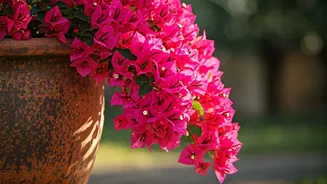
Bougainvillea absolutely demands copious amounts of sunlight to truly flourish and display its signature bursts of colour. A minimum of six hours of direct sun exposure daily is not merely a recommendation
but a fundamental requirement for this plant. When deprived of sufficient light, the bougainvillea will prioritize producing lush green foliage over developing flowers. The intense solar energy is the critical trigger that prompts the plant to shift its focus from vegetative growth to the reproductive act of blooming. Failing to provide this essential element means you'll likely end up with a verdant but flowerless specimen, missing out on its most captivating characteristic. Therefore, choosing a sunny location is paramount for a successful and vibrant bougainvillea display.
Practice Drought Stress
Contrary to what many gardening enthusiasts might instinctively do, bougainvillea thrives on a degree of dryness between watering sessions. Overwatering can significantly inhibit or even prevent flowering altogether. The plant's natural inclination is to conserve energy when its roots experience mild drought conditions. This stress encourages the plant to divert its resources towards reproduction, which translates to abundant blooms. This doesn't imply complete abandonment; rather, it means watering deeply but allowing the soil to dry out thoroughly before the next watering. This approach signals to the plant that it needs to produce flowers to ensure its propagation, leading to a more spectacular display of colour.
Prune Aggressively
It can be challenging for plant lovers to prune a seemingly healthy plant, but for bougainvillea, this is a crucial step towards encouraging profuse flowering. The plant blooms on new growth, meaning that fresh shoots emerging after pruning are where you'll find the blossoms. Older, established branches are far less likely to produce flowers. A firm recommendation is to prune back quite hard. While the plant may appear sparse and bare immediately after such an intervention, new shoots will emerge within a few weeks. These new stems will then develop buds, leading to a renewed and often more vibrant flowering period, transforming the pruned plant into a spectacle of colour.
Fertilize Lightly
Bougainvillea does not require heavy feeding; in fact, excessive fertilization can be detrimental to its blooming cycle. Many successful growers, including gardening creators, admit to rarely fertilizing their plants. When feeding is deemed necessary, the type of fertilizer is important. Opt for formulations that are low in nitrogen and high in phosphorus. Nitrogen primarily encourages leafy growth, which is counterproductive if your goal is more flowers. Phosphorus, on the other hand, is essential for supporting the flowering process. A light application of the right fertilizer will help keep the plant focused on producing blooms rather than an abundance of leaves, ensuring a more colorful and rewarding display.