


The Ubiquitous Potato
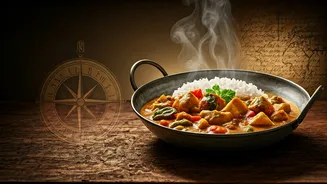
The humble potato, a cornerstone of countless Indian dishes from spicy samosas to comforting curries and tangy chaats, feels intrinsically Indian. However, this versatile tuber's origins lie far from the
subcontinent, in the Andes Mountains of South America. Cultivated by the Incas for centuries, the potato eventually made its way to Europe and subsequently to India. Its ability to absorb a wide array of spices and masalas, coupled with its affordability and filling nature, made it an instant and unparalleled culinary chameleon, seamlessly integrating into the Indian palate and pantry.
The Andean Tomato
Imagine Indian cooking without the vibrant tang of tomatoes – it's almost unthinkable. Yet, this essential ingredient also embarked on a long journey to reach Indian kitchens. Originating in the Andes and later cultivated in Mexico, the tomato was introduced to Europe by the Spanish in the 16th century. From European shores, it travelled to India, where it became a crucial element for adding flavour, acidity, and balance to a vast array of dishes, from rich gravies to zesty chutneys and sauces. Today, it's an inseparable part of Indian culinary identity, despite its decidedly American roots.
Chilli's Global Spread
The fiery kick that defines much of Indian cuisine often leads to the assumption that the chilli pepper is an indigenous ingredient. This perception, however, is a testament to India's mastery of the spice, not its origin. Chilli peppers are native to the Americas, with evidence pointing to domestication in Mexico and other parts of Central and South America. Introduced to Europe in the late 15th century, they rapidly disseminated across continents, eventually finding a fervent adopter in India. While India didn't invent the chilli, it perfected its use, integrating its heat and flavour so thoroughly that it feels like an ancient Indian culinary instinct.
Cauliflower's Western Roots
Cauliflower presents a particularly convincing Indian facade, appearing in beloved dishes like aloo gobi, rich kormas, and street food preparations. Its ubiquity in Indian households makes it easy to overlook its foreign provenance. This cruciferous vegetable actually hails from Western Asia, with historical mentions among the ancient Persians, Greeks, and Romans. Through millennia of cultivation and trade, it eventually found its way to India, where it was assimilated into the local cooking styles, becoming a familiar and cherished vegetable, albeit one with a journey spanning continents.
The Samosa's Journey
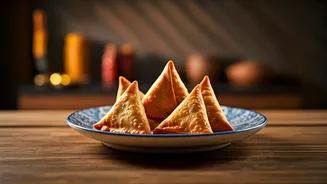
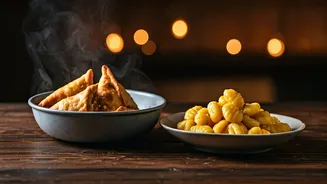
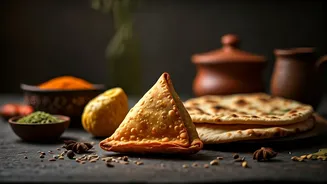
One of India's most iconic and cherished snacks, the samosa, boasts a history that begins outside the subcontinent. Traces of its ancestry can be found in medieval precursors from the Middle East and Central Asia, where similar filled pastries, known by names like 'sanbusak,' were popular. These early versions travelled along trade routes and through royal courts into India. Here, the recipe was refined and transformed into the crisp, triangular, spice-laden delight that is now synonymous with Indian tea time and hospitality, a true testament to India's culinary innovation.
Naan: A Persian Legacy
The soft, often buttery naan, a staple in Indian restaurants both domestically and internationally, carries a name and heritage rooted in Persia. Linguistic evidence suggests 'naan' derives from Persian terms for bread, and historical accounts place its presence in India as early as the 14th century. It's believed that naan travelled to India via the extensive cultural and culinary exchanges between Persia, Central Asia, and the Indian subcontinent. Over time, wheat breads baked in hot ovens were adapted to local tastes, evolving into the beloved flatbread we know today, particularly associated with North Indian cuisine and Mughal aristocracy.
Jalebi's Sweet Translocation
Jalebi, the vibrant, syrupy sweet that graces Indian festivals and sweet shops, has an ancestry that stretches westward. Historical texts indicate similar confections existed in Arabic and Persian culinary traditions under names like 'zalabiya.' These sweets traversed the Middle East before eventually arriving in India. The Indian adaptation, however, became uniquely its own – brighter, crispier, and presented in its iconic coiled form. While the concept travelled, India gave jalebi its definitive, unforgettable appearance and taste, making it an emblematic Indian dessert.