


When to Watch
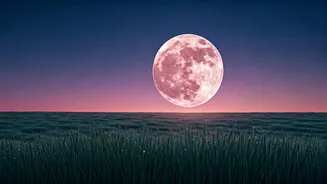
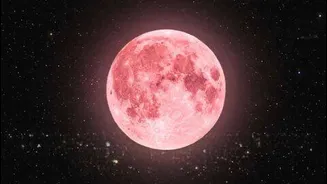
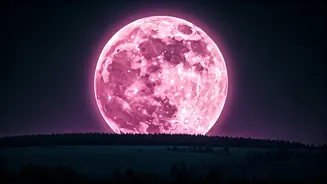
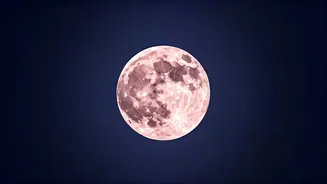
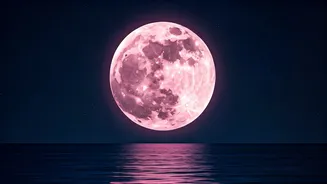
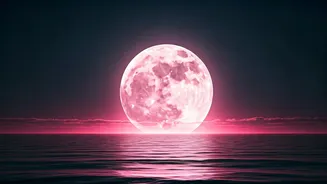
Prepare to be captivated by the first full moon of spring, traditionally known as the 'Pink Moon.' This celestial marvel will reach its zenith of illumination precisely at 3:12 am on Thursday, April 2.
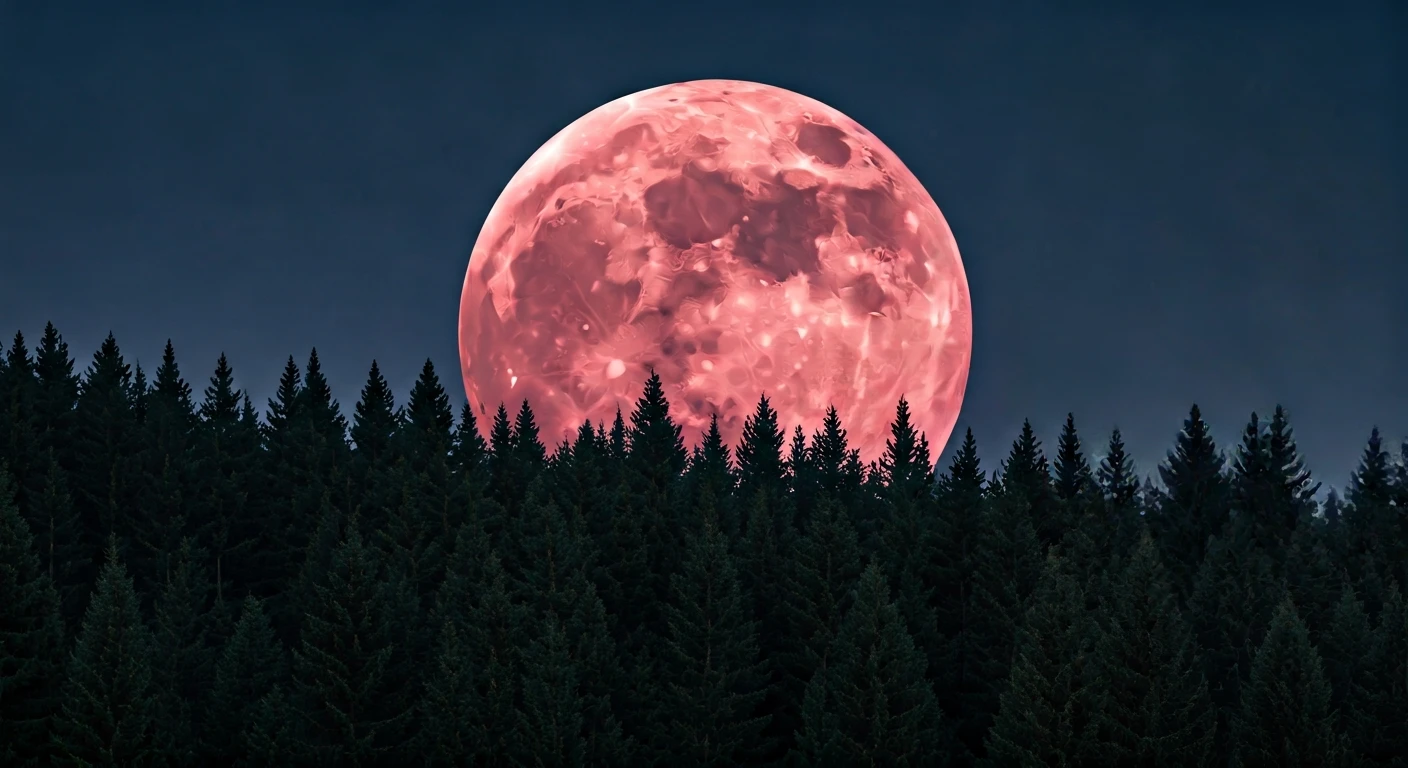
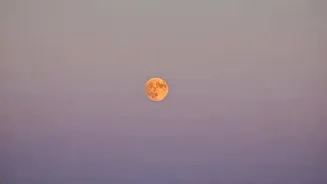
However, for the most breathtaking visual experience, observers are encouraged to cast their gaze upwards on the evening of Wednesday, April 1, as the moon begins its ascent above the horizon. This earlier viewing offers a more dramatic and picturesque perspective of the moon's emergence into the night sky, promising a memorable spectacle for all who tune in.
The Pink Moon's True Colors
Contrary to its evocative name, April's 'Pink Moon' does not manifest as a rosy orb. The appellation originates from ancient traditions of Native American tribes in the northern hemisphere, who meticulously tracked the passage of seasons through lunar cycles. This particular full moon was named to coincide with the vibrant blooming of wild ground phlox, a delicate pink wildflower that heralds the arrival of spring. Instead of pink, skywatchers will likely witness a moon displaying warm, captivating shades of orange, copper, or a rich golden hue as it hangs low in the sky.
Science Behind the Glow
The mesmerizing orange or golden tint of the rising 'Pink Moon' is a beautiful consequence of atmospheric physics. When the moon is close to the horizon, the light reflecting off its surface must traverse a significantly longer path through Earth's atmosphere to reach our eyes. This extended journey through our dense atmosphere causes shorter wavelengths of light, such as blues and violets, to be scattered in various directions. The longer wavelengths, specifically the reds, oranges, and yellows, are more resilient and manage to penetrate the atmospheric veil, bestowing upon the moon its characteristic warm, coppery glow. This phenomenon is precisely what creates the stunning colors of sunsets.
Virgo's Bright Companion
Adding to the allure of this month's lunar display is a spectacular celestial companion. As you marvel at the 'Pink Moon,' direct your attention to a remarkably bright point of light positioned in close proximity. This is not an ordinary star; it is Spica, a brilliant binary star system nestled within the Virgo constellation. The alignment of Spica so near the illuminated full moon crafts a truly dynamic and visually arresting panorama in the night sky, offering an additional layer of wonder for stargazers.
Holiday Connections
Beyond its aesthetic charm, the 'Pink Moon' carries significant cultural and religious importance, directly influencing the timing of major global celebrations. Its position in the lunar calendar is the key determinant for the dates of both Easter and Passover. The ancient rule dictates that Easter is observed on the first Sunday immediately following the first full moon after the spring equinox. Given that this year's astronomical spring equinox occurred on March 20, the April full moon serves as the critical celestial marker, officially setting the dates for these important holiday observances.
Weather Watch
The visibility of any astronomical event is, naturally, dependent on the prevailing weather conditions. For those in the UK, forecasts indicate a mixed outlook. Skywatchers in England and Wales may encounter challenges, as predictions suggest heavy cloud cover and potential rainfall on Wednesday night, possibly obscuring the view. However, the northern regions of Scotland and Northern Ireland are expected to benefit from colder air masses, offering a higher probability of clear skies and uninterrupted viewing opportunities. Regardless of the forecast, taking a moment to look skyward on Wednesday night is encouraged as spring's celestial theatre awakens.