





Patteda Anchu: Sustainable & Reversible
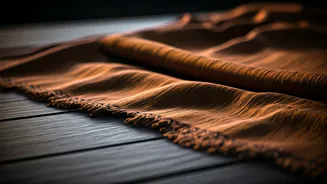
Hailing from North Karnataka and dating back to the 10th century, the Patteda Anchu saree is a testament to ancient sustainable practices. This substantial cotton drape features a striking checked pattern,
often in bold mustard or red hues for its borders. Its ingenious design makes it entirely reversible, allowing for wear on both sides without any additional fuss. What truly sets it apart is its zero-maintenance nature; it requires no fall, no lining, and can be worn without ironing, making it an incredibly practical and eco-friendly garment. Its popularity waned with the influx of affordable synthetic fabrics in rural markets, yet for a blend of environmental consciousness and effortless wear, the Patteda Anchu remains unparalleled.
Himroo & Mashru: Comfort Meets Luxury
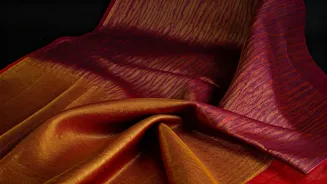
Himroo, originating from Aurangabad with historical ties to the Mughal era, is a sophisticated fusion of silk and cotton. The name itself, derived from the Persian word 'Hum-ruh,' signifies a likeness to pure silk. This weave offers the opulent appearance of heavy brocade while remaining remarkably breathable, ideal for India's warm climate. Unfortunately, the market is now saturated with imitations produced on power looms, often misrepresented as authentic Himroo. In Patan, Gujarat, weavers developed Mashru, a fabric whose name translates from Arabic to 'permitted.' This innovation arose from religious customs that prohibited Muslim men from wearing pure silk directly against their skin. The solution was a clever weave with luxurious silk on the exterior and a soft cotton lining on the interior, creating a 'comfort-luxury' experience. However, genuine handwoven Mashru has become exceedingly scarce today.
Siddipet Gollabhama's Woven Tales
The Siddipet Gollabhama saree is a narrative woven into fabric, showcasing intricate motifs of a 'Gollabhama,' a milkmaid carrying a pot. What makes this saree exceptional is that these charming depictions are not embroidered post-weaving; rather, they are meticulously integrated into the fabric itself through a complex extra-weft weaving technique. This process is extraordinarily labor-intensive. Due to the insufficient compensation for such slow and precise craftsmanship, younger generations are increasingly opting out of this traditional art, threatening its very existence.
The Kunbi Drape's Humble Roots
Beyond Goa's famous beaches, the Kunbi saree represents a significant part of its textile history, traditionally worn by tribal communities. This striking drape, characterized by its red and black checkered pattern, was woven on backstrap looms. Women wore these sarees short, often without a blouse or petticoat, facilitating easy movement for agricultural work, particularly in paddy fields. The imposition of Portuguese colonial dress codes and the advent of modern power looms nearly led to its extinction. Today, only a handful of weavers possess the knowledge of this technique, yet its breathable, minimalist aesthetic makes it remarkably well-suited for contemporary fashion trends.
Sungudi & Karvath Kati's Regional Charm
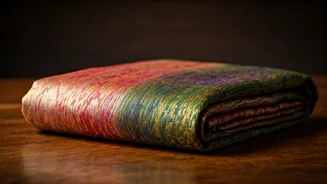
In Madurai, South India, Saurashtrian weavers developed the Sungudi saree. Authentic Sungudi production involves painstakingly tying thousands of minute knots by hand before the fine cotton fabric is dyed using natural colors. This process results in a highly breathable textile, perfect for enduring the sweltering Southern summers. Currently, most garments marketed as Sungudi are merely screen-printed imitations. Simultaneously, in Maharashtra's Vidarbha region, while Paithani sarees garner widespread attention, weavers of the Karvath Kati saree struggle for recognition. Crafted from pure, wild Tussar silk, this saree derives its name from the distinctive geometric patterns along its borders, resembling saw teeth ('karvath'). It possesses a raw, earthy elegance that distinctly stands out amidst heavily embellished silk varieties.
Beyond Banarasi: Everyday Heritage
While grand celebrations often feature opulent Kanjeevarams and intricate Banarasis, the bedrock of India's handloom legacy was actually built upon practical, locally relevant, and ingeniously designed everyday sarees. Sadly, the proliferation of inexpensive synthetic fabrics and the rapid efficiency of power looms have led to the quiet disappearance of numerous historical weaves. The allure of fast fashion may offer immediate satisfaction, but it comes at the significant cost of eroding our invaluable textile heritage. It's imperative that we recognize and revive these seven forgotten masterpieces that deserve a prominent place in contemporary style.