


Viscosity and Flow
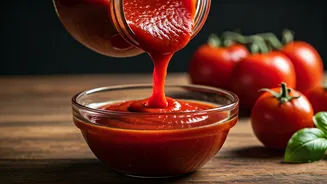
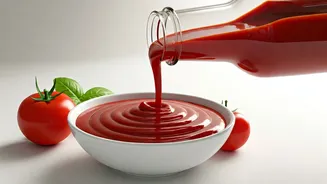
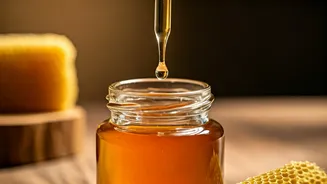
The natural density of pure honey is a key indicator of its authenticity. Genuine honey exhibits a thick, viscous consistency, causing it to pour in a slow, unbroken stream that doesn't readily fragment.
When you tilt a container of pure honey, it will flow as a cohesive ribbon, maintaining its form. In contrast, honey that has been diluted with sugar syrups or water will appear much runnier, breaking into droplets almost immediately and spreading out quickly. This stark difference in how honey behaves when poured is a readily observable trait, requiring no special equipment, and serves as an immediate visual cue to assess its purity upon purchase or use.
Appearance and Uniformity
While real honey's appearance can vary significantly, ranging from a light golden hue to a deep amber, and may even seem slightly cloudy or uneven, adulterated versions often present an almost unnaturally perfect facade. This excessive uniformity—a clear, consistent colour and texture throughout—can be a tell-tale sign that the honey has been processed or mixed with syrups to achieve a flawless look. The natural variations in colour and clarity are a result of the floral source, season, and processing methods, and if your honey looks identically polished every time, it warrants closer inspection.
The Crystallisation Clue
Crystallisation is not a sign of spoilage but rather a natural characteristic of pure honey, attributed to its glucose content. Over time, especially in cooler environments, honey will naturally thicken and may develop a grainy texture. This transformation is actually a positive indicator of authenticity. Fake or heavily processed honey, however, is often treated with additives to prevent this natural crystallisation, thus remaining liquid indefinitely. If your honey never hardens or changes its texture, it could be an indication that it's not entirely pure.
Water Test for Purity
A simple yet effective method to test honey's purity involves a glass of water. When pure, dense honey is dropped into water, it tends to sink to the bottom and retain its shape for a while before slowly dissolving. This is because its high density prevents it from dispersing quickly. Adulterated honey, which has a lower density due to added sugars and water, will typically dissolve almost immediately upon contact with water, creating a cloudy mixture that spreads throughout the glass. This visual observation provides an instant, accessible assessment of potential adulteration.
Flame and Foam Indicators
Two additional, though sometimes less definitive, tests can offer further insights. The flame test involves dipping a cotton wick into honey; pure honey, having low moisture content, should ignite and burn. Adulterated honey, particularly if mixed with water, may struggle to burn or produce crackling sounds. Furthermore, pure honey typically exhibits minimal foaming. Excessive froth or continuous bubbling on the surface can suggest fermentation or the presence of added substances, serving as a potential red flag for adulteration or improper storage.
Aromatic and Olfactory Check
Trust your senses, including your sense of smell, when evaluating honey. Pure honey possesses a subtle yet distinct floral aroma, the scent of which varies depending on the origin of the nectar. This natural fragrance is typically mild but noticeable. In contrast, adulterated honey might lack any discernible scent or may carry an artificial fragrance from added flavourings, sometimes even smelling chemically sweet. While smell alone isn't a conclusive test, a strong, natural aroma can support the assessment of purity when combined with other observable characteristics.
Understanding Adulterants
The primary method of adulterating honey involves mixing it with cheaper sugar syrups, such as glucose, fructose, or high-fructose corn syrup, to artificially increase its volume and reduce production costs. While these syrups mimic the sweetness of natural honey, they drastically diminish its nutritional value and beneficial properties. In some instances, artificial colours and flavours might also be incorporated to enhance its appearance and taste, ultimately deceiving consumers into believing they are purchasing a genuine, wholesome product.
Health Implications
Consuming adulterated honey carries significant health implications, as it deprives individuals of the genuine health benefits associated with pure honey. These benefits include essential enzymes, antioxidants, and antibacterial properties that are often absent or significantly reduced in fake honey. Regular intake of such diluted or chemically altered products can lead to increased consumption of sugars and potentially unwanted chemical additives, which over time can negatively impact overall health and well-being, underscoring the importance of ensuring honey's authenticity.