



Understanding Holi's Date
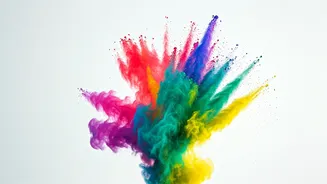
Every year, the vibrant festival of Holi, marking the advent of spring and celebrated with a riot of colors, brings a common query regarding its exact dates. For 2026, the main Holi festivities will take
place on Wednesday, March 4th. This joyful occasion, deeply embedded in Indian culture, is preceded by Holika Dahan, a significant ritual observed on the evening prior. The confusion often arises from the lunar calendar and specific astrological considerations that determine the precise timing of these events. Holi is a festival that transcends social barriers, encouraging people to shed animosities and reconnect through shared revelry and childlike playfulness. Its celebration in the Hindu month of Falgun signifies renewal and the triumph of good over evil.
Holika Dahan Auspicious Timing
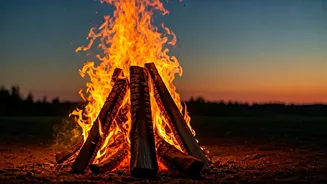
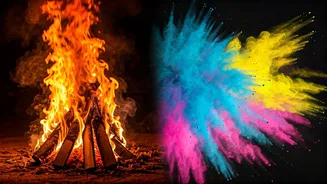
The sacred ritual of Holika Dahan, also known as Chhoti Holi or Holika Deepak, is scheduled for Tuesday, March 3, 2026. According to traditional Hindu scriptures, this bonfire ceremony should ideally occur during the Pradosh Kaal, which begins after sunset, while the Purnimasi Tithi (full moon day) is still prevailing. The specific timing for Holika Dahan in 2026 is between 06:22 PM and 08:50 PM, lasting for approximately 2 hours and 28 minutes. It is crucial to note that Bhadra, an inauspicious period, prevails during the initial part of the Purnimasi Tithi. The Bhadra Punchha period extends from 01:25 AM to 02:35 AM, followed by Bhadra Mukha from 02:35 AM to 04:30 AM. Therefore, auspicious activities, including Holika Dahan, should be performed outside of these Bhadra timings, aligning with the Pradosh Kaal. The Purnima Tithi commences on March 2, 2026, at 05:55 PM and concludes on March 3, 2026, at 05:07 PM, guiding the determination of Holika Dahan's timing.
Historical Roots of Holi
The origins of Holi are believed to stem from ancient Vedic fire rituals meant to purify and celebrate the arrival of spring and the harvest season. Early texts like the Rigveda refer to 'Holaka,' which involved lighting bonfires during Phalguna (February-March) to ward off winter's negativity and welcome spring's renewal. Over time, as the Puranic era dawned, compelling narratives were woven into the festival's fabric, adding layers of meaning and drama. A prominent legend recounts the story of Prahlad, the devoted son of the demon king Hiranyakashipu. Defying his father's tyrannical rule, Prahlad continued to worship Lord Vishnu. His aunt, Holika, who possessed a boon of fire immunity, attempted to burn Prahlad by sitting with him in a pyre. However, through divine intervention, Prahlad emerged unharmed while Holika perished, establishing the practice of Holika Dahan as a symbol of divine justice and the triumph of devotion. Furthermore, the playful antics of Lord Krishna during his youth have inspired many folk tales associated with Holi, contributing to its joyous and spirited nature.
Holi Celebrations Across India
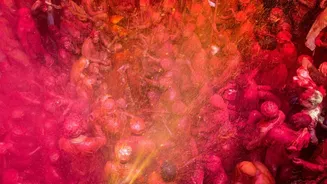
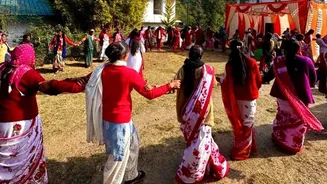
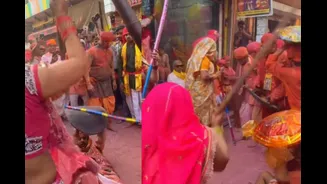
While the core spirit of Holi remains consistent, regional variations add unique flavors to its celebration across India. The main events typically involve Holika Dahan the night before, where a bonfire is lit with offerings like ghee, cow dung cakes, and coconuts, accompanied by prayers for familial well-being. The following day, known as Rangwali Holi, commences with people smearing colors on idols at home or in temples, offering Prasad to their Kul Devta (family deity), and then extending the festivities outdoors with friends and relatives. Many communities gather in the evening to seek blessings, foster goodwill, and share delicious festive meals. Examples of distinct regional celebrations include Bengal's Basanta Utsav, characterized by rice-flinging, and the famous Lathmar Holi of Braj, where women playfully beat men with sticks. These diverse traditions underscore Holi's rich cultural tapestry, while the universal themes of joy, renewal, and camaraderie remain central to the festival.