






UV Index Alerts Issued
The Kerala State Disaster Management Authority (KSDMA) recently issued a significant public advisory due to concerning Ultraviolet (UV) index readings observed throughout the state over the preceding 24
hours. Data shared by KSDMA indicated that several locations experienced UV index levels exceeding 8, a threshold classified as an 'orange alert.' Specifically, areas like Kottarakkara in Kollam, Konni in Pathanamthitta, Chengannur in Alappuzha, Changanassery in Kottayam, and Munnar in Idukki recorded these high levels. Furthermore, a 'yellow alert,' signifying a UV index between 6 and 7, was noted in Kalamassery in Ernakulam, Thrithala in Palakkad, Ponnani in Malappuram, and Mananthavady in Wayanad. These alerts serve as a crucial warning to the public about the intensity of the sun's rays in their vicinity.
Health Risks Identified
The KSDMA has explicitly warned about the potential health detriments associated with prolonged exposure to intense ultraviolet radiation. These risks encompass a range of issues, including acute sunburns that can cause significant discomfort and skin damage. Beyond immediate effects, extended exposure can contribute to the development of various skin disorders over time. Ocular health is also a major concern, with potential for eye problems such as cataracts and other vision impairments. The authority emphasized that these health issues are not limited to casual sunbathers; individuals engaged in outdoor professions or activities are particularly vulnerable. Consequently, the advisory aims to raise awareness and encourage preventative actions to mitigate these health hazards.
Peak Exposure Times & Vulnerable Groups
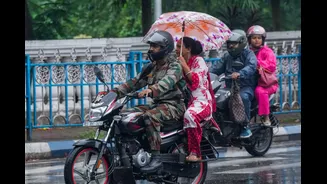
Understanding the timing of maximum UV intensity is crucial for effective protection. KSDMA highlighted that high UV index levels are typically observed during the period between 10 am and 3 pm. During these hours, direct exposure to sunlight should be minimized for extended durations. Certain groups of people have been specifically identified as requiring extra caution due to their occupations, health conditions, or lifestyle. This includes individuals who work outdoors for prolonged periods, such as fishermen involved in both marine and inland water activities, and those working in water transport. Bike riders, tourists, individuals with pre-existing skin conditions, people with albinism, those suffering from eye ailments, cancer patients, and individuals with compromised immune systems are also strongly advised to take stringent precautions. The advisory serves as a vital reminder for these vulnerable populations to be extra vigilant.
Protective Measures Advised
To combat the elevated UV levels, the KSDMA has put forth a set of practical and essential protective measures for the public. When venturing outdoors during daylight hours, it is strongly recommended to utilize protective gear such as hats, umbrellas, and sunglasses. These items provide a physical barrier against direct sunlight. Furthermore, wearing cotton clothing that offers full body coverage is advised, as it can significantly reduce skin exposure to harmful UV rays. The authority also stressed the importance of seeking respite in shaded areas. Taking breaks in shaded spots while traveling or participating in outdoor activities can help lower cumulative sun exposure and prevent overheating. Adhering to these simple yet effective strategies can greatly contribute to safeguarding personal health against the sun's intense radiation.
Factors Influencing UV Intensity
Several environmental factors contribute to the intensity of ultraviolet radiation levels, and the advisory touched upon these to provide a more comprehensive understanding. It was noted that UV index levels tend to be inherently higher in geographical areas characterized by high altitudes and tropical climates, such as Kerala. The presence of clear skies, meaning minimal to no cloud cover, further exacerbates UV exposure, as clouds can act as a partial shield. Additionally, the surrounding environment plays a role; areas situated near large bodies of water and those with sandy surfaces can experience amplified UV intensity. This is due to the phenomenon of reflection, where ultraviolet rays bounce off these surfaces, increasing the overall exposure for individuals in the vicinity. Understanding these contributing elements helps in appreciating why certain conditions might lead to higher UV readings.