




Bridging the Gap
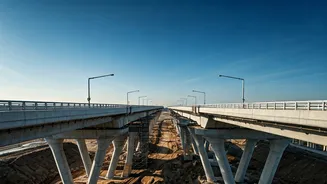
The much-anticipated 'Missing Link' on the Mumbai-Pune Expressway, spanning 13.3 kilometers, has officially opened its gates, connecting Khopoli on the Mumbai side to Kusgaon near Lonavla. This ambitious
project was conceived to circumvent the notoriously winding and hazardous Khandala ghat section, a route that has historically been a bottleneck for traffic and a source of safety concerns. Developed at a substantial cost of approximately Rs 6,695 crore, construction commenced in 2019 and, despite facing considerable challenges including a slowdown due to the Covid-19 pandemic and adverse weather conditions like heavy rainfall and strong winds in the ghat region, as well as global supply chain disruptions, has now reached completion. The project signifies a major leap forward in infrastructure development for one of India's busiest inter-city corridors, promising a smoother and more efficient travel experience for countless commuters.
Tunneling Through Asia
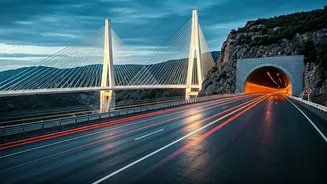
A remarkable feat of modern engineering, the 'Missing Link' incorporates an impressive twin tunnel system. The primary tunnel extends for an astounding 8.9 kilometers, positioning it as one of the longest road tunnels not just in India, but across the continent of Asia. Complementing this, a second tunnel measures 1.9 kilometers in length. Both tunnels boast a significant width of 23.5 meters, a dimension that could potentially secure a place in the Guinness World Records for the widest road tunnel. These tunnels are integral to bypassing the challenging ghat sections, offering a safe and high-speed passage. The construction involved sophisticated techniques to ensure structural integrity and public safety, making them a testament to advanced civil engineering capabilities.
Iconic Cable-Stayed Bridge
The 'Missing Link' also features an awe-inspiring 650-meter cable-stayed bridge, a structure that has earned the title of India's longest road cable-stayed bridge. This majestic bridge gracefully spans over Tiger Valley, soaring to a height of over 180 meters, placing it among the tallest road bridges in the nation. Its construction utilized cutting-edge methodologies, including jump formwork, which allowed for efficient and precise building of its towering pylons and deck. This bridge not only serves as a crucial artery for the new route but also stands as a significant architectural and engineering landmark, enhancing the visual landscape of the region and showcasing advanced construction techniques.
Travel Time Revolution
The impact of the 'Missing Link' on travel time between Mumbai and Pune is expected to be transformative. Commuters can anticipate a reduction of at least 30 minutes on their journeys, with even greater savings possible during peak traffic hours or holiday periods. Beyond just saving time, the new alignment also shortens the overall distance by approximately 6 kilometers. This efficiency translates into quicker, more fluid, and notably more predictable travel experiences. Furthermore, a significant benefit for users is that there will be no additional toll charges to utilize this new, advanced stretch of the expressway. The existing toll plazas at Talegaon and Khalapur will continue to operate with their current rates, meaning passengers will enjoy the advantages of faster transit without incurring any extra financial burden.
Phased Access Rollout
In its initial phase of operation, authorities have implemented a controlled access policy for the 'Missing Link'. For the first six months, only cars and buses will be permitted to use the new stretch. This deliberate, phased approach is designed to meticulously study traffic patterns, user behavior, and overall safety performance before expanding access. Heavy vehicles and those transporting hazardous materials will continue to navigate the older, existing ghat section during this period. This cautious strategy will allow for fine-tuning operational procedures and addressing any unforeseen issues, ensuring a robust and secure environment for all road users as the project transitions to full operational capacity. A decision on allowing goods vehicles will be made after a thorough evaluation of traffic and safety conditions in the early months.