






The Rail Network's Exception
In a nation where railways form the backbone of long-distance travel, connecting vast landscapes from arid deserts to soaring mountains, it's surprising to find a state that remains off the rail map. Indian
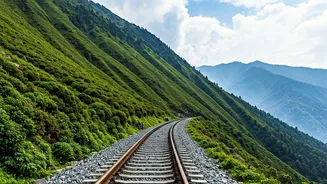
Railways, a colossal network globally, typically ensures accessibility across diverse terrains. However, Sikkim, nestled in the Himalayas, stands as a unique exception. Presently, no operational railway lines or stations exist within this northeastern gem, positioning it as India's sole state without direct rail connectivity. This distinctive status is primarily a consequence of Sikkim's formidable geography. The state is characterized by rugged mountainous landscapes, deep valleys, and ecologically sensitive areas, making the construction of railway lines an incredibly intricate and challenging undertaking, often requiring extensive tunneling. This isolation, however, is not a permanent fixture. A significant railway project is underway to bridge this gap, connecting Sevoke in West Bengal to Rangpo in Sikkim. This ambitious endeavor involves building approximately 44-45 kilometers of track through the challenging Himalayan terrain, featuring substantial tunneling and bridge construction along the Teesta River valley. It is recognized as one of the nation's most complex railway projects. Substantial progress has been made, with a considerable portion of the work completed, and the line is anticipated to be operational by 2027. Once completed, it promises to dramatically enhance connectivity to Sikkim and has plans for further extensions towards Gangtok, which will undoubtedly invigorate tourism and improve regional accessibility.
Reaching Sikkim: Practical Avenues
For travelers eager to explore the beauty of Sikkim, several practical routes exist despite the absence of direct rail access. The most popular and recommended method involves a combination of train and road travel. This journey typically begins with a train ride to New Jalpaiguri (NJP) railway station in West Bengal, which is well-connected to major Indian cities like Delhi and Kolkata. From NJP, the adventure continues by road. Shared taxis, buses, and jeeps are readily available in the nearby city of Siliguri, forming the gateway to Sikkim. The scenic drive from Siliguri to Gangtok, the state capital, covers a distance of around 120-130 kilometers and takes approximately four to five hours, winding along the picturesque River Teesta. Alternatively, for those seeking a faster ingress, air travel combined with road transport offers a viable option. Sikkim boasts its own airport in Pakyong, situated about 30 kilometers from Gangtok. However, flight operations to Pakyong can be limited and are often dependent on favorable weather conditions. A more reliable air route is to fly into Bagdogra Airport, also in West Bengal, which enjoys better connectivity with major Indian metros. From Bagdogra, the journey to Gangtok proceeds by road, mirroring the travel time from Siliguri. For the avid road traveler, Sikkim offers an immersive experience. The state is well-connected by road networks to West Bengal and other neighboring regions, with most routes originating from Siliguri. The drive itself is a highlight, offering a gradual and stunning transition from the plains to the majestic mountain landscapes, making it a cherished experience for bikers and road trip enthusiasts. In essence, while the lack of railway connectivity might seem like a drawback, it has paradoxically helped Sikkim preserve its tranquil and remote charm. The journey to Sikkim is more than just reaching a destination; it is an integral part of the experience, marked by a delightful shift in environment, culture, and pace of life. Even with the ongoing railway construction, reaching Sikkim remains an accessible and rewarding endeavor through its well-established road and air networks.