







Magnesium: The Basics
Magnesium is a key player in countless processes within your body, supporting nerve and muscle function, regulating blood sugar levels, and contributing to bone health. It also helps in the creation of
protein, DNA, and RNA. Despite its significance, a considerable number of people do not meet their daily magnesium requirements. Factors like poor diet, certain medications, and specific health conditions can lead to deficiencies. Symptoms of magnesium deficiency can include muscle cramps, fatigue, and even more severe issues. Ensuring an adequate intake is crucial, and dietary adjustments offer a practical solution for improving your magnesium levels and enhancing your health. By incorporating magnesium-rich foods into your meals, you can take a proactive step towards optimal wellness.
Leafy Green Powerhouses
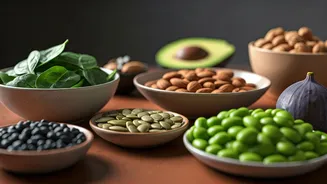
Leafy green vegetables are excellent sources of magnesium, with spinach leading the pack. One cup of cooked spinach provides a substantial amount of magnesium. Other greens, such as kale and collard greens, also offer a good dose. These vegetables are also packed with vitamins A, C, and K, as well as fiber, making them a nutrient-dense choice. Incorporating these greens into your diet is easy; add them to salads, smoothies, or cook them as a side dish. The mild flavors of some greens allow them to blend seamlessly into various dishes, making it simple to increase your magnesium intake through your regular meals.
Nuts and Seeds Abound
Nuts and seeds are convenient and nutritious snacks that boost magnesium intake. Almonds, cashews, and peanuts are particularly high in magnesium, providing a satisfying crunch and numerous other nutrients. Seeds like pumpkin and chia seeds also make a significant contribution. A handful of almonds or a sprinkle of pumpkin seeds on your yogurt or salad can significantly increase your daily magnesium consumption. Besides magnesium, these foods also offer healthy fats, protein, and fiber, contributing to heart health and sustained energy. Nuts and seeds can easily be added to your diet and provide a nutritional boost in a quick and simple way.
Legumes' Mighty Role
Legumes, including beans and lentils, are valuable sources of magnesium. Black beans, edamame, and kidney beans are all excellent options. Lentils are another great addition to your diet. These foods are also rich in fiber and protein, making them satisfying and beneficial for digestive health. Preparing legumes can be as easy as adding them to soups, stews, or salads. They are versatile, inexpensive, and readily available, making them a practical choice for boosting magnesium intake while adding variety to your meals. Their complex carbohydrates also offer sustained energy release.
Whole Grains Shine
Whole grains are more than just a source of carbohydrates; they also contain magnesium. Quinoa, brown rice, and oats offer significant amounts of this essential mineral. When choosing grains, opt for the whole grain versions to maximize their nutritional value. Whole grains offer a combination of fiber, which aids digestion, and various vitamins and minerals that boost overall health. Substituting white rice with brown rice or starting your day with a bowl of oatmeal is a simple way to increase your magnesium consumption. Making the shift to whole grains not only increases magnesium intake but also provides additional health benefits.
Dark Chocolate Delight
For those with a sweet tooth, dark chocolate is a treat that also delivers magnesium. Choose dark chocolate with a high cocoa content, typically over 70%, for the most benefit. While dark chocolate offers a good source of magnesium, it’s also rich in antioxidants and can boost mood. Enjoying a small piece of dark chocolate can be a delicious way to supplement your magnesium intake. However, it's essential to consume it in moderation due to its calorie content. Dark chocolate is a delightful way to satisfy cravings and boost your magnesium levels.
Tofu: A Versatile Choice
Tofu, made from soybeans, is a versatile food rich in magnesium. It's also a complete protein, meaning it contains all the essential amino acids your body needs. Tofu can be used in a wide variety of dishes, from stir-fries to smoothies, making it a flexible addition to your diet. The texture of tofu makes it easy to adapt to various cooking styles, absorbing the flavors of the sauces and ingredients it is paired with. Including tofu in your diet not only increases your magnesium intake but also provides essential protein and contributes to overall nutritional diversity. Tofu provides a simple way to add magnesium-rich foods to your meals.