





Fabric Suitability Check
Before embarking on your home dry cleaning journey, it's crucial to ascertain if your garments can withstand this treatment. Begin by scrutinizing the care label; if it explicitly states 'Dry clean only,'
proceed with extreme caution. A practical test involves dabbing a hidden section of the garment, like an inner pocket lining, with a clean, damp white cloth. Observe closely for any dye transfer onto the cloth. If color bleeds, it's a clear indication that the item should be entrusted to a professional cleaner. Furthermore, certain materials are inherently unsuitable for home cleaning; these include leather, suede, and fur. These require specialized treatments and oils that are best administered by experts to prevent irreversible damage.
Gentle Hand-Washing Technique
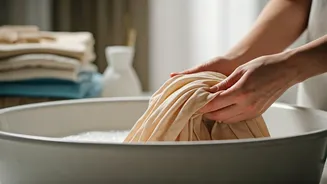
For items deemed safe for home cleaning, the next step involves a gentle hand-washing process. Prepare your sink by filling it with cool water; avoid hot water, as it can lead to unwanted shrinkage, especially in delicate fibers like wool and silk. When selecting a cleaning agent, opt for a mild liquid detergent, such as a baby shampoo or a detergent specifically formulated for wool. Use only a small amount to minimize residue. Submerge the garment and gently swish it around in the water. It is imperative to refrain from rubbing or scrubbing the fabric against itself or other items, as this can mar the material's finish. Once cleaned, thoroughly drain the soapy water and rinse the garment repeatedly with cool water until all traces of detergent bubbles are completely eliminated.
Towel Drying Method
To preserve the shape and integrity of your washed garments, employ the 'towel roll' drying trick. Absolutely avoid wringing out wet clothes, as this action strains and twists the fabric fibers, leading to stretching and distortion. Instead, lay the damp garment flat on a clean, dry white towel. Then, carefully and tightly roll the towel with the garment encased inside. Once rolled into a compact cylinder, gently press down on it. This action effectively transfers excess moisture from the clothing into the absorbent towel. Finally, unroll the towel and place the garment flat on a drying rack. Hanging wet items, particularly those with shoulder seams, can cause them to develop unsightly 'ears' or bulges around the shoulder area.
Utilizing Machine Steam Settings
Modern washing machines offer innovative features that can significantly simplify the garment care process. If your clothes are not visibly soiled but carry unpleasant odors from cooking or smoking, you can leverage the 'Steam Refresh' or 'Air Wash' cycles available on many newer models. These settings are designed to effectively neutralize smells without a full wash. When you do need to wash delicate items in your machine, it is highly recommended to place them inside a mesh laundry bag for added protection. Then, select the 'hand-wash' or 'delicates' cycle, which utilizes gentler agitation and lower spin speeds, ensuring your fragile garments are cleaned safely.
Post-Wash Finishing Touches
After your garments have been washed and dried at home, a few finishing touches can elevate their appearance to rival professional dry cleaning. For wrinkle removal, prioritize steaming over ironing, especially for sensitive materials like silk. Traditional flat irons, due to their high heat, can leave shiny marks on silk. A handheld steamer, however, effectively removes creases while also sanitizing the fabric. When steaming, maintain a distance of about one inch from the fabric surface. The steam will instantly relax wrinkles and refresh the material. After steaming, allow the garment to hang in a well-ventilated area to cool down completely before storing it back in your wardrobe.