







The Brain's Social Editor
It's a common experience: the moment the lights dim, your mind kicks into overdrive, meticulously re-examining every word, pause, and glance from recent conversations. This isn't just idle overthinking;
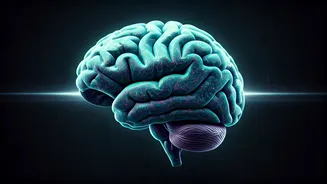
it's a deeply ingrained biological process. During waking hours, our brains are constantly processing a barrage of information, filtering out the mundane to focus on immediate tasks. However, as external stimuli diminish and the body prepares for rest, a specific brain network, known as the default mode network (DMN), becomes more prominent. This network is intimately linked with introspection and the consolidation of memories. When social interactions, which are crucial for survival, carry even the slightest hint of tension or uncertainty, the DMN flags them for closer examination. This is because our evolutionary past has hardwired us to prioritize social cues for safety and belonging. Consequently, seemingly minor social awkwardness can trigger a low-level stress response, keeping the brain in a state of heightened alert even when it should be winding down. Dr. Madhukar Bhardwaj notes that this 'night-time replay' is the brain's attempt to process unresolved social stress and potential threats, amplified by the quiet of the night.
Memory Consolidation and Loops
The nightly replay of conversations coincides with a critical period for memory processing. During the initial stages of sleep, our brains engage in sorting and consolidating the day's events, with emotional memories often taking precedence. If a conversation, however brief, contained elements of stress or uncertainty, it gets prioritized for this reprocessing. Research indicates that sleep is vital for managing emotional memories. The challenge arises when this processing transitions from subconscious consolidation to conscious, exhaustive thinking. Instead of simply filing away the memory, the brain gets trapped in an active thought loop. This replay isn't a neutral recollection; it's often tinged with criticism, a focus on minute details, and subtle distortions. This occurs because the brain is not merely recalling but actively simulating potential future scenarios. It's engaging in 'mental time travel,' running 'what if' analyses to prepare for subsequent interactions, a phenomenon linked to predictive processing. The ultimate aim is protection and learning, but this can inadvertently lead to rumination and a feeling of being stuck, especially when uncertainty, self-doubt, or a lack of perceived closure fuels the cycle.
Breaking the Cycle
While occasional reflection on conversations is normal, the issue arises when this replay becomes repetitive and intrusive, forming a disruptive loop. This cycle is fueled by a trio of internal states: uncertainty about how an interaction was perceived, self-doubt regarding one's own contributions, and a lingering lack of resolution. The brain fundamentally dislikes unfinished narratives and will persistently circle back to these unresolved moments, even if no definitive answer exists. The key to breaking this pattern lies not in stopping all thought, but in signaling to the brain that it is safe to disengage from these constant analyses. Simple yet effective strategies can help reset this cognitive tendency. Writing down lingering thoughts before bed provides an external outlet for them, allowing them to 'rest' on paper rather than in your mind. Practicing slow, deep breathing techniques can lower cortisol levels, signaling to your body that it's time to relax. Establishing a mental boundary, such as consciously telling yourself 'this can wait until morning,' can reduce the perceived urgency of these thoughts. Over time, consistently applying these techniques helps retrain the brain to understand that not every social detail requires immediate, nocturnal resolution, fostering a more peaceful transition to sleep.
Impact on Well-being
The persistent replaying of conversations at night extends its influence beyond just sleep disruption. Chronically, this pattern can contribute to increased anxiety, diminished self-confidence, and a ingrained habit of negative self-evaluation. A subtle but significant shift occurs where the brain begins to anticipate social stressors, making future interactions feel more fraught than they objectively are. This heightened vigilance, while rooted in a protective instinct, can become detrimental to overall mental health. However, it's important to recognize that this tendency also highlights the brain's inherent drive to learn, adapt, and care about social connections. The challenge lies in redirecting this powerful processing ability towards more constructive outcomes. By understanding the underlying mechanisms, individuals can begin to harness this drive more effectively, transforming a source of nighttime distress into a catalyst for personal growth and improved social navigation, ultimately leading to a more balanced and resilient state of mind.