






![[WATCH] T20 World Cup 2026 Warm-ups: Ishan Kishan steals the show with outrageous off-balance six in IND vs SA clash](https://g-mob.glance-cdn.com/public/fc/image/m1MBlwiQwYM0.webp)
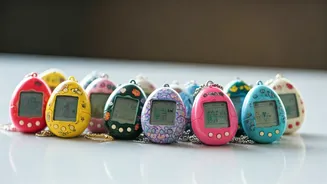
Tamagotchis and Furby
In the vibrant era of the 90s, the digital pet craze swept across the globe, and the Tamagotchi became a coveted item. These handheld virtual pets demanded constant care, from feeding to cleaning up after
them. Failure to properly tend to the Tamagotchi resulted in a sad beep and the demise of the digital pet. Parallel to this, the Furby, with its wide eyes and quirky mannerisms, also captivated youngsters. These electronic creatures, capable of learning and speaking, were not just toys; they were companions that many 90s children longed to have. Today's Gen Z, accustomed to sophisticated digital interactions and virtual worlds, might find the dedication required for these simple digital companions a bit baffling, used to the immediacy of modern technology. The thrill of nurturing a virtual pet has largely been replaced by more advanced virtual experiences.
Dial-up Internet Access
Remember the distinctive sound of a dial-up modem? In the 90s, gaining access to the internet was a drawn-out process. Connecting meant a phone line was occupied, and the wait for the squealing, screeching sound of the modem to connect could be agonizing. After the connection was secured, exploring the digital world unfolded at a snail's pace. Websites loaded slowly, and online activities such as downloading files or streaming videos were almost impossible. Today, Gen Z, used to high-speed internet and instant connectivity, probably cannot fathom the concept of waiting for minutes just to load a single webpage. The dial-up experience is now a distant memory, a marker of a time when the internet was still in its infancy.
CD Players and Walkmans
Before the age of streaming services and digital music libraries, the portable music player was the pinnacle of personal entertainment. The Sony Walkman, with its cassette tapes, ruled the 80s and was still a big deal in the early 90s. As the decade progressed, CD players became the must-have item. Carrying CDs, however, meant carrying a bulky player and a collection of discs. Gen Z, accustomed to the convenience of smartphones and streaming music, may find the concept of lugging around physical media and a dedicated player cumbersome. For them, music is available instantly, a stark contrast to the physical limitations faced by the 90s generation.
Landline Telephones
In the 90s, landline telephones were the primary means of communication in homes. Families shared a single phone line, and calls were often made from the kitchen or living room. Call waiting, answering machines, and the annoyance of a busy signal were everyday experiences. The lack of privacy and the constraints on mobility stand in sharp contrast to today's always-on, always-connected mobile world. The concept of asking for someone's landline number feels archaic. Gen Z has grown up in a world where mobile phones are ubiquitous, and landlines are more of a relic than a necessity.
Beanie Babies
The 90s also saw the emergence of a collecting craze centered around Beanie Babies. These plush toys, with their bean-filled bodies, were marketed as collectibles, and some rare ones sold for exorbitant prices. Kids and adults alike engaged in the pursuit of completing their collections, trading and guarding their beanbags jealously. Today's younger generation may not grasp the fever around these toys, since the digital world offers far more interactive collecting experiences. The allure of limited-edition items has faded, and the value of collectibles is now often found online rather than through physical exchanges.
Video Rental Stores
Before streaming services, video rental stores were the epicenter of home entertainment. Families and friends would frequent stores like Blockbuster to rent VHS tapes of the latest movies. Returning movies on time was crucial, and late fees were a regular occurrence. The experience of browsing aisles filled with movie covers and the anticipation of settling in for a movie night at home was a defining aspect of the 90s lifestyle. The instantaneous accessibility offered by modern streaming services renders this entire experience obsolete for Gen Z.
Pager Devices
Before smartphones, pagers were the go-to devices for quick messaging. They allowed people to receive short text messages or phone calls. Pagers provided a way to be contacted, which was extremely useful, but it also limited communication to short messages, necessitating the use of landlines for more detailed conversations. The inconvenience of this restricted approach is contrasted with the always-available, comprehensive communication tools of today, which provide instant texting, calling, video calls, and social media connectivity. For Gen Z, the limited capabilities of pagers would seem highly restrictive compared to their usual communication tools.
Game Boy
The Game Boy offered the thrill of mobile gaming for kids of the 90s. The handheld console, with its pixelated screen and iconic grey colour, offered a range of games. Playing games like Tetris or Pokémon on the Game Boy was a common pastime during long car rides or boring afternoons. For Gen Z, who have grown up with powerful smartphones and consoles, the graphics and functionality of the Game Boy would seem limited. The handheld gaming device served as a cornerstone of childhood entertainment in the 90s.
Slap Bracelets and Butterfly Clips
Fashion trends of the 90s provided another way for children to express their individuality. Slap bracelets and butterfly clips were major trends of the decade. These accessories were simple yet instantly recognizable. The slap bracelets were metallic bands that would coil around the wrist with a slap. Butterfly clips, in a myriad of colours and styles, adorned hairstyles. While fashion trends come and go, Gen Z's wardrobe choices have developed. Trends that were once important have since faded and are not as popular anymore.
Trapping Pokémon Cards
The trading card craze reached its peak in the 90s. Collecting, trading, and battling with these colorful cards became a phenomenon, occupying the attention of kids. The rare cards became valuable commodities and were highly sought after. While trading cards are still a thing, the intensity of the Pokémon card craze of the 90s may be a mystery to Gen Z, especially those who grew up in the digital age. The cultural significance of these cards during the 90s has significantly influenced the generation's experiences.