






Vision for Modern Cities
The Uttar Pradesh government is charting a course to redefine urban living through its 'Viksit UP@2047' initiative, a strategic roadmap focused on developing modern cities statewide. This initiative's
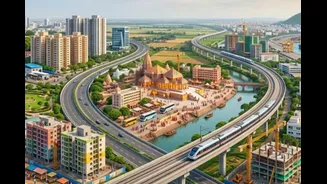
core objective is to elevate the ease of living for all residents by establishing well-organized urban centers replete with advanced infrastructure, essential amenities, and streamlined public services. Beyond improving daily life, these modern urban developments are poised to act as significant magnets for investment, spurring job creation and contributing to the holistic economic and social advancement of Uttar Pradesh. While precise project locations, scale, and timelines are still under deliberation, the government has firmly committed to fostering urban environments that are both sustainable and highly livable, setting a new standard for urban development in the region.
Strategic Urban Development
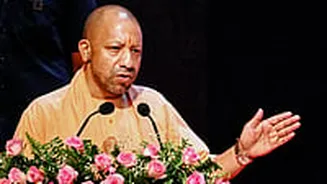
At the heart of Uttar Pradesh's 'Viksit UP@2047' vision lies a meticulously crafted plan to enhance urban living through a multi-faceted approach. The roadmap, recently presented to Chief Minister Yogi Adityanath, prioritizes key areas such as bolstering public transportation networks, ensuring the complete digitalization of civic services, expanding water supply infrastructure, cultivating vibrant economic hubs, and reinforcing waste management and environmental protection systems. This comprehensive strategy is designed not only to improve the daily lives of citizens but also to fortify civic services and ensure a superior quality of life through balanced and sustainable growth. Urban areas are positioned as crucial engines for economic progress, supported by highly efficient administrative frameworks. As part of this forward-thinking plan, Lucknow is earmarked for development as a State Capital Region (SCR), while strategically important regional economic centers will be established across the state. These centers will leverage unique local geographical strengths to stimulate investment, generate substantial employment, and promote equitable regional development.
Enhanced Connectivity & Services
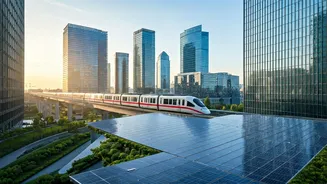
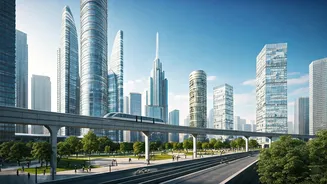
Improving mobility and accessibility is a cornerstone of Uttar Pradesh's urban transformation. The government proposes a sophisticated multi-modal transport system, integrating metro rail, rapid rail, electric buses, and advanced smart traffic management solutions. The ambitious goal is to increase the mode share of public transport to 25%, thereby significantly reducing traffic congestion and air pollution while making commuting more affordable and convenient. Complementing this enhanced mobility is the 'Liveable Cities Mission,' which aims to ensure that essential services like healthcare facilities, educational institutions, and markets are accessible within a 15-minute radius from residential areas, fostering a truly walkable and convenient urban experience. Governance is also set for a major overhaul with the introduction of GIS-based property mapping and taxation systems, designed to bring greater transparency and accuracy to land records and municipal revenue collection. Furthermore, Integrated Command and Control Centres (ICCC) will be established statewide to facilitate real-time monitoring and seamless coordination of various urban services, optimizing operational efficiency and emergency response capabilities.
Digital Governance & Sustainability
A significant pillar of the 'Viksit UP@2047' plan is the commitment to 100% digital delivery of citizen services across all Urban Local Bodies (ULBs), aiming to streamline processes and enhance user experience. The roadmap also includes provisions for establishing development authorities in every district to ensure localized planning and oversight, alongside ensuring comprehensive water supply coverage for all residents. To foster diverse living and economic opportunities, the development of theme-based townships is envisioned. Data-driven planning will be a key enabler, supported by the establishment of an Uttar Pradesh Urban Observatory. On the environmental front, the 'Sponge City' initiative will be implemented, focusing on critical measures such as enhanced rainwater harvesting, the revitalization of existing water bodies, and the protection of natural drainage systems. These efforts are crucial for improving groundwater levels and mitigating flood risks. Additionally, the government plans to set up waste-to-energy plants, moving towards the ambitious target of achieving zero-landfill cities and promoting a circular economy. Inclusive growth will be supported through expanded housing schemes for economically weaker and low-income groups, coupled with the promotion of mixed land use policies.