





Storytelling Siddipet Gollabhama
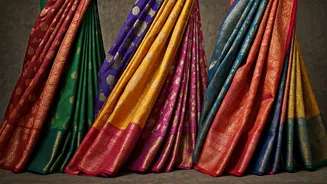
The Siddipet Gollabhama saree is a unique textile narrative, intricately woven with motifs of a milkmaid carrying a pot. This stunning design isn't an embellishment applied later; rather, it's meticulously
integrated into the fabric itself through a complex extra-weft technique. This labor-intensive process demands immense skill and time, yet weavers are often inadequately compensated for their dedication. Consequently, fewer young artisans are drawn to this heritage craft, posing a significant threat to its survival and the continuation of this visual storytelling tradition through textiles.
Himroo's Mughal Roots
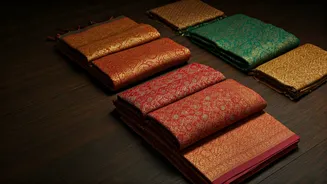
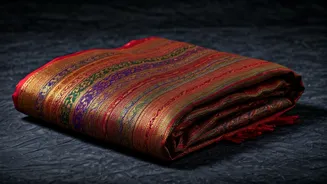
Originating from Aurangabad and bearing the legacy of the Mughal era, Himroo fabric is a brilliant fusion of silk and cotton. The name itself, derived from the Persian word 'Hum-ruh,' signifies a resemblance to pure silk. This innovative blend offers the opulent appearance of heavy brocade while remaining remarkably breathable, making it ideal for India's demanding climate. Unfortunately, the market is now inundated with affordable power-loom imitations that are deceptively marketed as authentic Himroo, diminishing the value and recognition of the genuine handwoven article.
Mashru's Ingenious Design
In Patan, Gujarat, weavers developed Mashru, an Arabic term meaning 'permitted,' born out of religious considerations that prohibited Muslim men from wearing pure silk directly against their skin. Their ingenious solution was a carefully constructed textile featuring luxurious silk on the exterior and a soft, comfortable cotton lining on the interior. This ingenious construction provides a perfect balance of elegance and wearability, creating a fabric that feels like a comfort-luxury. However, acquiring genuine, handwoven Mashru has become exceedingly difficult in contemporary times.
Sungudi & Karvath Kati
Saurashtrian weavers in Madurai pioneered the Sungudi saree, a testament to fine cotton craftsmanship. Authentic Sungudi involves an intricate process of tying thousands of minute knots by hand before immersing the fabric in natural dyes, resulting in an exceptionally breathable textile perfect for the intense heat of Southern India. Regrettably, most items now sold as Sungudi are merely screen-printed imitations. In Maharashtra's Vidarbha region, the Karvath Kati saree, woven from pure wild Tussar silk, features distinctive geometric borders resembling saw teeth ('karvath'). It possesses a unique, earthy elegance that sets it apart from more embellished silks, though its weavers often struggle for recognition compared to the popular Paithani sarees.
Goa's Minimalist Kunbi
Contrary to popular notions of Goa's beaches, the Kunbi saree represents a significant yet overlooked aspect of its heritage. Traditionally worn by tribal communities, this striking red-and-black checkered drape was expertly woven on backstrap looms. Its design was practical for agricultural work, often worn shorter and without a blouse or petticoat, allowing for freedom of movement in the paddy fields. The influence of Portuguese colonial fashion and the rise of power looms nearly eradicated this weave. Today, only a small number of artisans retain the knowledge of its creation, yet its breathable, understated pattern holds immense potential for contemporary fashion.
Patteda Anchu: Sustainable Simplicity
Hailing from North Karnataka and tracing its origins back to the 10th century, the Patteda Anchu is a remarkable cotton saree showcasing ancient sustainability principles. Characterized by a prominent mustard or red border contrasting with a checked body, its true genius lies in its complete reversibility, allowing it to be worn on either side. This saree requires no lining or fall and is entirely iron-free, making it exceptionally low-maintenance. Its popularity waned with the influx of inexpensive synthetic fabrics into rural markets, but it remains an unparalleled example of eco-friendly, zero-fuss attire.
Preserving Our Textile Legacy
The current market landscape, dominated by mass-produced synthetics and efficient power looms, poses a severe threat to India's rich handloom heritage. Hundreds of historically significant and locally developed weaves are at risk of disappearing due to the overwhelming presence of fast fashion. This trend, while offering immediate gratification, comes at a profound cost to our cultural identity and the livelihoods of skilled artisans. Reviving and celebrating these forgotten masterpieces is crucial not only to preserve our textile history but also to support the communities that keep these ancient crafts alive.