




Mission Overview
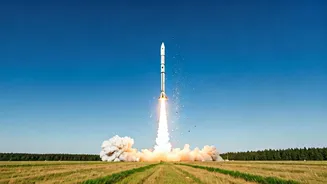
The ISRO PSLV-C62 mission was an attempt to launch a rocket into space, a project of significant importance for the Indian Space Research Organisation (ISRO). This mission was designed to achieve specific
objectives in space, and its success was vital for demonstrating India's capabilities in space technology. The mission was set to launch various payloads into orbit, potentially including satellites for Earth observation, communication, or scientific research. The PSLV, or Polar Satellite Launch Vehicle, is a workhorse for ISRO, known for its reliability and versatility. The C62 variant was expected to uphold this reputation, aiming to transport its payload to a precise orbit. However, during the mission, an unexpected anomaly occurred, disrupting the planned trajectory and leading to the mission's failure. The mission was tracked closely, with scientists and engineers monitoring every stage to ensure that data was collected and analyzed thoroughly.
Encountering Anomaly
During the mission, the PSLV-C62 encountered an anomaly, a term used to describe an unexpected event or deviation from the planned operational sequence. This anomaly occurred during the flight, leading the rocket to deviate from its intended path. The details of the anomaly are currently under investigation, but it's understood to have played a crucial role in the mission's failure. The immediate impact was that the rocket could not achieve its intended orbit and therefore could not successfully deploy its payloads. This setback prompts a detailed examination to determine what went wrong, involving thorough analysis of data, telemetry, and the rocket's performance. The anomaly could be attributed to various factors, including technical failures within the rocket systems or external environmental conditions. The ongoing investigation aims to pinpoint the exact cause to prevent similar issues in future launches.
Aftermath and Analysis
Following the unsuccessful mission, ISRO initiated an extensive analysis to understand the root cause of the anomaly. This process involves the examination of all available data, including telemetry, sensor readings, and any other relevant information gathered during the flight. Experts meticulously analyze each aspect of the launch, from the launch vehicle's performance to the operational procedures and any potential external influences. The analysis is comprehensive and multi-faceted, often involving both internal and external teams of specialists, to ensure an unbiased and thorough review. The objective is not only to pinpoint the specific cause of the failure but also to identify any vulnerabilities in the launch procedures or the vehicle's design. This knowledge is crucial for making the necessary improvements to prevent similar incidents in future missions. This includes implementing corrective actions, updating safety protocols, and refining operational processes. The failure serves as a learning opportunity, helping ISRO to bolster its expertise and enhance its capabilities in space technology.
Implications and Future
The failure of the ISRO PSLV-C62 mission has various implications for ISRO and India's space program. It is essential to recognize the setback and address the issues to ensure continued progress in space exploration. The immediate implication is the loss of the mission's payload, which could involve scientific, technological, or commercial assets. This failure could potentially delay the launch of future missions that depend on the same launch vehicle or technologies. Furthermore, it impacts the confidence in the reliability of ISRO's launch capabilities, both domestically and internationally. However, ISRO has a strong track record of successful missions, and this setback provides valuable lessons for future endeavours. It is an opportunity to strengthen safety measures, improve operational protocols, and enhance technical expertise. ISRO will continue to refine its approach, incorporating the learnings from this failure into the development of new technologies and future missions. The focus will be on ensuring the reliability and success of future missions, maintaining the trajectory of space exploration.