



Preserving Flavorful Treasures
A small jar of 'achar' (pickle) was a game-changer, transforming plain staples into a delightful meal. These pickles, expertly crafted with oil, salt, and acidic elements like vinegar or raw mango, served
a dual purpose: acting as a vibrant seasoning and a robust preservative. Similarly, fruit and vegetable preserves, often steeped in oil or thick sugar syrups, proved remarkably resilient to the heat and rigors of extended travel. Their compact nature and potent flavors were invaluable for masking the staleness of breads or rice, a crucial advantage when access to hot, freshly prepared meals was impossible. These preserves offered a concentrated burst of taste and sustenance, making bland travel food palatable.
Sun-Kissed Sweetness
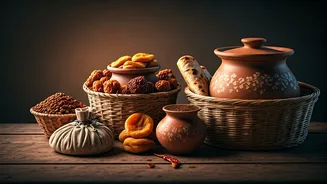
Sun-dried mango leather, or 'aam papad,' along with other preserved fruits, offered a concentrated essence of fruit in thin, pliable sheets that traveled exceptionally well. Likewise, fruits like mangoes and bananas, when dried under the sun, had their moisture content significantly reduced, preventing spoilage while concentrating natural sugars for an immediate energy boost. In many Indian regions, these dried fruits were meticulously prepared during the peak of harvest seasons when fruits were plentiful and sunlight dependable. This slow dehydration process not only extended their shelf life dramatically but also intensified their natural flavors, converting seasonal produce into compact, travel-ready nourishment. Typically wrapped in waxed paper or banana leaves, these delightful treats were often placed in the center of luggage bundles to ensure they remained dry, providing a sweet and tangy contrast to savory meals during long journeys.
Sweet Indulgences for the Road
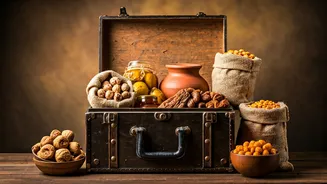
Confections like 'thekua,' a dense wheat and jaggery cookie originating from Bihar, and various types of 'laddoos' (made from ingredients like 'besan,' sesame seeds, or coconut) were cherished travel companions across India. The high sugar or jaggery content in these sweets naturally preserved them, while their dense, dry textures minimized the risk of crumbling. Many families would prepare these treats in advance, wrapping them in leaves or paper, and often incorporating ghee and toasted flours to reduce moisture content—an early form of preservation. These provided a quick source of calories, remained fresh for several days, and served as delightful festive treats, especially if journeys coincided with important rituals or visits.
Crisp Flatbreads
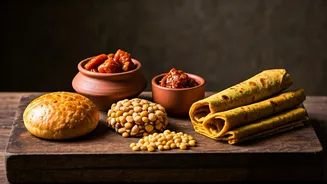
Hailing from western India, 'khakhra' is essentially a thin, dry, roasted flatbread that boasts an impressive shelf life. Crafted from whole-wheat dough rolled to an almost paper-thin consistency and then dry-roasted to a crisp, 'khakhra' is remarkably resistant to moisture and physical damage. Families would meticulously stack multiple layers, separating them with cloth, and often smear a little ghee for enhanced flavor before packing them securely in tins. These were enjoyed plain, with jaggery, or accompanied by a dollop of pickle. Their exceptional longevity and minimal weight made them an ideal choice for daytime travel when preparing a hot 'tiffin' was not feasible. This easily prepared snack pairs wonderfully with both chai and coffee.
Lightweight Crunchy Snacks
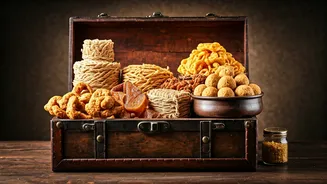
Puffed rice, known as 'murmura,' and its spicy variations, 'chivda,' stand as quintessential examples of lightweight travel food. Both vendors and households would prepare substantial batches, enhancing the puffed rice with ingredients like peanuts, roasted lentils, curry leaves, and a touch of lime juice or salt. Because puffed rice is highly aerated, it offers significant volume with minimal weight, making it perfect for extended periods when a quick, crunchy snack was needed to stave off hunger. Its texture is quite forgiving; while a bit of steam or humidity might soften it, it doesn't spoil rapidly. Portions could be easily replenished from a communal tin, ensuring a continuous supply of this satisfying snack.
Protein Powerhouses
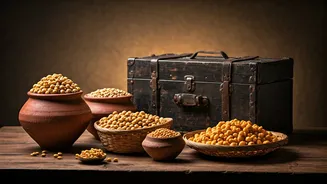
For travelers needing a sustained protein source, 'sattu' (roasted gram flour) and whole roasted chickpeas or peanuts offered an ancient and effective solution. 'Sattu' could be carried as a dry flour and conveniently mixed with water or buttermilk at rest stops to create a revitalizing drink. Roasted chickpeas and peanuts, requiring no preparation, provided slow-releasing energy. In regions of central and eastern India, travelers often carried small earthen pots filled with 'sattu,' which they would mix with sour yogurt or jaggery to form a filling and cooling meal that was more stable for travel than fresh pulses.