







Divine Progeny and Warrior God
Lord Kartikeya, revered in Hindu tradition as Skanda, Murugan, or Subrahmanya, holds a significant place as the elder son of the divine couple, Lord Shiva and Goddess Parvati. His dominion is that of a warrior
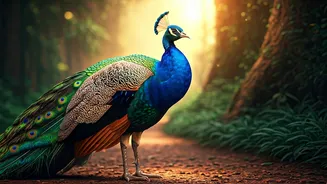
and victor, embodying the strength and strategy required for triumph in conflict. This divine warrior is famously depicted with the peacock as his mount, a powerful symbol intricately woven into his mythology and representing a host of virtues, including the vanquishing of malevolence and the embodiment of positive qualities.
The Myth of Surapadman's Defeat
One of the most prominent narratives explaining the peacock's connection to Lord Kartikeya recounts a fierce battle against the tyrannical king Surapadman. This formidable adversary, known for his cruelty towards the gods and possessing formidable powers, presented a significant challenge. During their epic confrontation, Lord Kartikeya's divine spear struck Surapadman, leading to a miraculous transformation. The king was not destroyed outright but transmuted into a mango tree, which then bifurcated into two distinct entities. From this divine intervention, one part manifested as the resplendent peacock, and the other as a rooster. This transformation signifies not only Kartikeya's victory but also Surapadman's remorse and eventual plea for forgiveness, solidifying the peacock's role as a consequence of divine justice and mercy.
Indra's Gift and Devotion
An alternative tale attributes the peacock's presence to a generous offering from Indra, the king of the celestial realms. In this version, Indra's divine bird, Paravani, played a crucial role in assisting Lord Kartikeya during his war against Surapadman. As a testament to its loyalty and invaluable support, Paravani was bestowed upon Kartikeya as his personal vehicle. This story emphasizes virtues like unwavering loyalty, profound devotion, and selfless service. The peacock's striking beauty, from its melodious calls to its vividly colored plumage, is often interpreted as a divine sign of favor and blessings received during times of struggle and warfare.
Symbolism of Qualities and Auspiciousness
The peacock's inherent characteristics align perfectly with the attributes of Lord Kartikeya. It is known for its speed, agility, and fearlessness – precisely the traits essential for a divine warrior destined to overcome adversaries. Beyond its role as a vehicle, the peacock and its magnificent feathers are imbued with significant spiritual and astrological importance within Hinduism. Peacock feathers are considered highly auspicious in Vedic astrology, Vastu Shastra, and various spiritual practices. They are seen as potent symbols associated with wealth, protection, and happiness, often acting as a lucky charm. Astrologically, they are linked to Goddess Lakshmi and the celestial energies of Rahu-Ketu, further enhancing their auspicious reputation.
Cultural Depictions and Inspiration
The divine connection between Lord Kartikeya and the peacock is prominently displayed in various cultural representations, particularly in South Indian temples like Palani and Tiruchendur, where depictions of Kartikeya mounted on his peacock vahana are common. Art and iconography frequently showcase Lord Kartikeya with peacock feathers adorning his divine form, serving as a constant reminder of his bravery and victorious spirit. These visual narratives inspire devotees to embrace courage, to stand firm against negativity, and to strive for success in their own endeavors, reinforcing the enduring message that good ultimately triumphs over evil.