



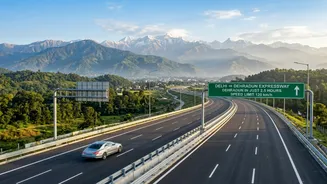
A New Era Dawns
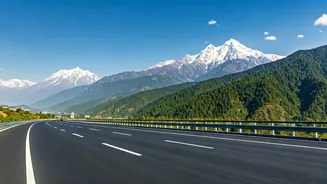
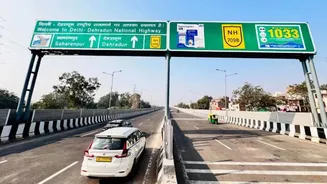
The much-anticipated Delhi-Dehradun Expressway, also known as the Delhi-Dehradun Economic Corridor, has officially been inaugurated, marking a significant milestone in India's infrastructure development.
This six-lane, access-controlled corridor, brought to life by the National Highways Authority of India, is set to revolutionize travel between the nation's capital and the popular hill station of Dehradun. The primary impact of this project is the dramatic reduction in travel time, slashing the current six-hour journey down to a mere 2.5 hours, promising convenience and efficiency for thousands of travelers.
Impressive Dimensions & Investment
This ambitious project spans an impressive 213 kilometers, connecting Delhi to Dehradun with a state-of-the-art highway. The construction of this six-lane economic corridor represents a substantial investment, with the total cost exceeding Rs 12,000 crore. The expressway traverses through key regions including Delhi, Uttar Pradesh, and Uttarakhand, aiming to foster economic growth and improve connectivity across these states. For regular commuters utilizing the FASTag system, a one-way trip across the four toll plazas is estimated to cost just over Rs 60, making it an economical as well as efficient option.
Pioneering Wildlife Corridor
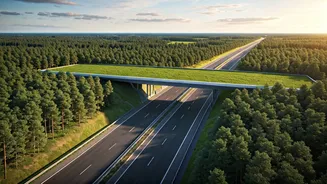
A standout feature of the Delhi-Dehradun Expressway is its thoughtful integration of ecological considerations. Recognizing the rich biodiversity and sensitive nature of the region, particularly the Rajaji National Park, the design incorporates extensive measures to minimize human-wildlife conflict. This includes Asia's one of the longest elevated wildlife corridors, extending for 12 kilometers, ensuring unhindered animal movement. Additionally, the corridor boasts eight designated animal crossings, two substantial elephant underpasses, each 200 meters long, and a 370-meter tunnel near the Daat Kali temple, showcasing a commitment to coexisting with nature.
Advanced Infrastructure & Connectivity
Beyond its impressive length and wildlife-friendly design, the Delhi-Dehradun Economic Corridor is equipped with advanced infrastructure to ensure smooth and safe travel. The project includes the development of 10 strategically placed interchanges, three railway overbridges, and four major bridges to facilitate seamless movement. Furthermore, the corridor will feature 12 wayside facilities offering convenience to travelers. An integrated Advanced Traffic Management System is in place to enhance safety and optimize travel efficiency, ensuring a pleasant and secure journey for all users.
Phased Development Strategy
The construction of the Delhi-Dehradun Economic Corridor was meticulously planned and executed in four distinct phases. The initial phase, a 31.6 km brownfield segment from Akshardham to Khekra, involved upgrading an existing route into a six-lane elevated road with a parallel service lane. The second phase, a 120 km greenfield project, extends from the EPE interchange at Baghpat to the Saharanpur bypass. The third phase, covering approximately 42 km from Saharanpur bypass to Ganeshpur in Uttarakhand, has already been completed. The final segment, about 20 km long from Ganeshpur to Dehradun, includes a 4.6 km upgraded stretch alongside newly constructed portions.
Economic Impact & Local Access
This transformative expressway traverses through several districts, including Baghpat, Muzaffarnagar, Shamli, and Saharanpur, before reaching Uttarakhand, thereby enhancing regional connectivity. To facilitate local access and maintain smooth traffic flow, the project incorporates 113 vehicular underpasses and 62 bus shelters. Nearly 76 km of service roads have been constructed, alongside multiple entry and exit points. The design also includes provisions for rainwater harvesting and groundwater recharge, highlighting a sustainable approach to infrastructure development. The economic benefits are expected to be substantial, boosting tourism and commercial activities.