


Date and Timing
In 2026, Holika Dahan will be observed on Tuesday, March 3rd, a celebration that marks the beginning of the Holi festival. This significant event occurs during the Purnima Tithi, which is the full moon
day, in the month of Phalguna. The Purnima Tithi commences on March 2nd at 05:55 PM and concludes on March 3rd at 05:07 PM. While the main Holika Dahan ceremony takes place in the evening, it's important to note the presence of the Bhadra period, which is generally considered inauspicious for new beginnings. Specifically, Bhadra Punchha occurs from March 3rd, 01:25 AM to 02:35 AM, followed by Bhadra Mukha from 02:35 AM to 04:30 AM on the same day. The most auspicious time for Holika Dahan, the "Muhurta," is scheduled for the evening of March 3rd, from 06:22 PM to 08:50 PM, offering a window for devotees to perform the rituals.
Festival Significance
Holika Dahan holds immense religious and cultural importance within Hinduism, serving as the prelude to the more widely known festival of Holi. At its core, Holika Dahan commemorates the legendary triumph of good over evil, embodied in the story of Prahalad, a devoted follower of Lord Vishnu, and his wicked aunt Holika. Prahalad's father, Hiranyakashyapu, a powerful demon king, had obtained a boon that made him virtually invincible. Driven by arrogance, he demanded to be worshipped as a god, but Prahalad's unwavering devotion to Lord Vishnu made him an obstacle. Despite numerous attempts by Hiranyakashyapu to harm his son, Prahalad was consistently protected by divine grace. In a final, cruel act, Hiranyakashyapu ordered Holika, who possessed a blessing that protected her from fire, to sit in a pyre with Prahalad on her lap. However, the divine intervention of Lord Vishnu ensured that Holika, defying her own boon, was consumed by the flames while Prahalad emerged unharmed, earning him the revered title of "Bhakt Prahalad" for his steadfast faith.
Puja Rituals Observed
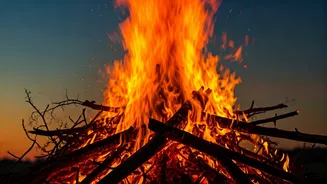
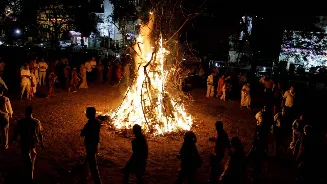
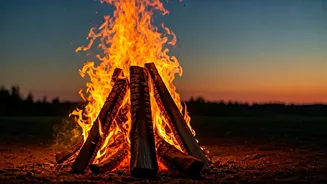
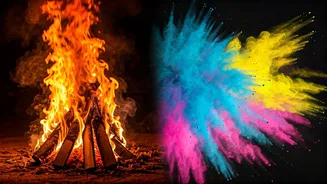
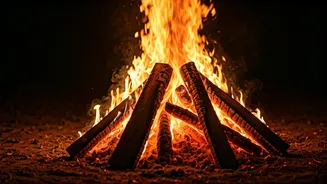
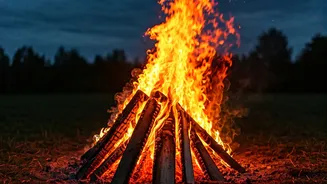
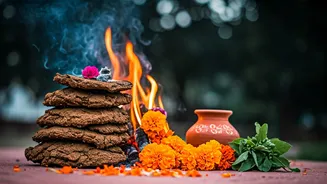
The observance of Holika Dahan involves specific rituals that connect devotees with the divine and reinforce the festival's meaning. Preparations typically begin by selecting an open space, often a community gathering spot, where a bonfire, known as the Holika, will be erected. This pyre is constructed from wood, dried neem leaves, and other combustible materials. Before the main bonfire is lit, female devotees often perform puja in the early evening. They offer prayers to Lord Bhairav and present items such as turmeric (haldi), a red marking powder called roli, and tie a white holy thread around the wood. A lamp (diya) lit with mustard oil is also offered, alongside sweets. After sunset, the Holika is ignited. As the flames rise, people add auspicious ingredients to the fire, including cardamom (elaichi), cloves (laung), jaggery, coconut, and camphor, symbolizing purification and offerings. Throughout the ceremony, powerful mantras are recited, and blessings are sought from Lord Vishnu and Bhakt Prahalad, reinforcing the spiritual essence of the celebration and the victory of virtue.