



Avian Diversity Flourishes
The Vazhachal forest division has recently celebrated a remarkable surge in its bird population, with a comprehensive survey documenting an impressive 193 distinct species. This figure represents a substantial
increase from the 136 species recorded during the initial survey in 1996, signifying a healthy and expanding ecosystem. Spanning 372 square kilometers, this forest division is characterized by a rich tapestry of flora and fauna, with its biodiversity particularly noteworthy in the low-elevation river basins – a characteristic that sets it apart within the Western Ghats region. The presence of all three primary local hornbill species – the great hornbill, Malabar pied hornbill, and Malabar grey hornbill – further emphasizes its ecological significance. This latest survey, conducted between February 13 and 15, brought together ornithologists, students, and birding enthusiasts, reaffirming Vazhachal's status as a critical habitat for avian life and a testament to successful conservation endeavors.
Hornbill Paradise Confirmed
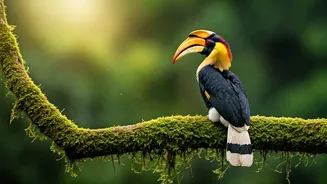
Vazhachal stands out as a prime sanctuary for hornbills, with the recent survey confirming the presence of these magnificent birds across 23 out of 40 monitored transects. Observers were particularly delighted to spot 63 hornbill nests, a discovery made possible through the invaluable assistance of the local Kadar tribal community. The divisional forest officer, Suresh Babu, noted that while habitat loss and climate change remain concerns for larger wildlife, the escalating bird species count and other ecological indicators point towards a robust and resilient Vazhachal forest ecosystem. This finding is especially significant given that Vazhachal is one of the few areas in the country where the three main indigenous hornbill species thrive concurrently. The forest's suitability for nesting is exceptional; while great hornbills typically favor only about 10% of trees in other parts of the Western Ghats, approximately 30% of trees in Vazhachal are ideal for their nesting, truly earning it the title of a 'hornbill paradise.'
Conservation Efforts Yield Results
The remarkable recovery and growth in bird species, particularly hornbills, in Vazhachal are a direct outcome of sustained conservation initiatives, spearheaded by organizations like the Western Ghats Hornbill Foundation. For nearly two decades, this foundation has been dedicated to protecting these rare birds. A survey in 2005 had indicated a critical decline in the great hornbill population, but concerted efforts have reversed this trend, with recent observations documenting at least 33 individual great hornbills. Amitha Bachan, the director of the foundation, emphasized the pivotal role of the Kadar community in these conservation successes. Initially, there were instances of hornbill hunting for eggs, but through dedicated awareness programs, the community has transformed into vigilant protectors of these birds. This collaborative approach has fostered an environment where hornbills, often unafraid of human presence, can flourish, solidifying Vazhachal's reputation as a vital avian stronghold and a beacon of effective conservation.