







Solar Steam Revolution
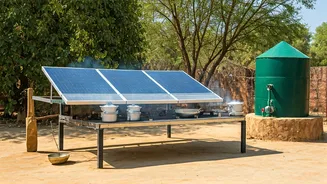
At the Muni Seva Ashram in Goraj, a remarkable solar-powered kitchen is ensuring that nearly 5,000 people, including patients, residents, and students, are fed twice daily. This innovative system meets
approximately 80-85% of the cooking needs through solar energy and biogas. The heart of this operation is the 'Big Dish' solar concentrator, a technology developed by Australian institutions, which efficiently converts sunlight into high-temperature steam. This steam is not only powerful enough to cook over 2,000 meals daily but also supports extensive laundry operations of nearly 1,000 kg and critical sterilization requirements for the associated hospital. What's particularly impressive is the concentrator's efficiency, capturing almost 90% of incident sunlight, a stark contrast to the 20% efficiency of conventional solar panels. This high-temperature steam even contributes to the campus's 200-ton air conditioning system, demonstrating the multifaceted benefits of this renewable energy approach. The ashram's chairman highlights that this model embodies the founder's philosophy of societal service, self-reliance, and environmental stewardship.
Biogas: From Dung to 'Dhan'
In a similar vein of ingenuity, Mujkuva village near Anand has witnessed women transform cow dung into a vital energy source. The Mujkuva Sakhi Khad Sahkari Mandali Ltd, established in 2018, is the nation's pioneering all-women cooperative focused on manure-based biogas production. What began with 25 members has grown to encompass 150 women, many of whom rely on animal husbandry. They utilize cow dung to generate biogas, ensuring cooking fuel is a constant supply, even for large joint families. Members report substantial monthly savings, around Rs 2,000 per household, by eliminating the need for LPG cylinders. The residual slurry from the biogas plants is also a valuable commodity, sold as organic fertilizer to support natural farming practices. The success of these women, including Hema and Jagruti Padhiyar, has even been recognized at the national level, with an invitation to Rashtrapati Bhavan.
Resilience in Kutch
The fuel supply challenges faced by many elsewhere are virtually unknown in parts of Kutch, thanks to the widespread adoption of biogas. Rekha Maharaj and nearly 50 other women in the region have had their kitchens running on biogas plants installed over the past three years. While many parts of the country experience anxiety and long queues for LPG cylinders, these communities remain unaffected because their primary fuel source – cow dung – is consistently available. The daily collection and processing of dung ensure a steady supply of cooking gas. This shift away from LPG dependency is actively promoted by organizations like the Self-Employed Women's Association through initiatives such as 'Swachh Akaash,' empowering thousands of women to embrace biogas production and achieve greater energy autonomy.