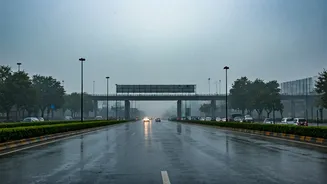








Unexpected Rainfall Arrives
Early morning showers unexpectedly hit Delhi-NCR, causing immediate disruptions. The rainfall, which came without warning, left many residents unprepared, with daily routines significantly altered. These
showers, part of an unseasonal weather pattern, caught the city by surprise, leading to adjustments in daily activities and travel plans. The intensity and timing of the rainfall played a crucial role in amplifying its impact, affecting everything from traffic flow to outdoor events. The sudden nature of the showers made it difficult for people to plan their day effectively. Moreover, the unpredictable weather conditions necessitated an immediate response from local authorities, who had to address issues like waterlogging and traffic congestion to help maintain public order and safety during the inclement weather. This unexpected event clearly showed the vulnerability of urban infrastructure to sudden changes in environmental conditions.
Cold Wave Intensifies
The early morning showers have intensified the cold wave already gripping Delhi-NCR. As the rainfall settled, temperatures dropped, making it significantly colder. Residents experienced the effects of the intensified cold wave, with many people resorting to additional layers of clothing and other measures to stay warm. The combination of rain and cold proved to be a harsh weather combination, creating difficulties for people and potentially increasing health risks, especially for those who are vulnerable. The heightened cold has caused more significant concerns among the people living there. People experienced the effects of the intensified cold wave, leading to increased demand for warmer clothing, heating devices, and hot beverages. The weather patterns have clearly added to the winter experience.
AQI Remains 'Very Poor'
The Air Quality Index (AQI) in Delhi-NCR continues to remain in the 'very poor' category, at 321. The unseasonal weather is making the air quality problem worse, which causes health risks and concerns. This suggests that the air is severely polluted, with a high concentration of harmful particles and pollutants. The continuous 'very poor' air quality poses significant health risks. People are advised to take necessary precautions to protect themselves from the poor air quality. The government and environmental agencies are facing increasing difficulties in improving air quality. The long-term effects of poor air quality on public health are significant, emphasizing the urgent need for consistent efforts to reduce pollution levels and improve air quality throughout the region.