





Court Overturns Ban
In a notable ruling, the Calcutta High Court has significantly altered the Election Commission's stringent 48-hour prohibition on all motorcycle activity preceding the second phase of West Bengal's assembly
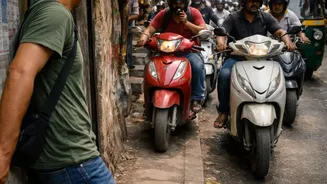
elections. The court determined that a complete cessation of bike usage was an excessive measure, particularly when considering the daily needs of citizens. While the ban on organized motorcycle rallies has been upheld to maintain order and prevent potential disruptions, the sweeping restriction on individual bike riding has been deemed unjustified by the judiciary. This decision aims to balance election security with the practical realities of public movement on polling days.
Permitted Exceptions Eased
The High Court's revised order introduces a more nuanced approach to vehicular restrictions. Although a blanket ban has been struck down, the court has permitted limited pillion riding for a specific 12-hour period on the day of the polls. This concession is not without conditions, as it comes with a set of carefully defined exemptions. Individuals requiring transport for voting, attending to medical emergencies, or participating in pre-arranged family functions are among those who will be allowed to use motorcycles. Furthermore, essential service providers and individuals commuting to their offices have also been granted specific exemptions, ensuring that critical public services and economic activities are not unduly hampered by the election process.
Judicial Rationale Explained
The High Court's decision underscores the principle that the Election Commission's powers, while substantial, must operate within the framework of existing legal statutes. The court emphasized that the commission's directives should not impose restrictions that go beyond what is legally permissible or practically necessary. It was highlighted that the existing deployment of adequate security forces across West Bengal is intended to ensure that polling proceeds peacefully and without incident. Therefore, the court concluded that the extensive ban on bike movement was an unnecessary overreach, given the security measures already in place to facilitate a fair and orderly electoral process.