
Plastic's Unexpected Role
The Great Pacific Garbage Patch, a massive accumulation of plastic debris, is evolving into something entirely new: a habitat. Scientists were surprised to find marine life not just passing through, but
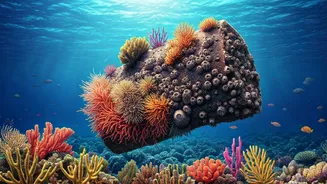
actually making plastic their home. This unexpected ecological shift points to the remarkable adaptability of marine species. The floating plastic, ranging from tiny fragments to large objects, offers these creatures surfaces to attach and thrive upon. This creates a novel environment where species that traditionally live on rocky coasts or in open waters can now find refuge.
Species with Japanese Ties
Intriguingly, the study revealed that some of the species found on the plastic have connections to Japan. This finding underscores the interconnectedness of ocean ecosystems and how human activities in one region can have wide-ranging effects. The plastic debris, originating from various sources, has become a floating island. It is now transporting these species across the Pacific, potentially altering the distribution of marine life and introducing new competitive dynamics within the ecosystem. The implications of this are quite far reaching.
Survival in Unexpected Places
Traditionally, coastal species struggle to survive in the open ocean. But the plastic provides them with a new opportunity. The plastic offers shelter from predators, a stable surface for attachment, and a pathway to new habitats. This is a complete paradigm shift. The plastic allows these species to move across vast distances, something they could not previously do. It's a testament to the resilience of life and how it can adapt even to the most challenging of situations.
Beyond Temporary Passage
The initial assumption was that these animals were merely using the plastic for transportation. However, further research indicates that many species are actively breeding and forming established populations on these floating platforms. This goes beyond simply hitching a ride; this suggests that the Great Pacific Garbage Patch is becoming an integral part of their life cycles. These creatures are not just passing through; they are establishing a new existence, adapting and evolving in a way scientists did not expect.
Implications for the Ocean
This discovery has profound implications for the ocean's future. The widespread colonization of plastic by marine life is fundamentally reshaping ecosystems. Changes in species distribution, potential impacts on food webs, and the overall health of the ocean are at stake. It is important to remember that these changes are happening within a context of increasing plastic pollution. Understanding these complex interactions is crucial for developing effective strategies to mitigate the impacts of plastic waste and protect marine biodiversity. The need for comprehensive solutions is ever more urgent.