








The Traveler's Garden Dilemma
For avid gardeners who frequently travel, maintaining a flourishing garden can feel like an insurmountable challenge. The constant need for watering, weeding, and general upkeep often clashes with busy
schedules, leading to stress and the fear of returning to wilted plants. Traditional gardening practices are often predicated on consistent, daily attention, a luxury that many globetrotters or business travelers simply cannot afford. This persistent worry can diminish the joy of both travel and the horticultural hobby. The core issue for traveling gardeners is not the initial planting or the eventual harvest, but rather the critical period of absence where plants are left unattended, facing potential neglect and environmental stressors.
Straw Mulch: The Natural Solution
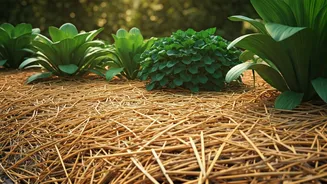
The game-changing technique recommended for busy travelers is the application of straw mulch. This natural, cost-effective method transforms high-maintenance gardens into self-sustaining environments capable of withstanding a gardener's unpredictable itinerary. Straw mulch functions as a protective layer, creating optimal conditions for plants to thrive independently. Its efficacy stems from its ability to significantly enhance soil moisture retention, regulate soil temperature, and naturally suppress weed growth. Research confirms that mulching practices can elevate soil moisture levels by 10–50%, thereby extending the availability of water to plants and allowing for longer intervals between watering. This makes it an ideal solution for those who are often away from home.
Optimizing Mulch Application
To achieve maximum benefits from straw mulch, precise application is key. A layer of straw 2-3 inches thick should be spread around plants, ensuring a small clearance is left near the plant stems. This gap prevents excessive moisture from accumulating around the base of the plant, which could lead to rot. The thickness of the mulch should be adjusted based on the local climate. In exceptionally humid regions, a thinner application is advisable to prevent soil compaction and erosion while still managing moisture. Conversely, in arid or desert environments, a thicker layer is recommended to maximize water retention and keep the soil cooler. This strategic adjustment ensures that the mulch provides the most benefit for the specific growing conditions, further enhancing plant health and reducing maintenance needs.
Plant and Climate Considerations
Selecting the right plants and understanding your climate are crucial for successful straw mulching. This method is particularly effective for vegetables such as tomatoes, peppers, and squash, as well as most perennial flowers and shrubs. However, it's important to avoid using straw mulch around plants that thrive in dry conditions, like lavender or rosemary, as it may retain too much moisture for them. Matching your mulching strategy to your plant choices significantly improves results. Furthermore, adjusting mulch thickness according to your climate is essential. In wet areas, a thinner layer helps avoid trapping too much water, while in dry climates, a thicker application is beneficial for moisture retention and temperature regulation. This tailored approach ensures optimal conditions for a wide variety of plants, even when you're away.
The Long-Term Benefits
The beauty of the straw mulch method lies in its simplicity and its ability to eliminate the anxiety associated with leaving plants unattended. It creates a self-sustaining environment that supports plant health regardless of your presence. By mimicking natural processes, straw mulch ensures plants receive adequate moisture and are protected from invasive weeds. This natural approach bypasses the need for complicated irrigation systems or reliance on neighbors, offering a truly independent gardening solution. With a well-mulched garden, travelers can embark on their journeys with peace of mind, knowing their plants are cared for by nature itself, allowing for complete enjoyment of their adventures without the burden of garden guilt.