





The Opossum's Play
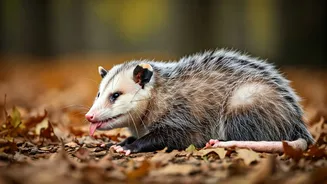
The opossum is perhaps the most well-known practitioner of death feigning. When threatened, this North American marsupial will often collapse, appearing lifeless. It might foam at the mouth, release a foul
odor, and even become temporarily paralyzed. This elaborate performance convinces many predators that the opossum is already dead, leading them to lose interest. The opossum's ability to remain still and seemingly deceased for extended periods often allows it to escape unharmed. This behavior is involuntary, triggered by a nervous system response to extreme stress, acting as a last resort defense when other strategies fail. The opossum's act is so convincing that it has become synonymous with the term "playing possum."
Hognose Snake's Gambit
The hognose snake, a non-venomous reptile, also employs a dramatic death display. If threatened, the hognose snake will first try to intimidate its attacker by flattening its neck and hissing. If this doesn’t work, it may resort to death feigning. The snake will flip onto its back, open its mouth, and emit a foul smell. It may even convulse and release fluids, creating a convincing image of a dead snake. If turned right-side-up, the hognose snake often flips back over, further emphasizing its commitment to the deception. This tactic is effective because many predators prefer live prey and may lose interest, allowing the snake to slither away unnoticed. The hognose's performance is a testament to its survival instincts.
The European Frog
Certain species of frogs, particularly the European common frog, also use death feigning to avoid predation. When confronted by a predator, a frog may suddenly go limp and appear lifeless. It might even expose its vulnerable underside, making itself seem even more defenseless. This strategy works because many predators are more interested in live prey and may leave the apparently dead frog alone. The frog's stillness and seemingly fragile state can effectively deter potential attackers. This death-feigning behavior is part of a broader set of defense mechanisms that help frogs survive in a world filled with predators. This instinctive act illustrates the remarkable adaptability of these amphibians.
Click Beetles' Trick
Click beetles are masters of the death feigning technique, relying on a unique method for escape. These beetles can flip themselves into the air, making a clicking sound, and use their ability to evade danger. However, when threatened and unable to escape, the click beetle will feign death. It retracts its legs, curls up, and becomes motionless, blending in with its surroundings. This stillness can deter predators that primarily hunt moving prey. Once the threat has passed, the beetle will use a special mechanism to launch itself into the air, using the clicking sound and flip as a means of righting itself. This behavior is a clever combination of camouflage and a surprising escape maneuver, making the click beetle a true survivor.
Beetle's Play Dead
Many other beetle species utilize death feigning as a defense mechanism, often as a last resort when other defensive tactics fail. These beetles may freeze in place, tuck their legs, and remain motionless for a period. This stillness can be an effective way to avoid becoming a predator's meal, as many predators are attracted to movement. By playing dead, the beetles can blend into their surroundings and avoid detection. This tactic provides valuable time for the predator to lose interest, or for the beetle to find an opportunity to escape. It's a key survival trait that allows beetles to persist in environments teeming with predators. The ability to deceive predators through stillness is a testament to their evolutionary adaptability.