






Budget Overview
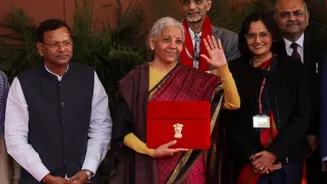
Nirmala Sitharaman delivered the Union Budget 2026 amidst considerable global economic uncertainty. The budget prioritized reforms and capital expenditure (capex) to bolster economic growth and address
emerging challenges. The focus was on infrastructure development, job creation, and boosting the manufacturing sector. The budget aimed to stimulate economic activity through strategic investments and policy interventions. Global headwinds were acknowledged, and the budget was framed to navigate these challenges through a combination of fiscal prudence and growth-oriented measures.
Defense Spending Rise
A significant increase was observed in the defense budget. It jumped to Rs 7.85 lakh crore, with Rs 2.19 lakh crore allocated for modernization efforts. This substantial allocation signaled the government's commitment to strengthening national security. The augmented defense budget reflected a strategic focus on enhancing the country's defense capabilities through advanced technology and equipment. This increase was expected to drive growth within the defense manufacturing sector and contribute to technological advancements related to national security. The allocation included provisions for new acquisitions, infrastructure development, and research and development initiatives.
Healthcare Sector Updates
The Union Budget 2026 included crucial updates for the healthcare sector. Notably, the government waived customs duty on drugs used to treat cancer and rare diseases. This measure was designed to make these life-saving medications more affordable and accessible to patients. The move demonstrated a commitment to improving healthcare access for individuals facing significant health challenges. Furthermore, it underscored the government's efforts to support advancements in medical research and the pharmaceutical industry. This decision had the potential to alleviate some of the financial burdens faced by patients and families dealing with these serious illnesses.
Infrastructure Boost
Several high-speed rail corridors were announced as part of the budget's infrastructure initiatives. These corridors included routes connecting Mumbai-Pune and Hyderabad-Bengaluru, among others. Such projects are poised to enhance connectivity and boost economic activity across regions. The initiative demonstrated the government's focus on modernizing India's transportation infrastructure and fostering regional development. Beyond high-speed rail, the budget also supported the development of mountain trains in areas such as Himachal Pradesh, Uttarakhand, and Jammu & Kashmir. These projects were seen as crucial for promoting tourism and improving connectivity in geographically challenging terrains.
Tax Regime Clarifications
The budget offered insights into the income tax slabs and rates applicable under both the new and old tax regimes for the financial year 2026-27. This information was crucial for taxpayers to understand their tax liabilities and plan their finances. The details were aimed at providing clarity and transparency in the tax system. Taxpayers could assess how the new and old regimes would impact their financial situations. Section 87A, pertaining to tax rebates under the new income tax regime for the fiscal year 2026-27, was another highlight providing clarity on potential tax benefits. Overall, the aim was to simplify the tax framework and assist individuals in making informed financial decisions.
Semiconductor Mission 2.0
The Union Budget 2026 saw the launch of 'India Semiconductor Mission 2.0' by Nirmala Sitharaman. This initiative highlighted the government's strategic focus on the semiconductor industry. The mission aims to foster innovation, attract investments, and enhance domestic manufacturing of semiconductors. The launch of the mission underscored the government’s commitment to positioning India as a global player in this vital technology sector. This initiative is expected to boost technological self-reliance, create jobs, and stimulate overall economic growth. Supporting the semiconductor industry reflects a forward-looking approach to technological advancement and economic development.