

Momos: Delightful Dumplings
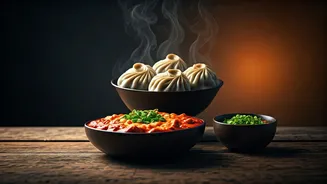
Momos are arguably the most recognizable Nepali dish, and they are beloved for their simplicity and taste. These steamed or fried dumplings are usually filled with seasoned ground meat (typically buffalo,
chicken, or pork) or vegetables, depending on regional preferences. The filling is carefully wrapped in a thin dough, then cooked to perfection. Served with a spicy tomato-based chutney, the combination is both satisfying and addictive. The popularity of momos reflects Nepal's cultural exchange and adaptability, having spread from the Tibetan plateau and becoming a cornerstone of Nepali street food. Across the country, momos' diverse variations and cultural adaptations represent a culinary icon, offering a delicious taste of Nepal's heritage.
Dal Bhat: Hearty Staple
Dal bhat is more than just a dish; it's a Nepali way of life. The term refers to a combination of lentil soup (dal) and steamed rice (bhat). This is the quintessential everyday meal, symbolizing the country's agricultural roots and its commitment to fresh, locally-sourced ingredients. In Nepal, dal bhat is traditionally served with various accompaniments, including vegetable curries (tarkari), pickles (achar), and sometimes, meat or fish. The simplicity and balanced nutrition, along with regional variations, make dal bhat a timeless staple. Every region adds its unique touch, using local vegetables, spices, and cooking techniques, ensuring that each meal is a celebration of Nepali flavors.
Thukpa: Noodle Soup Comfort
Thukpa offers warmth and sustenance. This hearty noodle soup is popular in the mountainous regions. The base of thukpa is typically a flavorful broth, simmered with vegetables, meat (such as yak, chicken, or mutton), and thick, hand-pulled noodles. Various spices and herbs, including ginger, garlic, and chili peppers, are incorporated to enhance the taste. Thukpa is a deeply satisfying meal, perfect for cold weather or after a long day of trekking. The dish is available in different versions across Nepal, using diverse noodles and ingredients, reflecting regional preferences and the resources available in each area. Its ability to be easily customized has made thukpa a staple on the menus throughout the country.
Sel Roti: Sweet Delight
Sel roti is a traditional Nepali sweet, often eaten during festivals and celebrations. It is a ring-shaped rice flour bread, deep-fried until golden brown and crispy. The batter includes ingredients such as rice flour, sugar, and spices like cardamom and cloves, giving it a unique aroma and taste. Sel roti is an integral part of Nepali culture, prepared in many homes and sold at local sweet shops. Its presence at festivals and religious ceremonies highlights the deep connection between food, tradition, and community. The combination of its sweet taste and satisfying texture makes sel roti a much-loved treat across Nepal.
Momo Soup: Brothy Goodness
Momo soup, an evolution of the traditional momo, offers a delightful twist on a classic. Instead of just steamed or fried dumplings, these momos are served in a flavorful broth, often made from meat or vegetable stock, and enriched with spices. The broth adds warmth and enhances the taste of the momos. Vegetables may also be added, creating a more comprehensive meal. Momo soup is a fusion of comfort and convenience, perfectly suited for those seeking a quick, satisfying meal. This soup combines the flavors of Nepal, blending street food with comforting warmth, making it ideal for various occasions.
Gundruk: Fermented Delight
Gundruk is a fermented leafy green vegetable dish, a distinctive element in the Nepali cuisine. The fermentation process transforms the texture and adds a unique flavor. Typically, gundruk is made from fermented mustard greens or other green vegetables. This process is time-consuming, involving wilting the greens, packing them tightly, and allowing them to ferment in an airtight environment. Gundruk is a popular dish in Nepal and is often served as a side dish or used in curries and soups. Its fermented taste and distinctive flavor make it a beloved food. Gundruk represents the ingenuity of Nepali people, showcasing their ability to transform simple ingredients into a flavorful and enduring culinary staple.
Chow Mein: Noodle Adventure
Chow mein is a popular street food and a well-loved part of Nepali cuisine. The dish often includes noodles stir-fried with vegetables, meat (chicken, pork, or buffalo), and a blend of soy sauce and spices. It's quickly cooked over high heat, creating a slightly charred taste. Chow mein has found its way onto the menu in numerous restaurants and is a staple at most events. With the ability to quickly prepare and adapt to local ingredients, chow mein has grown to become a cornerstone of Nepal's culinary scene, bringing various cultures together through the common love of delicious food. Its versatility and availability have earned it a prime spot in Nepal's cuisine.
Jhol Momo: Soup Fusion
Jhol momo is a more modern take on traditional momos. These dumplings are submerged in a flavorful, thin soup (jhol), typically made with tomatoes, spices, and herbs. The broth adds a new dimension to the momos. Jhol momos, with their combination of momos and a flavorful soup, offer a comforting and enjoyable eating experience. It provides a unique textural contrast, as the momos absorb some of the soup's flavors. It can be found on menus nationwide and symbolizes a blend of tradition with modern twists. The dish is evidence of Nepal’s embrace of culinary creativity, creating new and exciting ways to enjoy classic flavors.
Yomari: Festive Treats
Yomari is a sweet dish associated with the Yomari Punhi festival, an important celebration among the Newar community. It is a rice flour dough, molded into unique shapes and filled with sweet fillings, typically molasses, sesame seeds, and nuts. This is then steamed and eaten during the festival. Yomari represents cultural customs, celebrated through food and rituals, embodying the values of sharing and family. Yomari is one of the many examples of Nepal’s rich cultural background, illustrating the deep ties between tradition, food, and community. The dish's appearance during Yomari Punhi emphasizes its importance to festivals.
Pani Puri: Street Snack
Pani puri is a street food staple across the Indian subcontinent and has a strong presence in Nepal. It is made from a crispy, hollow puri (fried bread) filled with a mixture of flavored water (pani), tamarind chutney, potatoes, chickpeas, and spices. The combination offers a burst of flavors and textures in every bite, ranging from sweet and tangy to spicy and savory. Pani puri is a symbol of street food culture, enjoyed by people of all ages. Its wide availability and affordability have made it an everyday snack and a way to share culture. The widespread enjoyment of pani puri showcases the common love for delicious, affordable food across Nepal.