





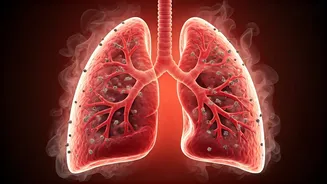

Current Air Quality Snapshot
As of March 19, 2026, 09:26 AM, Gurgaon is experiencing an Air Quality Index (AQI) of 191, which falls into the 'Poor' category. This elevated level is primarily driven by significant concentrations of particulate
matter, with PM2.5 registering at 96 µg/m³ and PM10 at 118 µg/m³. Additionally, ozone (O3) levels are at 28 ppb. While carbon monoxide (CO) is at 310 ppb and nitrogen dioxide (NO2) is at 9 ppb, these contribute to an air quality that is considered slightly unhealthy for the general population. Individuals with respiratory sensitivities may experience mild irritation due to these conditions. It is advised for those with pre-existing respiratory issues to limit their time outdoors and implement protective measures to minimize prolonged exposure to these air contaminants.
Major Pollutants Explained
The air quality in Gurgaon is being impacted by several key pollutants. Particular Matter, in both its finer (PM2.5) and coarser (PM10) forms, is a significant concern, measured at 96 µg/m³ and 118 µg/m³ respectively. These tiny particles can penetrate deep into the lungs, causing respiratory and cardiovascular problems. Carbon Monoxide (CO) is present at 310 ppb, a gas that reduces the blood's ability to carry oxygen. Sulphur Dioxide (SO2) is relatively low at 2 ppb, posing less immediate risk. Nitrogen Dioxide (NO2), measured at 9 ppb, can irritate airways and exacerbate asthma. Finally, Ozone (O3) at 28 ppb, particularly ground-level ozone, can also cause respiratory distress.
Weekly Air Quality Trend
Examining the air quality trend in Gurgaon over the past week reveals fluctuations. On March 12th, the AQI was 136, followed by 179 on the 13th and 147 on the 14th, all within the 'Poor' range. A slight improvement was observed on the weekend, with the AQI dropping to 94 on March 15th and 74 on the 16th, categorizing the air as 'Moderate'. However, the quality deteriorated again towards the end of the week, reaching 186 on March 17th and 188 on March 18th, both firmly back in the 'Poor' zone. This pattern indicates a volatile air quality situation susceptible to daily environmental changes.