



Early Arrivals Begin
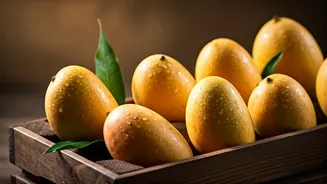
The highly anticipated Kesar mango season has commenced in Gujarat's Gir Somnath district, with the primary trading hub of Talala witnessing its first auctions approximately a week ahead of the usual schedule.
While the initial volume of fruit reaching the market yard on the opening day, April 19, was recorded at 10,500 boxes (each weighing 10kg), this figure represents a slight decrease of around 3,000 boxes compared to the previous year's inaugural sales. Since then, the daily influx of mangoes has stabilized, with approximately 4,200 to 4,500 boxes being processed each day. Despite these lower initial arrivals, the market sentiment remains positive, bolstered by consistent pricing and a significant uptick in demand from international buyers, setting an optimistic outlook for the season ahead.
Price and Quality Outlook
Ramesh Siroya, the secretary of the Talala market yard, has provided insights into the current market dynamics, noting that prices for Kesar mangoes have remained remarkably steady. While the quality of the very first fruits available for sale this season is described as marginally inferior, the overall outlook for the season's produce is quite promising. This is largely attributed to the unique flowering patterns observed this year, which suggest that the season is likely to extend beyond its typical duration. Currently, premium Kesar mangoes are commanding prices between Rs 1,000 and Rs 1,200 per box in the auction yard, translating to retail prices ranging from Rs 160 to Rs 200 per kilogram in local markets. This stability in pricing, even with minor initial quality variations, signals a strong market presence for this popular variety.
Extended Season Prospects
Farmers are expressing considerable optimism regarding the prospect of an extended Kesar mango season this year. This positive forecast stems from an unusual occurrence of a double flowering cycle on many mango trees. Parshottam Sidpara, a farmer hailing from Jamvala Gir in the Junagadh region, explained that some trees exhibited flowering not only at the usual earlier period but also experienced a second bloom in late January. This phenomenon has resulted in both an early-maturing crop and a later-developing one, potentially prolonging the availability of mangoes. If the monsoon season, a critical factor influencing crop yield and duration, is delayed until late June, there's a strong possibility that mango supplies could continue to be available well into August or even September, significantly extending the typical season.
Navigating Season Challenges
Despite the optimistic projections for a longer season, the current cultivation period has not been without its share of adversities. Unseasonal weather events, including instances of rain and hailstorms, have unfortunately impacted certain growing areas. These adverse conditions have led to crop damage, with farmers reporting significant losses due to premature fruit drop. Natha Bhattu, a farmer from Bhesan, shared his experience of substantial crop losses this year, highlighting the vulnerability of the mango harvest to unpredictable weather patterns. These challenges underscore the inherent risks faced by agricultural producers in adapting to and mitigating the effects of climate variability on their yields.
Strong Export Demand
Even with the domestic challenges faced by some farmers, the international appetite for Kesar mangoes remains exceptionally strong. The pack house facilities at the Talala market yard have already facilitated the shipment of six consignments, each comprising 1,200 kg of mangoes, to the United States. Furthermore, the market is anticipating additional orders from other key international markets, including Canada and the United Kingdom. This sustained and robust export demand plays a crucial role in stabilizing prices and ensuring market access for Kesar mangoes, thereby supporting the livelihoods of the farming community and promoting the global reach of this prized fruit.
Cultivation Expansion Growth
The cultivation area dedicated to Kesar mangoes is experiencing a notable expansion, a trend fueled by consistent demand and the attractive financial returns associated with this variety. The total area under cultivation has grown significantly, increasing from 35,000 hectares in 2021 to an impressive 44,000 hectares for the 2024-25 period. On average, the annual production of Kesar mangoes hovers around 3.15 lakh metric tonnes. While the cultivation has historically been concentrated in the districts of Junagadh, Gir Somnath, and Amreli, the geographical footprint of Kesar mango farming has now broadened considerably. It has successfully spread to new regions, including Bhavnagar, Porbandar, Devbhumi Dwarka, Rajkot, Morbi, and Surendranagar, indicating a wider adoption and increasing importance of this mango variety across Gujarat.