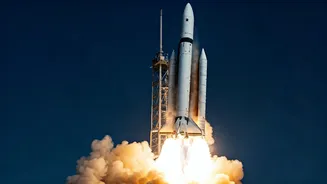







Mission's Unfolding Story
The ISRO PSLV-C62 mission, a critical endeavor for India's space program, unfortunately ended in an anomaly. The Polar Satellite Launch Vehicle (PSLV), a reliable workhorse for ISRO, failed to perform
as expected. The rocket deviated from its planned trajectory during the mission, resulting in an unsuccessful launch. While the specific details of the anomaly are still under investigation, the event marks a significant moment for ISRO. It underscores the inherent complexities and risks associated with space exploration, despite the best technological advancements and rigorous testing procedures. This incident necessitates a thorough review of the mission's parameters, vehicle performance, and any possible contributing factors to prevent recurrence. The failure brings attention to the ongoing efforts of ISRO to push the boundaries of space exploration.
PSLV's Role Explained
The PSLV is a key component of ISRO's operations. The PSLV is recognized for its versatility and dependability, having facilitated many successful satellite launches over the years. This vehicle is designed to carry a variety of payloads into various orbits, including polar and sun-synchronous orbits, which are critical for Earth observation, remote sensing, and scientific missions. The PSLV's design incorporates multiple stages, each powered by solid or liquid fuel, allowing for precise control and maneuvering throughout the launch sequence. Each launch is a complex process. The vehicle's performance is closely monitored, and any deviation can jeopardize the mission. The failure of PSLV-C62 highlights the need for continuous improvement, innovation, and unwavering attention to detail in the challenging field of space exploration. ISRO will likely delve into the technical elements of the failure to improve future missions.
Impact and Future Steps
The unsuccessful PSLV-C62 mission serves as a reminder of the inherent risks that are part of space exploration. This event will likely prompt a comprehensive analysis to identify the root causes of the anomaly. This investigation will entail examining all aspects of the launch, from the rocket's hardware and software to the launch procedures and environmental factors. ISRO will undoubtedly apply the lessons learned from this failure to enhance future missions and refine its technologies. The impact of this failure extends beyond the immediate consequences, impacting the timeline and potentially affecting planned future launches. Despite the setback, ISRO remains committed to its mission of advancing space technology and contributing to the scientific and technological progress of India. The space agency will work hard to ensure future endeavors are met with greater precision and success.