







Microgravity's Blood Flow Puzzle
Venturing beyond Earth's atmosphere presents unique physiological hurdles, with microgravity significantly altering how the human body functions, particularly concerning blood circulation. On our home
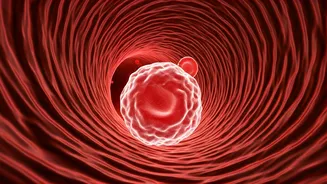
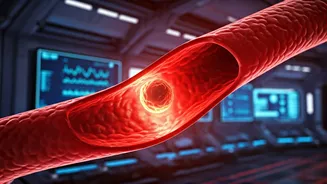
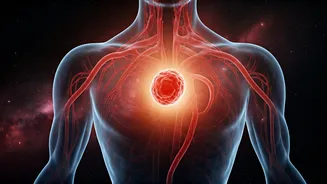
planet, gravity plays a crucial role in directing bodily fluids, especially blood, downwards. However, in the weightless environment of space, this natural pull is absent, leading to a pronounced upward 'fluid shift.' This phenomenon causes blood to accumulate in the upper body, specifically pooling in the internal jugular veins. The reduced flow in these veins, coupled with the lack of gravitational influence, creates conditions conducive to the formation of venous thromboembolism (VTE), a serious and potentially 'silent' risk for astronauts undertaking extended missions. Understanding and managing these altered blood flow dynamics is paramount for ensuring astronaut safety, especially as missions become more ambitious, like journeys to Mars, where immediate medical intervention is not feasible. The delicate balance of blood circulation is profoundly disrupted, necessitating a deep dive into the underlying biological mechanisms at play during spaceflight.
Detecting Silent Clots in Orbit
Diagnosing medical conditions in space is a complex endeavor, primarily due to the absence of comprehensive medical facilities. Astronauts must often act as their own medical technicians, guided remotely by physicians on Earth. For the detection of potential blood clots, a high-resolution ultrasound (HRUS) is the principal tool employed. This diagnostic procedure involves the astronaut manipulating the HRUS equipment while receiving real-time instructions and support from Earth-based medical professionals via a two-way video link. A significant development occurred in 2019 when an asymptomatic blood clot was identified during a routine research study using HRUS, underscoring the effectiveness of this remote diagnostic capability. The clot was discovered not because the astronaut experienced symptoms, but as a proactive measure within a research context, highlighting the importance of continuous monitoring and advanced diagnostic tools in the challenging environment of space.
Space Clots: A Different Breed
The physical characteristics of blood clots can be influenced by the environmental conditions under which they develop. In the unique microgravity environment of space, research suggests that blood clots may exhibit a different structure compared to those formed on Earth. Specifically, these space-formed clots can possess thicker fibrin networks. This increased density potentially makes them more resistant to the body's natural fibrinolytic system, which is responsible for breaking down clots. While scientists continue to investigate the precise ways microgravity influences clot formation and the body's response, existing anticoagulant medications have already demonstrated success in treating a clot detected in an astronaut during a mission. This indicates that while the clots might be 'different,' established medical interventions can still be effective, though ongoing research is vital for refining these treatments and understanding the long-term implications.
Exercise and Fluid Shift Challenges
On Earth, the simple act of walking significantly promotes blood circulation in the legs, playing a vital role in preventing clot formation. In space, astronauts engage in rigorous exercise routines to counteract the effects of muscle and bone density loss. They utilize specialized equipment like the Advanced Resistive Exercise Device (ARED), which simulates the forces of gravity. These resistance exercises are crucial for maintaining musculoskeletal health by ensuring that weight and force are continually transmitted to the bones and muscles. However, these beneficial exercises do not address the pervasive 'fluid shift' that causes blood to accumulate in the upper body and neck area. To combat this specific issue, NASA is actively exploring technologies such as Lower Body Negative Pressure (LBNP). This innovative system involves specially designed garments that create a vacuum effect, effectively drawing blood back down into the lower legs and thereby alleviating pressure in the jugular veins.