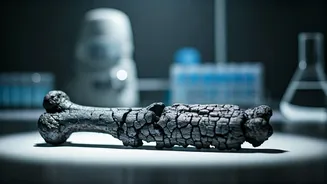








Ash: Forensic Difficulty
The process of identifying individuals after a catastrophic event, particularly when the remains have been burned and turned into ash, presents considerable challenges for forensic investigations. Extremely
high temperatures can inflict significant damage upon biological materials, and consequently, can severely degrade the DNA, the unique genetic blueprint that enables identification. The fragmentation and alteration of DNA molecules make it incredibly difficult to obtain the necessary genetic profiles for comparison. Furthermore, the presence of various contaminants like soot and other environmental factors can further hinder the recovery of usable DNA. This often necessitates the use of advanced techniques and methods, which can be time-consuming and costly, potentially delaying the process of identifying victims and informing their families.
DNA: Degradation Issues
When exposed to extreme conditions like intense heat, DNA, the fundamental genetic material, undergoes significant degradation. This means that the long strands of DNA break down into smaller pieces, or even completely disintegrate. Moreover, the chemical structure of the DNA can also be altered. These changes occur as the heat causes chemical bonds within the DNA molecules to break or reorganize. These modifications impede the standard DNA profiling techniques. For example, the polymerase chain reaction (PCR), a core method for amplifying DNA to make it easier to analyze, becomes considerably less effective when dealing with damaged and fragmented DNA. Successful DNA profiling depends on the preservation of the genetic material, which is severely compromised in cases of extreme thermal destruction.
Profiling: Complex Steps
DNA profiling of severely damaged remains is a complex undertaking, involving a series of advanced techniques designed to overcome the challenges posed by degraded DNA. The process generally begins with meticulous sample collection and pre-processing to eliminate contaminants. This could involve physical cleaning of the remains and chemical treatments to remove inhibitors that hinder the PCR process. Next, specialized DNA extraction methods are used to recover the degraded genetic material. These techniques may include using different extraction buffers, and optimizing the process to maximize yield and minimize further damage. Following extraction, the DNA undergoes a process of amplification, often through modified PCR methods. These modifications might involve using longer PCR cycles or primers targeting shorter DNA fragments, as shorter fragments are typically more likely to survive extreme conditions. Finally, the amplified DNA is analyzed using advanced equipment to determine the genetic profile. This whole procedure requires skilled specialists and sophisticated laboratory equipment.
Analysis: Challenges Persist
Despite these advanced techniques, analyzing DNA from severely damaged remains remains a challenge. Damaged DNA often yields incomplete or ambiguous profiles. The interpretation of these degraded profiles requires cautious methods and specialized statistical analysis. Forensic scientists must account for the likelihood of errors, such as allelic dropout (where one or more alleles are not amplified during PCR), and allele artifacts, leading to misinterpretations. This can complicate the matching process, particularly when dealing with limited amounts of DNA. Moreover, degraded DNA may exhibit a higher mutation rate, further complicating the identification. This can lead to uncertainty in establishing identity and necessitates the use of various methods to corroborate findings, like comparing with ante-mortem samples, missing persons reports, or familial DNA.
Families and Investigations
The challenges in DNA profiling can have a significant effect on investigations and the families of victims. Delayed or inconclusive results extend the grieving process and hinder closure for bereaved families. Furthermore, the absence of conclusive identification can complicate legal proceedings and affect the distribution of assets or insurance claims. Investigative delays can also hamper the progress of a criminal case, as the identification of victims is often crucial to establishing the facts and the chain of events. These difficulties highlight the need for investment in research and development, to improve the efficiency and accuracy of DNA profiling in extreme circumstances. Improved technologies, along with more efficient methods, are critical for allowing justice and providing solace to the families involved in such tragic events.