







Solar Steam Power
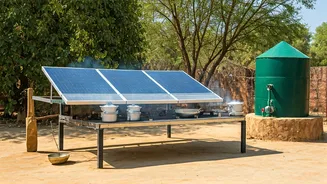
In Goraj, Gujarat, the Muni Seva Ashram is a beacon of energy independence, providing daily meals for approximately 5,000 individuals using advanced solar steam technology. This impressive system caters
to patients, their families, residents, and students across the ashram's extensive campus, which includes a cancer hospital, schools, and vocational training centers. The cooking process predominantly relies on steam, enabling the preparation of vast quantities of rice, dal, and vegetables. Remarkably, even fried items like bhajiyas and puris are prepared using solar-powered equipment. A cornerstone of this operation is the 'Big Dish' solar concentrator, a technology developed by the Australian National University and Sunrise CSP Australia. This device generates high-temperature solar steam, capable of cooking over 2,000 meals daily. Beyond culinary applications, it also supports the hospital's laundry needs, processing nearly 1,000 kg of laundry, and facilitates sterilization processes. The concentrator's efficiency is exceptional, capturing almost 90% of incident sunlight, significantly outperforming conventional solar panels which typically convert around 20% of sunlight. The high-temperature steam generated also powers the hospital's substantial 200-ton air conditioning system, showcasing the versatility and efficiency of this renewable energy solution. This initiative aligns with the founding principles of self-reliance and environmental stewardship championed by founder Anuben Thakkar, demonstrating a profound commitment to community service and ecological care.
Dung-Powered Biogas
In a testament to ingenuity and community empowerment, the village of Mujkuva, near Anand, has transformed cow dung into a reliable cooking fuel. Spearheaded by the Mujkuva Sakhi Khad Sahkari Mandali Ltd, the nation's pioneering all-women cooperative focused on manure-based initiatives, local women have created a sustainable energy source. Established in 2018 with an initial group of 25 members, the cooperative has since expanded to include 150 women, many of whom are involved in animal husbandry. They leverage the readily available cow dung from their livestock to produce biogas for their kitchens. This sustainable practice has eliminated concerns about cooking fuel, even for large joint families, as highlighted by members like Hema Padhiyar. By utilizing biogas, households are collectively saving approximately Rs 2,000 per month, a significant financial relief compared to purchasing LPG cylinders. Furthermore, the byproduct of the biogas production, a nutrient-rich slurry, is sold as organic fertilizer to NDDB Mrida Limited, actively encouraging farmers to adopt natural farming methods. This success story is mirrored in Kutch, where nearly 50 women, led by individuals like Rekha Maharaj, remain unaffected by the nationwide LPG crisis. Their kitchens are powered by biogas plants installed over the last three years, ensuring a consistent and readily available fuel supply. Unlike the long queues seen elsewhere for LPG, these communities rely on a daily collection of cow dung, processed in their local plants, thereby guaranteeing their energy needs are perpetually met. This movement, supported by organizations like the Self-Employed Women's Association through its 'Swachh Akaash' initiative, has seen thousands of women shift from LPG dependency to biogas production, fostering a sense of self-sufficiency and environmental consciousness.