





Navratri's Divine Significance
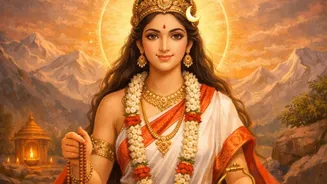
Chaitra Navratri stands as a paramount festival for Hindus worldwide, ushering in the new year as per the Vikram Samvat calendar. This nine-day celebration is dedicated to honoring the nine distinct avatars
of Goddess Durga, symbolizing potent attributes like strength, courage, purity, and spiritual wisdom. Across the globe, devotees engage in fervent worship, expressing gratitude and seeking the divine blessings of Maa Durga. The festival culminates with the celebration of Ram Navami on the final day, signifying the triumph of good over evil, a narrative deeply rooted in the victory of Goddess Durga over the demon Mahishasura. The observance involves a devout adherence to a sattvik lifestyle and fasting, fostering spiritual growth and devotion.
Ghatsthapana Auspicious Times
The commencement of Chaitra Navratri is marked by the sacred ritual of Ghatsthapana, performed on the first day of the Pratipada Tithi. For 2026, the auspicious time for Ghatsthapana Muhurat is on March 19, commencing from 06:52 AM and concluding at 07:43 AM. An equally significant Abhijit Muhurat for this ritual will be observed from 12:05 PM to 12:53 PM on the same day. The Pratipada Tithi itself begins on March 19 at 06:52 AM and extends until 04:52 AM on March 20. Furthermore, the Meena Lagna, considered favorable for Ghatsthapana, begins at 06:26 AM on March 19 and ends at 07:43 AM on March 20, creating an opportune window for the ritual's performance.
Daily Puja and Rituals
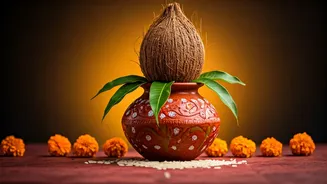
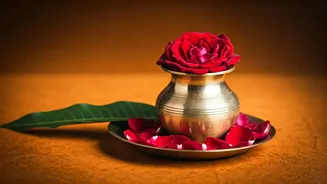
The core of the Navratri worship involves meticulous puja rituals, beginning with the sanctification of the chosen area for the altar. On the first day, devotees honor Goddess Shailputri, placing her idol and a kalash topped with a coconut. A lamp fueled by desi ghee is lit, and the Goddess is adorned with traditional shringar and garlands. Chanting mantras is crucial for invoking Maa Durga's presence. Reciting the Durga Saptashati is highly recommended, and if the entire text is not feasible, chanting the Kavach, Argala, and Keelak is considered beneficial. Fasting is an integral part of the observance, with many devotees consuming fruits and specific dishes prepared using rock salt (sendha namak), such as kuttu poori and aloo ki sabzi, following a day of abstinence.
Nine Forms of Durga
Each of the nine days of Navratri is dedicated to a specific manifestation of Goddess Durga, each embodying unique divine qualities. March 19, the first day, is devoted to Maa Shailputri, associated with the color yellow. The second day, March 20, honors Maa Brahmacharini and is represented by green. Grey is the color for March 21, dedicated to Maa Chandraghanta. Orange signifies the worship of Maa Kushmanda on March 22. White is associated with Maa Skandamata on March 23. Red represents Maa Katyayani on March 24. The vibrant royal blue marks March 25, dedicated to Maa Kaalratri. Pink is for Maa Mahagauri on March 26. Finally, purple adorns the worship of Maa Skandamata on March 27, completing the nine-day cycle of devotion and reverence.