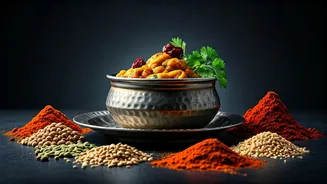








The Soaring Cost
The once affordable staple of idli and sambar in Kerala has seen a dramatic price surge, becoming a poignant indicator of post-pandemic inflation. While the taste remains the same, the financial burden
on consumers has undeniably increased. Official data analysis reveals a significant jump in the cost of preparing a standard home serving of 20 idlis with traditional sambar, sufficient for four to five individuals. This meal, which cost Rs 105 in 2015 and saw a minimal rise to Rs 107 by 2019, has now escalated to Rs 145. This upward trend, far exceeding pre-pandemic increases, highlights how everyday culinary staples are bearing the brunt of broader economic shifts, impacting household budgets and dining habits across the region.
Ingredient Price Volatility
A closer look at the 'Retail Prices of Essential Commodities Report' from Kerala's department of economics and statistics paints a clear picture of escalating costs for key ingredients. Toor dal, the fundamental component of sambar, experienced a dip from Rs 122 per kg in 2015 to Rs 95 in 2019, but then dramatically reversed its trend, reaching a peak of Rs 178 per kg in 2024 before settling at Rs 136 in 2025 – an 87% surge from 2019. Similarly, black gram, crucial for idli texture, climbed from Rs 95 in 2019 to Rs 130, marking a 37% increase. Dry chillies, after peaking at Rs 269 in 2022 from Rs 146 in 2019, eased to Rs 191 in 2025. Turmeric powder has doubled to Rs 30 per 100g, with most of the rise occurring post-2021. The most striking increase is seen in coconut oil, which more than doubled from Rs 185 per litre in 2019 to Rs 368 in 2025, showcasing a stark contrast to its pre-pandemic gradual rise.
Post-Pandemic Price Shock
The period following 2021 marked a significant inflection point for numerous essential commodities, with prices exhibiting an exceptional pace of increase and hitting historic highs from 2022 onwards. While prices rose gradually with minor corrections before the pandemic, the post-Covid era brought about a dramatic shift. The cumulative price increase over the six years since the pandemic stands at 99%, a stark contrast to the mere 35% rise observed in the four years preceding it. This inflationary pressure extends beyond pulses and spices to vegetables as well. For instance, elephant foot yam prices surged by 85%, snake gourd by Rs 11, and ladies finger by Rs 10. Even the humble tomato saw a moderate increase. All these vegetable price hikes have kept them at levels higher than their pre-pandemic benchmarks, contributing to the overall increased cost of meals.
Economic Explanations for Hikes
Experts attribute the sustained price escalation to 'cost-push inflation' and the phenomenon of 'sticky-down prices'. Dr. C. Veeramani, Director of the Centre for Development Studies, explains that while the pandemic didn't directly halt agricultural activities, it severely disrupted the supply chains for crucial inputs like machinery, fertilizers, pesticides, and seeds. This disruption led to a negative supply shock, driving up production costs. Given that demand for essential food items is inelastic – meaning people cannot simply stop consuming them – these higher costs were inevitably passed on to consumers, keeping prices elevated. Furthermore, the concept of 'sticky-down prices' suggests that once businesses adjust to higher operational costs, they are reluctant to lower prices even when initial disruptions subside, leading to persistent price inflation.