







A Major Investment
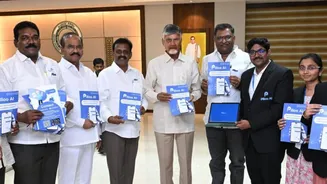
The Andhra Pradesh government greenlit a substantial investment by Websol Renewable Private Limited. This project aims to establish a fully integrated 8 GW solar manufacturing facility in the MPSEZ–Naidupeta,
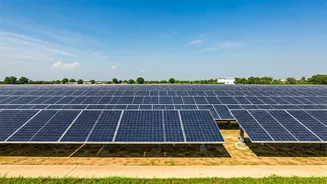
Tirupati district. The investment totals Rs 3,538 crore, marking a significant step in the state's renewable energy ambitions. The project, spanning 120 acres, will be executed in two phases. Commercial production is anticipated to begin in July 2027 and July 2028. Once operational, the facility is projected to become one of the largest and fastest-executed solar manufacturing projects in South India. It's designed to produce 4 GW of solar cells and 4 GW of solar modules, contributing significantly to India's clean energy goals.
Regional Significance Grows
The Naidupeta and southern Tamil Nadu industrial corridor is evolving into a key solar manufacturing hub in India, as the project further consolidates its importance. It's not just Websol; other companies such as Premier Energies, Tata Power, and Voltsun are setting up large-scale facilities in the region. This clustering effect is creating a robust ecosystem. It involves suppliers, a skilled workforce, good logistics, and port connectivity. This positioning helps to establish South India as a globally competitive base for photovoltaic manufacturing, increasing the region's contribution to clean energy initiatives.
Energy and Infrastructure
To ensure sustainable operations and cost-efficiency, the government has designated land for a 300-acre captive solar power plant. This allows Websol to run its facility entirely on renewable energy sources. Furthermore, the company announced plans for a 100 MW captive solar plant to strengthen energy security and decrease operational expenses. These infrastructure investments underscore the commitment to creating an efficient, self-sufficient, and environmentally friendly manufacturing base. Such developments are crucial for making renewable energy competitive and accessible, driving down costs and improving the sustainability of operations.
Government Support Praised
Nara Lokesh, Minister for Industries, IT & Electronics, welcomed the investment, highlighting Andhra Pradesh's competitiveness in clean-energy manufacturing. He described the project as a strong endorsement of the state's efforts. The 8-GW facility demonstrates the state's capacity to attract large-scale projects, thanks to its fast land allotment, single-desk clearances, and reliable green power infrastructure. The minister emphasized that Naidupeta and southern Andhra Pradesh are emerging as India’s renewable-energy industrial heartland, which is a source of pride for the state. This demonstrates the government’s commitment to providing a supportive environment for businesses in the renewable energy sector.
Policy and Incentives
The project aligns with the AP Industrial Development Policy (4.0) 2024–29, which offers customized incentives designed to accelerate project execution under the state’s “Speed of Doing Business” framework. These incentives include land, power, water, financial support, and statutory exemptions. This comprehensive approach is designed to encourage investment, streamline operations, and accelerate the development of the renewable energy sector in the state. Such supportive policies play a pivotal role in attracting and retaining investors, making Andhra Pradesh a preferred destination for clean energy manufacturing.
Employment and Vision
This significant project will create nearly 2,000 direct employment opportunities, injecting vitality into the local economy. Sohan Lal Agarwal, Chairman and Managing Director of Websol Energy System Limited, acknowledged the supportive industrial ecosystem of Andhra Pradesh. He stated that the expansion supports India's renewable energy ambitions under the Atmanirbhar Bharat initiative. Agarwal emphasized Andhra Pradesh's role in facilitating Websol's 4 GW solar cell and 4 GW solar module growth strategy. Websol looks forward to contributing to India’s clean-energy future from Naidupeta, reflecting the vision of self-reliance and environmental sustainability.