



Menu Meltdown Begins
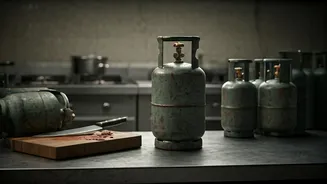
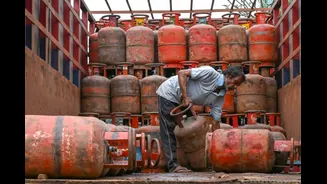
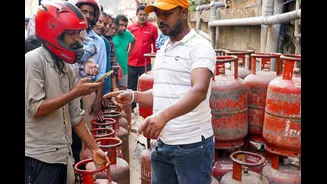
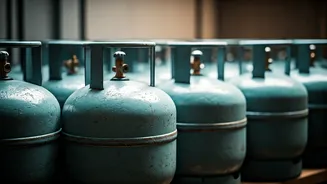
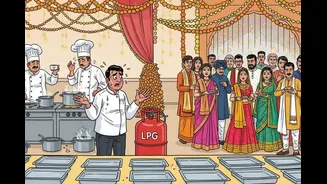
A severe shortage of commercial LPG cylinders is causing significant upheaval across various cities in India, leading to the removal of popular dishes from menus and outright closures of food establishments.
In the Delhi High Court canteen, main course items were temporarily unavailable, with roti being the first casualty in Hyderabad hostels and paying guest accommodations. Employees at Infosys campuses in Pune, Chennai, and Bengaluru were informed of potential limitations on cooking gas-intensive items like dosa. This crisis has forced several restaurants in Pune to shut down entirely, with no immediate end in sight for the commercial LPG shortage that is directly impacting the daily operations and offerings of countless eateries.
Widespread Impact Unfolds
The scarcity of commercial LPG has forced a wide array of food businesses to adapt or halt services. The Delhi High Court canteen, after a temporary suspension of main course dishes due to the cooking gas unavailability, managed to resume services once a day's supply was secured, though the underlying uncertainty persists. In major southern cities like Chennai and Bengaluru, along with Hyderabad, staples such as dosa and poori are being phased out from restaurant menus, canteens, and catering services. Even simple items like tea and coffee are subject to rationing in many places. The repercussions extend to hostels and PGs, particularly impacting north Indian students in Hyderabad who are experiencing the absence of certain curries like rajma and chickpea-based dishes, adding to their daily discomfort.
Seeking Alternative Fuels
As the commercial LPG supply chain faces disruptions, the food industry is actively exploring and implementing alternative cooking solutions. Hotel associations are investigating options ranging from traditional methods like coal and firewood to more sustainable choices such as biogas and electric kitchens. The Indian Railway Catering and Tourism Corporation (IRCTC) has instructed its static catering units at railway stations to transition to microwave and induction plates. Notably, the Bhubaneswar municipal corporation has lifted its earlier ban on coal and firewood use by roadside eateries and dhabas, providing much-needed relief. Restaurants like Empire in Bengaluru, which already utilize a biomethanation plant for their fuel needs, are now considering dual-fuel systems to reduce their sole reliance on LPG, regretting not adopting such models earlier.
Emergency Measures & Regional Responses
In response to the critical LPG shortage, various regions and businesses are implementing emergency measures and exploring unconventional fuel sources. Some bakeries in Mumbai, despite recent directives to switch to LPG, are prepared to revert to their traditional firewood ovens if permitted by authorities. In Uttar Pradesh, oil marketing companies are assessing the viability of kerosene as an emergency fuel substitute, a resource largely phased out in recent years. States like Bihar and Jharkhand are also witnessing the brunt of commercial cylinder shortages affecting PG accommodations, hostels, and catering services. One PG owner in Patna has successfully transitioned to electric cooking arrangements to manage the situation.
Tourist Season Under Threat
The ongoing LPG crisis poses a significant threat to the upcoming tourist season in several popular Indian states known for their hospitality industry. Hoteliers in Uttarakhand, Himachal Pradesh, and Goa are expressing deep concern over potential losses. Himachal Pradesh, with its peak tourist season imminent, faces particular alarm, with eateries in Shimla, Manali, Dharamshala, Kasauli, and Kasol already feeling the pressure. The president of the Dharamshala Hotels and Restaurant Association has voiced uncertainty among hoteliers regarding accepting advance bookings, highlighting the precarious situation as the industry grapples with fuel scarcity just as visitor numbers are expected to rise.