



Prime Sunny Location
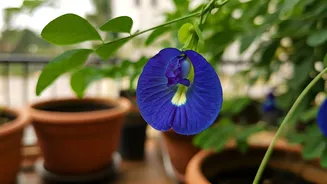
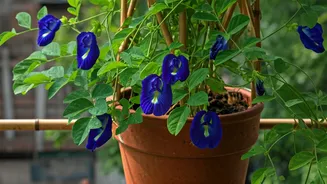
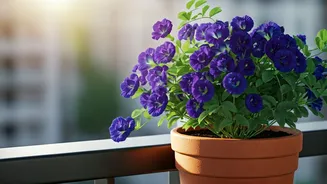
To encourage abundant flowering and healthy growth, your Aparajita plant thrives in a spot that receives ample direct sunlight throughout the day. For balcony settings, position the pot where it can bask
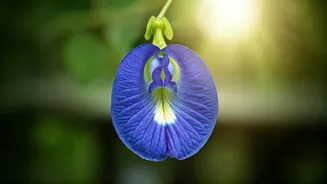
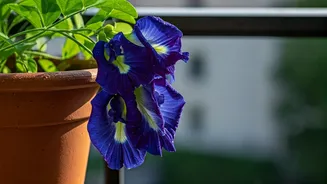
in strong morning or afternoon sun for the majority of daylight hours. Avoid placing it in shaded areas, as insufficient light will hinder its blooming potential. This plant is a sun-lover, and providing it with at least six hours of direct sunlight daily is crucial for its vitality and the production of its characteristic blue blossoms.
Pot and Drainage Essentials
Given Aparajita's climbing nature, it requires a container that offers sufficient space for its root system and ensures proper water drainage. A recommended pot size for a balcony garden is typically between 8 to 12 inches deep and 12 to 14 inches wide, providing a good balance for its growth. Crucially, the pot must feature drainage holes to prevent water from accumulating at the base. Waterlogged soil can lead to root rot, damaging the plant and drastically reducing its ability to flower, so good drainage is paramount.
Nourishing Soil Mix
Aparajita flourishes in a light, fertile, and well-draining soil medium. While it prefers soil that is either dry or slightly moist, it performs best when consistently watered without becoming waterlogged. For a balcony container, it's advisable to use a loose potting mix that allows for good aeration. Incorporating compost into this mix will not only improve its structure and drainage but also provide essential nutrients to nourish the plant, fostering robust growth and vibrant blooms.
Seed Preparation and Sowing
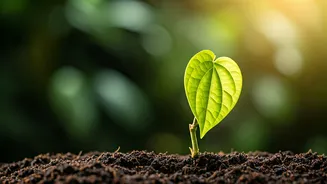
Initiating your Aparajita from seeds is a straightforward process, though a little preparation can enhance germination rates. Soaking the seeds in water for a few hours, or even overnight, helps to soften their tough outer coat, paving the way for quicker sprouting. For an even faster start, you can gently nick the seed coat with a fine-grit sandpaper before soaking. Once ready, sow these prepared seeds approximately 1 inch deep into your well-draining potting mix, ensuring adequate spacing between them to prevent young vines from competing.
Watering and Climate
Aparajita plants require consistent moisture, particularly during their early growth stages, but they are susceptible to damage from overly saturated soil. Water the plant thoughtfully, directing the water towards the soil rather than the foliage, as damp leaves can invite fungal issues. A good practice is to water when the top inch of soil feels dry to the touch, rather than adhering to a strict daily schedule. Warm conditions are ideal for sprouting, making warmer seasons more conducive to successful germination and early development on balconies.
Providing Climbing Support
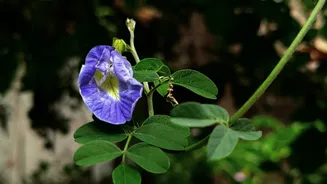
As a naturally twining vine, Aparajita needs a structure to ascend and display its beauty. Equip your balcony garden with a small trellis, a sturdy railing, a wire frame, or even the balcony's grill to serve as its support system. Without adequate assistance, the plant tends to sprawl, appearing less tidy. With a simple climbing aid, however, it grows more upright and attractive, contributing a charming vertical element to your limited outdoor space and showcasing its elegant blue flowers.
Pruning for Bloom
Regularly trimming your Aparajita plant is beneficial for maintaining a compact, bushy form rather than allowing it to become leggy and weak. Furthermore, the practice of deadheading—removing spent flowers before they form seeds—actively encourages the plant to produce more blooms. If you notice the vine growing too long, a light trim of the growing tips will stimulate the development of new side shoots, leading to a fuller plant. In terms of pest control for small insects like aphids, a forceful spray of water is often sufficient; removing severely infested leaves can also help. These simple horticultural techniques ensure a continuous display of flowers and a healthy, manageable plant.