






Today's Air Quality
The air quality in the nation's capital, New Delhi, has recently dipped into the 'Poor' category, registering an Air Quality Index (AQI) of 169. This deterioration is primarily driven by elevated levels
of particulate matter, with PM2.5 concentrations at 84 µg/m³ and PM10 at 103 µg/m³. These levels pose a moderate health risk, particularly for individuals who are more sensitive to air pollution. In addition to particulate matter, other pollutants contributing to the current air quality include ozone at 22 ppb and nitrogen dioxide at 13 ppb. The prevailing temperature of 22°C may also play a role in exacerbating these air quality concerns. Public health advisories suggest that those with respiratory issues or other vulnerabilities should consider limiting their outdoor activities during such periods to minimize exposure.
Key Pollutants Explained
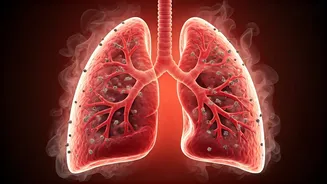
At the forefront of New Delhi's current air quality concerns are specific pollutants that significantly impact respiratory health. Particulate Matter (PM), a mixture of solid particles and liquid droplets suspended in the air, is a major culprit. Specifically, PM2.5, which are fine inhalable particles with diameters less than 2.5 micrometers, are present at 84 µg/m³. Their small size allows them to penetrate deep into the lungs and even enter the bloodstream. Equally concerning is PM10, particles with diameters less than 10 micrometers, found at 103 µg/m³, which can also cause respiratory problems. Other pollutants contributing to the 'Poor' AQI include Carbon Monoxide (CO) at 420 ppb, Sulphur Dioxide (SO2) at 3 ppb, Nitrogen Dioxide (NO2) at 13 ppb, and Ozone (O3) at 22 ppb. Understanding these components is crucial for assessing the overall health impact of the ambient air.
Weekly Air Quality Trends
Examining the air quality trends in New Delhi over the past week reveals a fluctuating pattern, with a predominantly 'Poor' status. On March 12th, the AQI was recorded at 137, and it remained in the 'Poor' range throughout much of the week, with readings of 159 on March 13th and 145 on March 14th. A brief respite was observed on March 15th and 16th, when the AQI dropped to 94 and 74 respectively, falling into the 'Moderate' category. However, the air quality deteriorated again towards the end of the week, with the AQI climbing back to 166 on March 17th and further to 183 on March 18th, both firmly within the 'Poor' classification. This weekly comparison highlights the volatile nature of air quality in the region and the persistent challenges in maintaining healthier air conditions.